
- All
- Product Name
- Product Keyword
- Product Model
- Product Summary
- Product Description
- Multi Field Search
Views: 0 Author: Rhinails Publish Time: 2026-11-06 Origin: Site


Integrated ceiling nails install overhead MEP hangers in 10 seconds from floor level without ladders, scaffolding, or hammer drills, delivering 400 to 800 lbs (1.8 to 3.5 kN) of tension pull-out resistance in cured C30/C40 concrete slabs.
By combining a 55# high-carbon ballistic drive pin with pre-crimped M6, M8, or M10 threaded connectors and pipe clamps, direct-fastening pole tools eliminate respirable crystalline silica dust compliance issues (OSHA 1926.1153)
while slashing installation labor costs by 75% compared to traditional drop-in expansion anchors.
Installing thousands of overhead anchor points for HVAC ductwork, cable trays, and fire sprinkler lines is one of the most hazardous tasks on commercial jobsites.
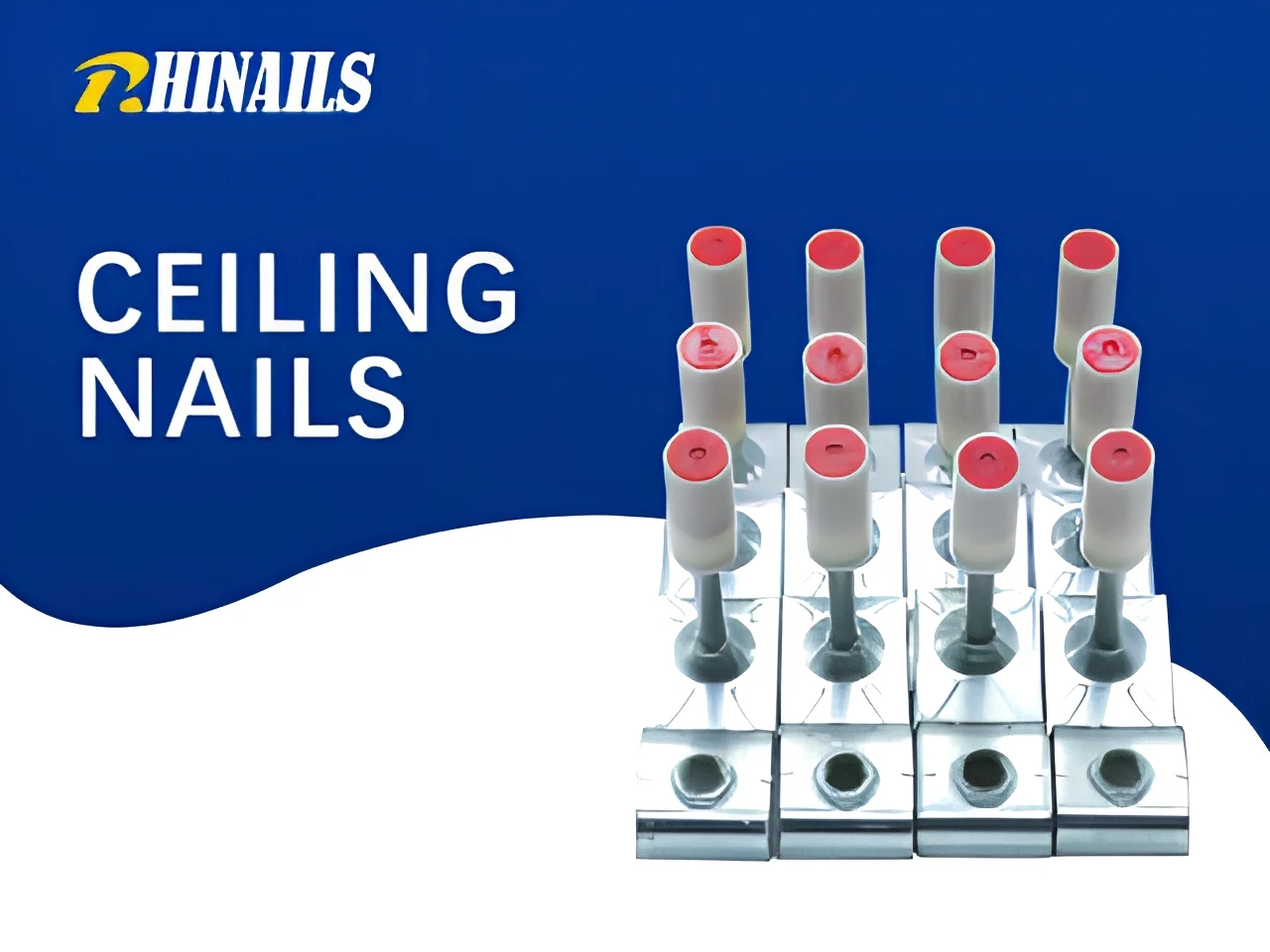
Fig. 1 - Rhinails 32mm integrated ceiling nails: ballistic 55# carbon steel drive pin with pre-stamped M6/M8/M10 threaded connector and gas-sealing positioner washer for direct slab anchoring.
Traditional overhead drop-in anchors create three severe jobsite bottlenecks:
Respirable silica dust: Drilling overhead pours fine concrete dust directly into the installer face and lungs, requiring heavy HEPA vacuum extraction shrouds under OSHA silica regulations.
Scaffold and ladder repositioning: Moving a rolling scaffold every 4 feet across cluttered rough floors wastes up to 60% of an electrical crew working day.
Multi-step anchor assembly: An electrician must drill a 10 mm hole, clear dust with a bulb pump, hammer in the lead shield or drop-in anchor, use a setting punch tool, and then thread in the rod.
Integrated ceiling fasteners combine four specialized components into a single pre-assembled unit:
Ballistic-point drive pin: Forged from 55# or 60# high-carbon steel, quenched and austempered to HRC 52-56 to pierce hard aggregate without buckling.
Gas-sealing plastic washer: Centers the pin inside the tool barrel and seals propulsive gas behind the piston for consistent penetration depth.
Heavy-gauge stamped bracket: 2.0 mm structural steel bracket pre-formed with M6, M8, or M10 threaded holes, L-angles, or pipe saddles.
Powder / Gas pole drive: Fired using a telescoping 12-foot pole tool pressed against the slab, allowing workers to anchor points safely with both feet flat on the concrete floor.
Installation Metric | Integrated Ceiling Drive Pins | Traditional Drop-In Expansion Anchors |
Installation Time per Point | 8 to 12 seconds total | 3 to 5 minutes (drill, blow, set, thread) |
Worker Safety Level | Both feet on floor; zero ladder fall risk | High fall risk from rolling scaffolds / ladders |
Silica Dust Generation | Zero respirable dust; displacement entry | High airborne silica; requires OSHA vacuum shrouds |
Tension Pull-Out Strength | 400 to 800 lbs (1.8 - 3.5 kN) in C30/C40 | 500 to 1,000 lbs (dependent on hole cleanliness) |
Tooling Required | Lightweight pole-actuated tool | Heavy rotary hammer drill, HEPA vac, setting tool |
Daily Output (1 Worker) | 600 to 1,000 anchor points | 100 to 180 anchor points |
Noise & Disruption | Single muted percussion pop | Continuous high-decibel hammer drill vibration |
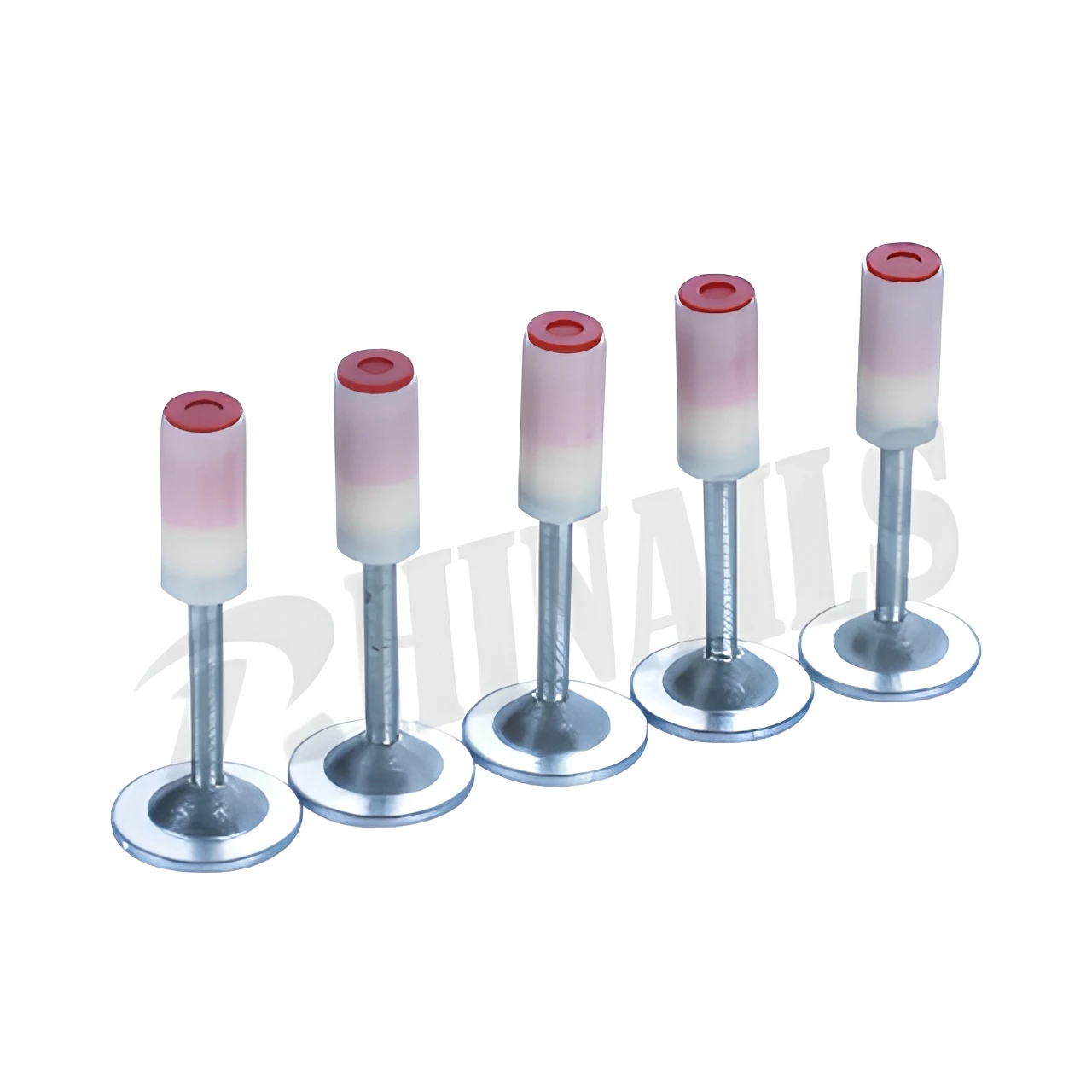
Fig. 2 - Rhinails fire fighting integrated nails: heavy-duty stamped bracket certified for structural fire sprinkler pipe hangers and heavy HVAC mechanical ductwork.
Mechanical, electrical, and plumbing contractors require different bracket terminations depending on the utility being supported:
Engineered for suspending acoustic ceiling T-grids, light fixtures, cable trays, and unistrut channels.
The stamped steel bracket features precision tapped internal threads.
After firing into the slab, standard threaded all-thread rods spin directly into the bracket from below.
Eliminates drop-in anchor setting tools and rod coupler nuts.
Engineered specifically to meet NFPA 13 structural hanging guidelines for commercial fire suppression piping.
Stamped from 2.5 mm reinforced high-carbon structural plate.
Designed with heavy-gauge loop brackets to accept clevis hangers and swivel ring sprinkler supports.
Tested to hold dynamic surge loads from pressurized water lines.
Sourcing Commercial Ceiling Fasteners Direct from Factory?Rhinails manufactures certified 32mm and 42mm integrated ceiling drive pins with M6/M8/M10 threads and 16-50mm pipe saddles, engineered for C25 to C50 cured concrete slabs. Request a Factory Specification Sheet & Free Jobsite Evaluation Pack -> |
Pre-assembled with one-piece PVC, electrical conduit (EMT), or copper pipe saddles.
Fired directly into concrete ceiling decks or vertical foundation walls in one motion.
Ideal for plumbing supply lines, solar thermal piping, and electrical conduit runs.
Cuts conduit installation labor by more than 70%.
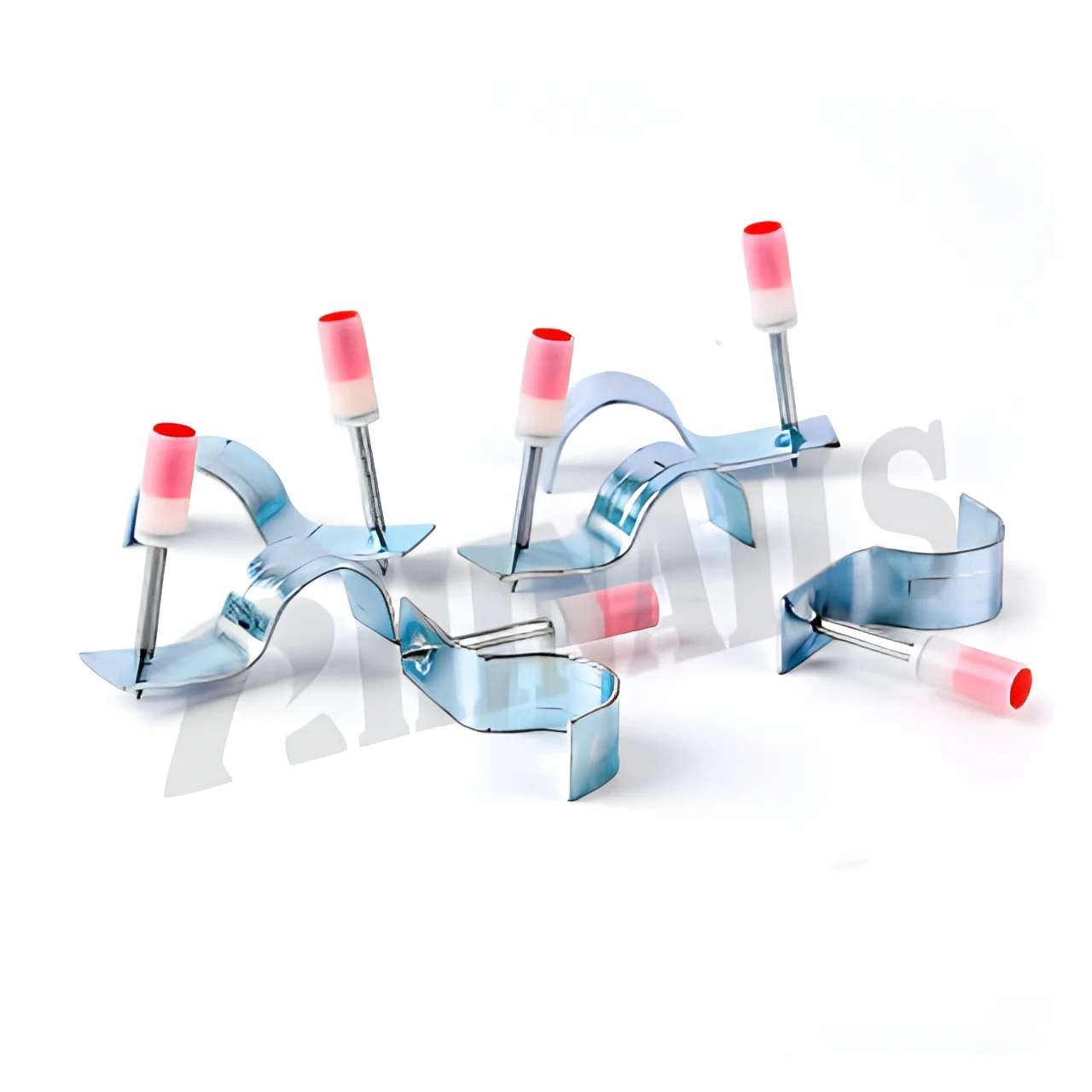
Fig. 3 - Rhinails pipe clamp nails: integrated saddle bracket secures 16mm to 50mm electrical conduit and plumbing pipe lines in a single floor-level trigger pull.
Ceiling Substrate | Concrete Compressive Strength | Recommended Pin Length | Safe Working Tensile Load | Ultimate Failure Pull-Out |
Solid Poured Slab (C25 / 3,000 psi) | Standard commercial floor slab | 32 mm pin | 220 lbs (1.0 kN) | 660 lbs (2.9 kN) |
Dense Hard Slab (C40 / 5,500 psi) | Post-tensioned parking deck slab | 27 mm or 32 mm pin | 330 lbs (1.5 kN) | 880 lbs (3.9 kN) |
Precast Hollow-Core Plank | High-density prestressed concrete | 27 mm pin | 260 lbs (1.2 kN) | 750 lbs (3.3 kN) |
Metal Deck with Concrete Infill | Composite corrugated steel deck | 32 mm or 42 mm pin | 200 lbs (0.9 kN) | 600 lbs (2.7 kN) |
Solid Concrete Block / Masonry | Dense foundation block walls | 32 mm pin | 180 lbs (0.8 kN) | 540 lbs (2.4 kN) |
Overhead fasteners support suspended weight over living and working occupants. Rhinails enforces strict manufacturing controls:
Through-Hardened Carbon Steel (HRC 52-56): Re-rolled soft wire buckles against flint aggregate. We select 55# fine-grain steel quenched to withstand 1,800 ft/sec impact velocity without bending.
Symmetrical Ballistic Point: The ogive-style ballistic point must be concentric to ensure straight, non-glancing penetration into gravel aggregate.
Zinc Barrier Protection: Pins and brackets receive a 5 to 8 micron electro-galvanized finish to prevent oxidation in high-humidity plenum spaces.
Lot-by-Lot Tension Testing: Random samples from every batch undergo ASTM E488 tensile pull-out verification in cured concrete blocks.
Integrated ceiling pins with M6/M8/M10 threads - Integrated Ceiling Nails Collection
Heavy structural fire sprinkler pins - Fire Fighting Integrated Fasteners
Conduit and plumbing pipe clamp nails - Pipe Clamp Nails Range
Gas and powder collated concrete drive pins - Collated Concrete Pins
Complete ceiling fastener catalogue - Rhinails Ceiling Nails Overview
Q: Are integrated ceiling nails as strong as traditional drop-in anchors?A: Yes. In standard C30/C40 concrete slabs, a quality 32 mm integrated ceiling pin delivers 400 to 800 lbs of ultimate tensile pull-out capacity, easily exceeding the safe working loads required for HVAC ductwork and pipe runs. |
Q: How do integrated ceiling nails eliminate OSHA silica dust concerns?A: Integrated pins pierce concrete via high-velocity displacement without rotary grinding. Because zero concrete aggregate is pulverized into airborne dust, no HEPA extraction or respiratory protection is required under OSHA 1926.1153. |
Q: What threaded rod sizes fit integrated ceiling nails?A: Rhinails integrated ceiling brackets are pre-stamped with standard M6, M8, or M10 metric internal threads, as well as 1/4 in and 3/8 in imperial threads for all-thread hanging rods. |
Q: What happens if an integrated ceiling pin hits rebar inside the concrete?A: If a pin strikes heavy rebar directly, the high-carbon tip glances off or stalls. The installer simply shifts the pole tool 2 inches over and fires a new pin in seconds, without leaving an unsealed drill hole. |
Q: Can integrated ceiling nails be used in post-tensioned slabs?A: Yes. With a penetration depth of only 25 mm to 30 mm, integrated pins stay safely within the slab concrete cover zone, well clear of post-tensioned cables typically buried 40 mm to 60 mm deep. |
Rhinails is a specialized construction fastener manufacturer with 30 years of industrial export experience, supplying certified integrated ceiling drive pins, concrete nails, drywall screws, and powder-actuated fastening systems to commercial electrical, HVAC, and fire protection contractors worldwide.
We manufacture integrated ceiling nails with M6/M8/M10 threaded collars, heavy fire sprinkler pipe hangers, and 16-50 mm pipe clamps cold-forged from 55# high-carbon ballistic steel.
Every production lot undergoes rigorous tension pull-out verification, metallurgical hardness testing, and salt-spray corrosion inspection.
Contact us to request engineering test data sheets, container-load wholesale pricing, or jobsite evaluation sample packs.


