
- All
- Product Name
- Product Keyword
- Product Model
- Product Summary
- Product Description
- Multi Field Search
Views: 0 Author: Rhinails Publish Time: 2026-10-23 Origin: Site


To drive concrete nails without bending or blowing out masonry, use quenched 55# high-carbon steel nails with a fluted or grooved shank, strike cleanly with a 24 oz to 32 oz framing hammer or small drilling sledge, and target an embedment depth between 5/8 in and 3/4 in (16 mm to 20 mm) into the slab or block.
Driving deeper than 1 inch in fully cured 3,000+ psi concrete fractures the aggregate rather than gripping it, causing the surface to spall and the fastener to kick out loose.
Standard framing nails are forged from low-carbon wire (1008 or 1018 steel) with a core hardness below HRC 20. When struck against cured masonry aggregate, low-carbon wire buckles instantly under compression.
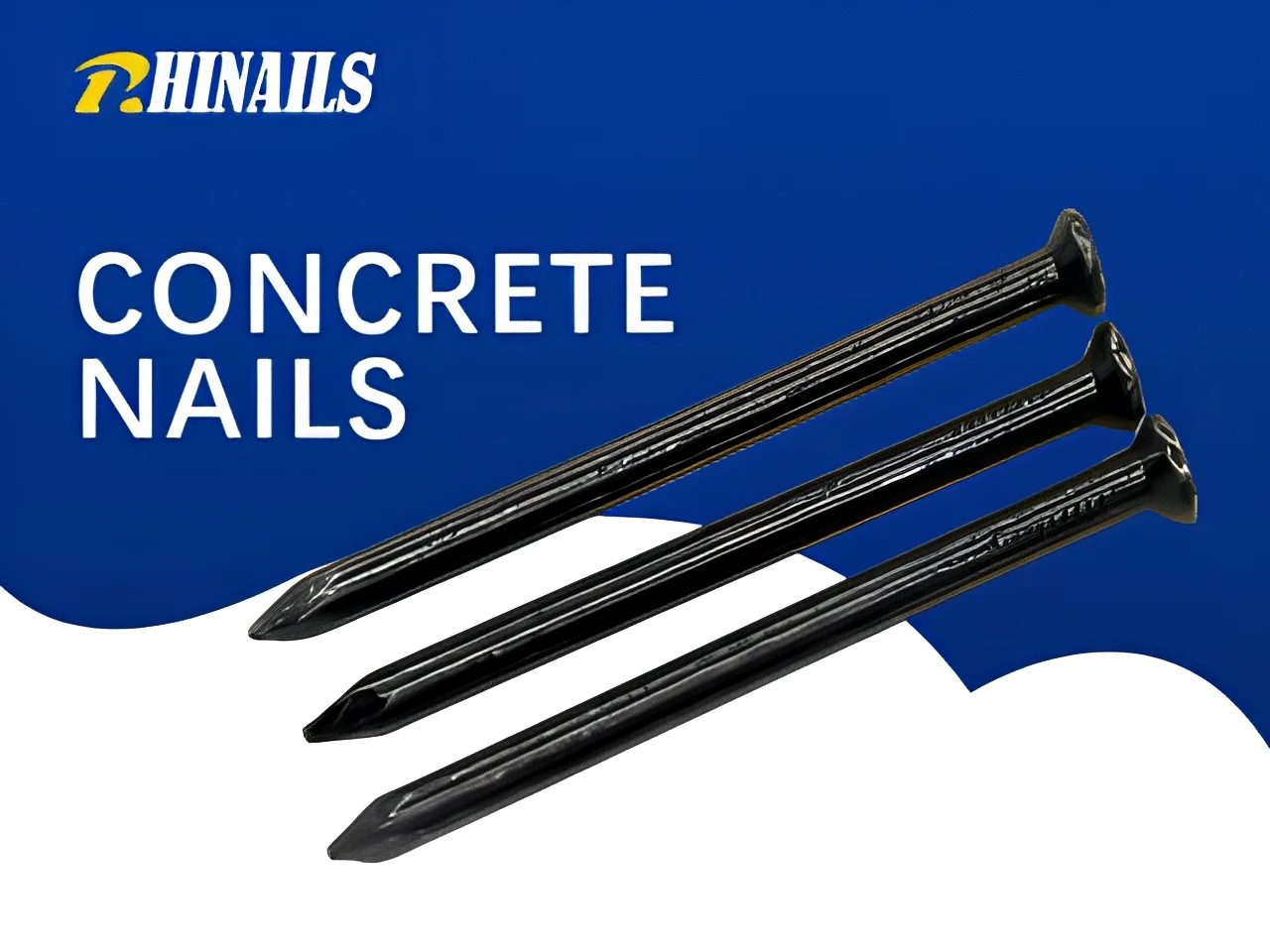
Fig. 1 - Rhinails black phosphated concrete nails: forged from 55# high-carbon steel with heat-treated HRC 50-54 core hardness to drive into cured aggregate without bending.
Concrete is a composite of sand, cement paste, and hard crushed stone aggregate.
Driving a fastener forces cured matrix outward by displacement.
If the steel is too soft, the shank collapses into an S-curve on the first strike.
If the nail is driven too close to a slab edge (under 3 inches), radial expansion cracks blow out a cone of concrete called a spall.
Choosing the correct shank geometry decides whether your fastener locks tight or rattles loose after cyclic vibration.
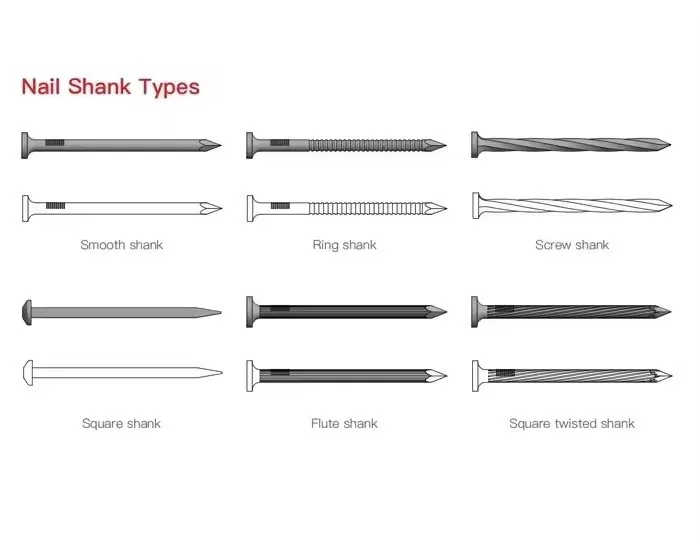
Fig. 2 - Technical overview of nail shank types: smooth, ring, screw, square, flute, and square twisted profiles engineered for specific holding requirements.
Shank Type & Geometry | Grip Mechanism | Best Substrate & Masonry Application | Pull-Out Resistance |
Fluted / Vertical Grooves | Longitudinal ridges slice into concrete matrix and resist rotation | Cinder block, mortar joints, brick, poured foundation walls | Highest shear & vibration resistance |
Smooth Shank | Direct friction fit against displaced concrete aggregate | Dense, fully cured solid floor slabs (over 3,500 psi) | High initial friction; lower cyclic vibration resistance |
Spiral / Twisted Shank | Turns like a screw as it enters, reducing entry impact shock | Hollow brick, aerated autoclaved concrete (AAC), green concrete | Balanced holding power; minimizes edge breakout |
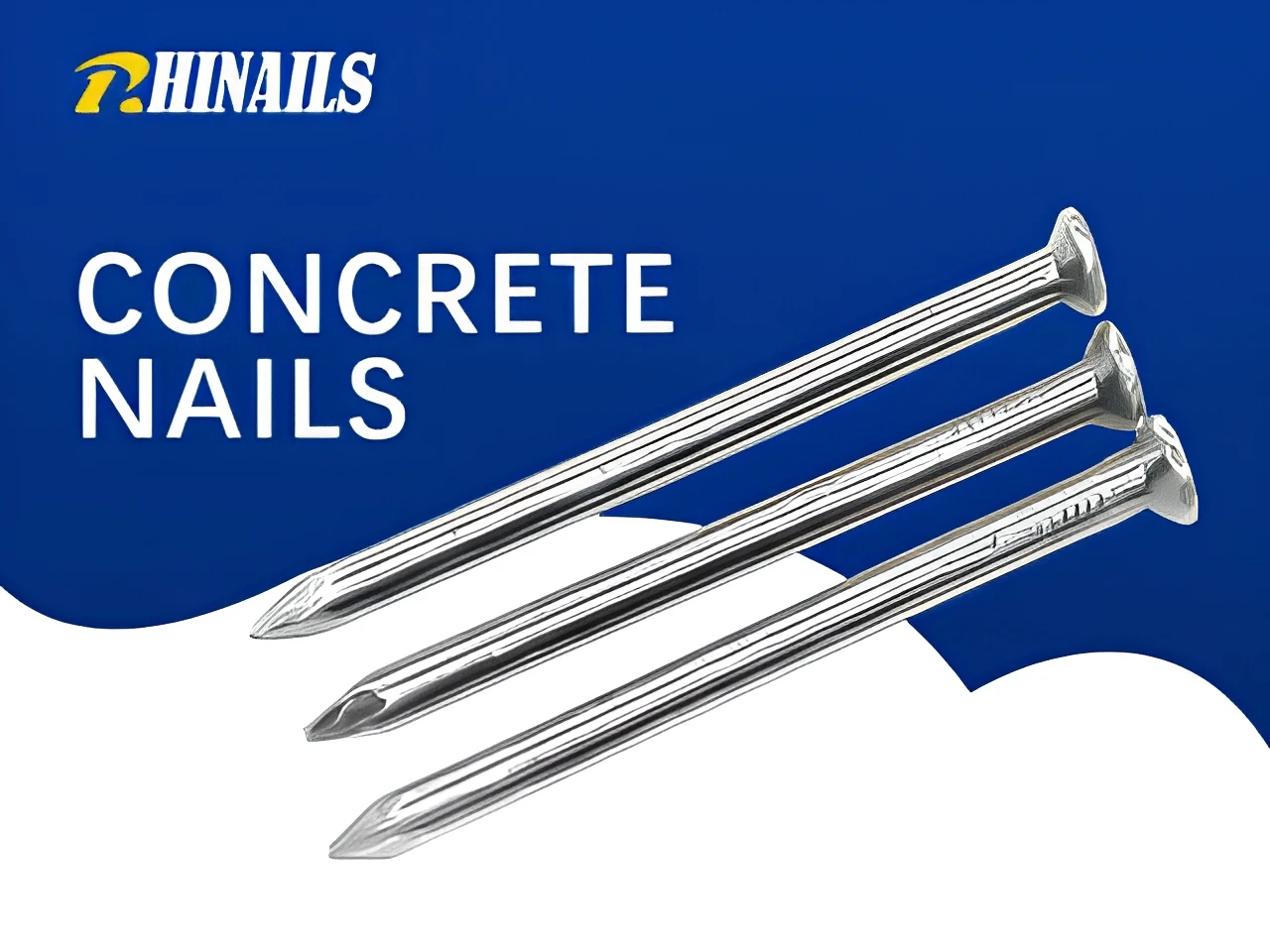
Fig. 3 - Rhinails galvanized concrete nails: electro-galvanized zinc coating over hardened carbon steel protects exterior masonry fixings from rust.
To set concrete nails securely on the first attempt, follow these field guidelines:
A light 16 oz claw hammer bounces off hardened steel, glancing sideways and bending the head.
Use a 24 oz framing hammer or a 2 to 3 lb hand drilling sledge.
Deliver solid, square blows straight down the shank centerline.
Strike with three or four confident swings rather than ten glancing taps.
A concrete nail does not hold by depth; it holds by radial friction compression.
For attaching 2x4 furring strips (1-1/2 in thick) to concrete, choose a 2-1/4 in or 2-1/2 in nail.
That leaves 3/4 in of shank embedded into the concrete matrix.
Going beyond 1 in of embedment risks striking large coarse aggregate stones, which deflects the tip and fractures the slab surface.
Never drive a concrete nail within 3 inches (75 mm) of a slab corner, step edge, or block seam.
The outward hydraulic-like expansion force will fracture the unsupported concrete edge.
If edge nailing is unavoidable, pre-drill a small 1/8 in pilot hole through the top 1/2 in of masonry.
When fixing timber to older brick walls:
Target the mortar joint for non-structural furring (easier driving, lower brick fracture risk).
Target the brick face for heavier brackets, keeping at least 2 inches away from brick edges.
Avoid hollow-core brick faces without pre-drilling.
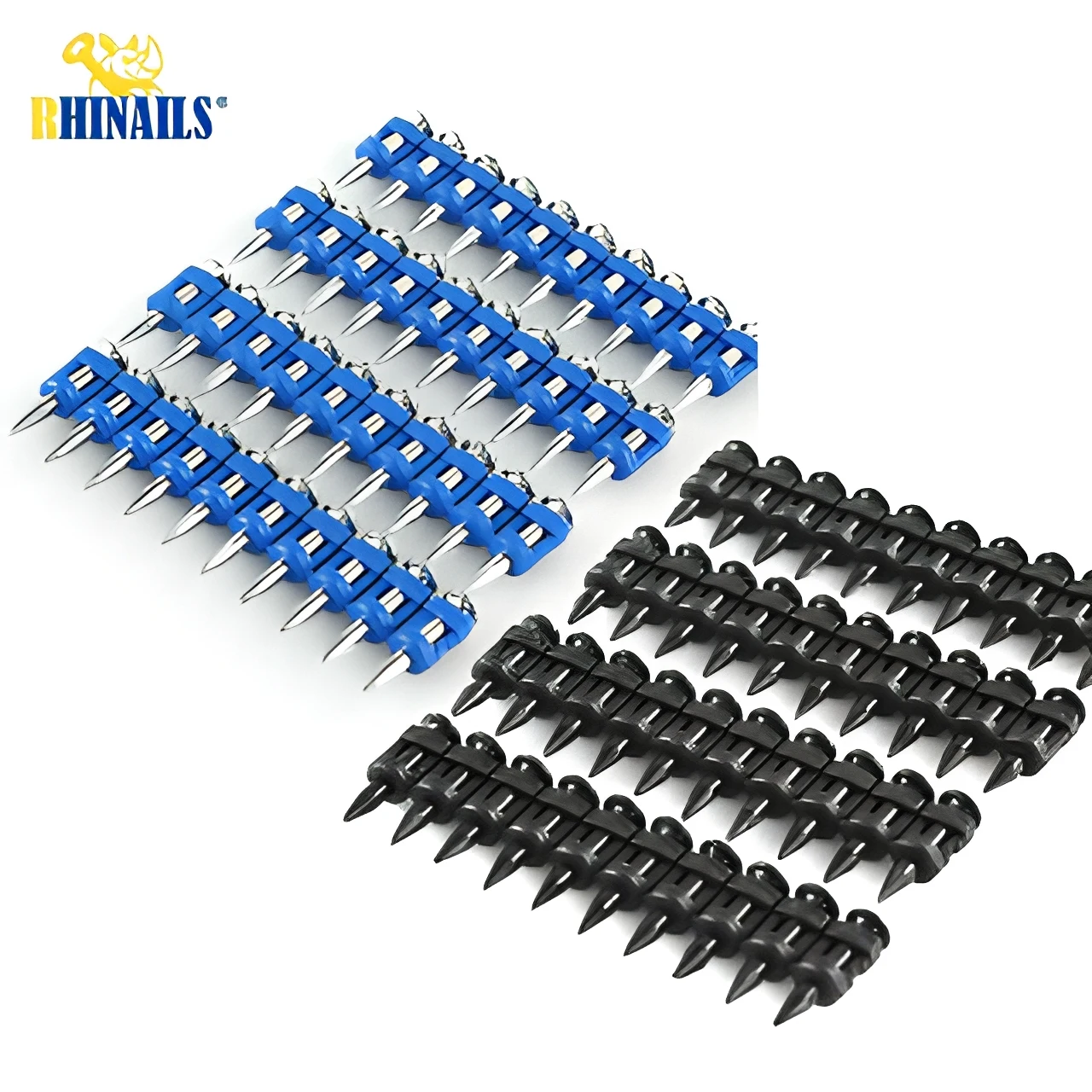
Fig. 4 - Rhinails collated concrete pins: 10-shot plastic strips for high-speed gas and powder-actuated drywall track installation.
Application | Material Being Fastened | Recommended Nail Size | Minimum Concrete Embedment |
Basement Furring Strips | 1x2 or 1x3 Pine (3/4 in) | 1-1/2 in (38 mm) Fluted | 3/4 in (19 mm) |
Sole Plates on Slab | 2x4 Framing Lumber (1-1/2 in) | 2-1/2 in (64 mm) Fluted | 3/4 in to 1 in (20-25 mm) |
Electrical Conduit Straps | Steel EMT 1-hole strap | 1 in (25 mm) Smooth / Fluted | 5/8 in to 3/4 in (16-19 mm) |
Carpet Tack Strips | Plywood strip (1/4 in) | 1 in (25 mm) Galvanized | 5/8 in (16 mm) |
Steel Drywall Track | 25-gauge track flange | 3/4 in to 1 in Gas Pin | 1/2 in to 5/8 in (13-16 mm) |
Thirty years of cold-heading and heat-treatment manufacturing highlights four quality controls for commercial buyers:
Carbon Steel Grade (55# or 60#): Re-rolled wire must contain 0.52% to 0.60% carbon to support through-hardening. Low-grade 45# wire is brittle and bends in dense mixes.
Controlled Quench Hardness (HRC 50-54): Hardness above HRC 56 creates dangerous flying shards on hammer impact. Hardness below HRC 48 bends in 3,500 psi concrete.
Concentric Diamond Point: Off-center four-sided diamond points steer the nail off-axis on entry, promoting lateral bending.
Corrosion Barrier: Black phosphate finishes absorb oil for indoor use; hot electro-galvanizing provides long-term barrier protection against damp basement walls.
Heavy-duty masonry & foundation walls - Hardened Concrete Nails Collection
High-carbon steel cement fasteners (25-150 mm) - 60# Carbon Steel Cement Nails
Galvanized silver masonry nails - OEM Silver Cement Nails
Gas & powder tool collated pins - Collated Concrete Pins
Full construction nail catalogue - Rhinails Masonry Nails Range
Q: Why do my concrete nails keep bending when hammered?A: Standard nails bend because low-carbon steel lacks required HRC 50-54 core hardness. Using a hammer lighter than 20 oz or delivering glancing, angled blows also causes the nail shank to buckle upon hitting stone aggregate. |
Q: How deep should a nail penetrate into concrete?A: Penetration between 5/8 in and 3/4 in (16 mm to 20 mm) provides maximum grip. Driving beyond 1 in in cured concrete fractures internal aggregate, reducing pull-out holding force and causing surface spalling. |
Q: Is a fluted shank better than a smooth shank for concrete?A: Yes. Fluted shanks have vertical grooves that slice into the concrete paste and anchor against rotational movement, delivering up to 35% higher resistance to pull-out under vibration than smooth shanks. |
Q: Do I need to pre-drill pilot holes for concrete nails?A: Quality hardened nails drive directly into block and concrete without pre-drilling. However, if working within 3 inches of an edge or into dense cured concrete above 4,000 psi, a small 1/8 in pilot hole prevents cracking. |
Q: What hammer is best for driving concrete nails?A: Use a 24 oz to 32 oz framing hammer or a 2 to 3 lb hand drilling sledge. Lighter claw hammers bounce off hardened steel, causing glancing hits that bend the nail and create dangerous flying chips. |
Rhinails is a fastener manufacturer with 30 years of industrial production experience, supplying hardened concrete nails, masonry fasteners, coil nails, and pneumatic tools to commercial contractors and distributors in over 40 countries. Our concrete fasteners are produced from premium 55# and 60# high-carbon steel, precision heat-treated to HRC 50-54, and finished with high-durability black phosphate or electro-galvanizing. Every lot undergoes strict 90-degree bend testing, penetration drive checks, and case-depth verification. Contact us to request product specification sheets, factory-direct bulk pricing, or evaluation sample packs.


