
- All
- Product Name
- Product Keyword
- Product Model
- Product Summary
- Product Description
- Multi Field Search
Views: 0 Author: Rhinails Publish Time: 2026-11-05 Origin: Site


For 3/4 in solid hardwood flooring (Red Oak, White Oak, Maple), use 16-gauge barbed L-cleats or T-cleats: their ribbed edges allow seasonal wood expansion without backing out, preventing the floor squeaks that plague stapled solid planks.
For 3/8 in to 1/2 in engineered hardwood, use 18-gauge narrow-crown staples (such as 90/K-series, 1/4 in crown): the dual slender prongs penetrate fragile plywood cores without splitting the tongue.
When blind-nailing over OSB subfloors, cleats retain up to 35% more holding power over time than staples.
A squeaking floor is not caused by the surface boards rubbing against each other. In more than 80% of callbacks, it is the fastener moving inside the subfloor hole.
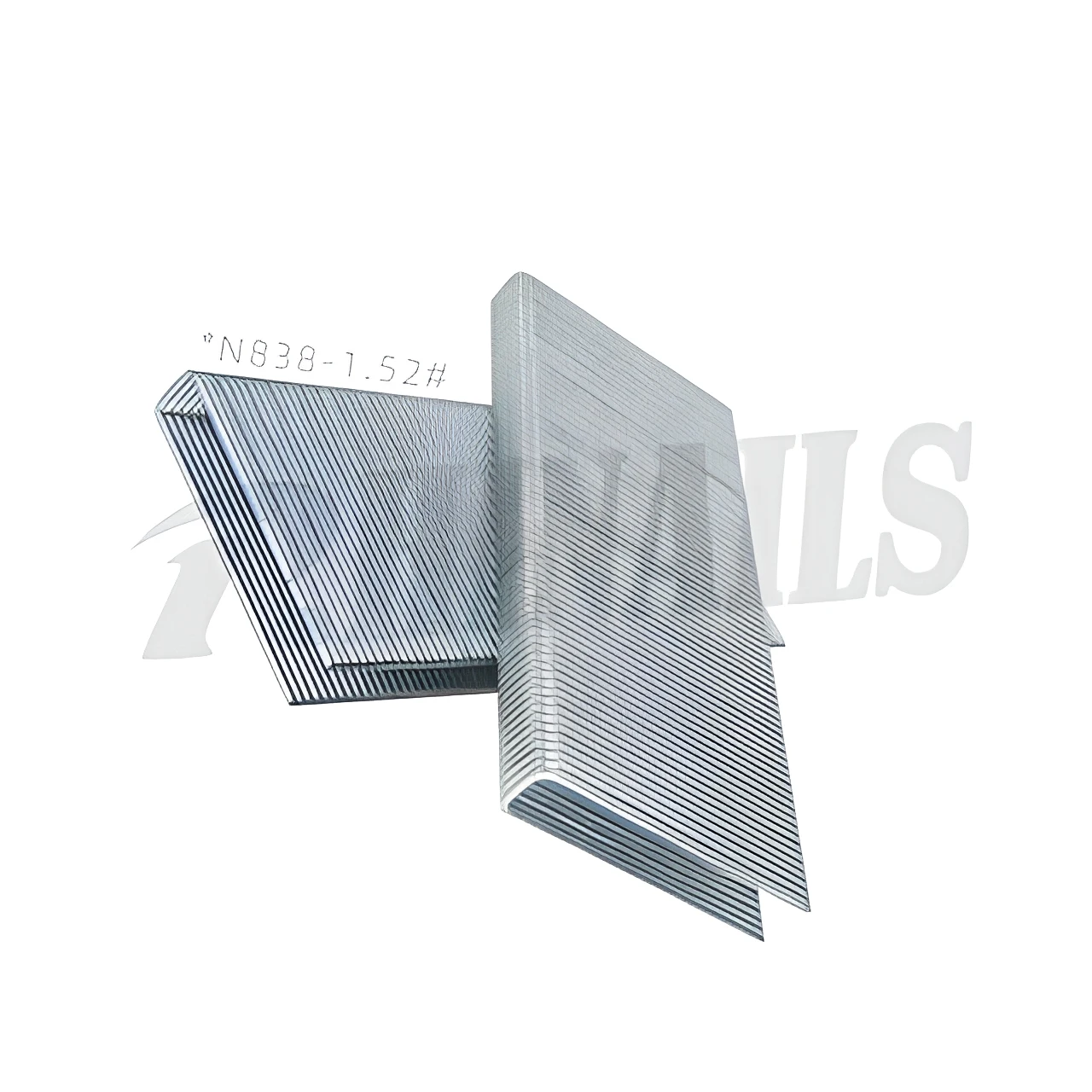
Fig. 1 - Rhinails N-series 16-gauge staples: 7/16 in medium crown delivers maximum initial grip for plywood subflooring, sheathing, and structural framing.
Wood is hygroscopic: it swells in humid summers and shrinks in dry heated winters.
Solid wood planks expand and contract laterally across their width.
A staple has two rigid vertical legs driven at 45 degrees through the tongue.
As the plank expands sideways, it applies bending leverage against both staple legs.
Over 2 to 3 seasonal cycles, the staple legs wallow out an enlarged oval hole in the subfloor.
When someone walks on the plank, the loose staple slides up and down inside the loose hole, producing a high-pitched squeak.
Flooring cleats (L-cleats and T-cleats) are single-shank steel blades stamped with directional barbs along their edges:
The flat blade of a cleat is oriented parallel to the length of the board.
When the plank swells or shrinks seasonally across its width, the cleat shank can flex slightly with the wood.
The stamped barbs bite into the subfloor fibers like fishhooks, preventing vertical back-out.
The result: zero vertical creep, zero loose holes, and a silent floor for decades.
Feature / Performance Metric | Flooring Cleats (16-Gauge L/T) | Flooring Staples (15.5-Gauge Crown) | Narrow-Crown Staples (18-Gauge 90/K) |
Fastener Profile | Single flat barbed steel blade | Two parallel round wire legs | Two slender fine-wire legs |
Fastener Thickness | 16-gauge (1.6 mm / 0.063 in) | 15.5-gauge (1.8 mm / 0.070 in) | 18-gauge (1.2 mm / 0.047 in) |
Initial Holding Power | High mechanical barb grip | Extremely high initial grip | Moderate; tailored for thin cores |
Response to Seasonal Wood Movement | Flexes with lateral wood movement | Rigid prongs wallow out oval holes | Fine wire gives with engineered ply |
Risk of Squeaking After 2 Years | Very low; barbs prevent back-out | Moderate to High in solid oak | Low in engineered planks |
Risk of Splitting Tongue | Low; single blade slices grain | Higher; two prongs wedge the tongue | Lowest; fine wire preserves core |
Best Wood Substrate | 3/4 in solid hardwood | 3/4 in solid (budget) / subflooring | 3/8 in - 1/2 in engineered wood |
Best Subfloor Type | 3/4 in Plywood or 23/32 in OSB | 3/4 in CDX Plywood only | Plywood, OSB, sound underlayment |
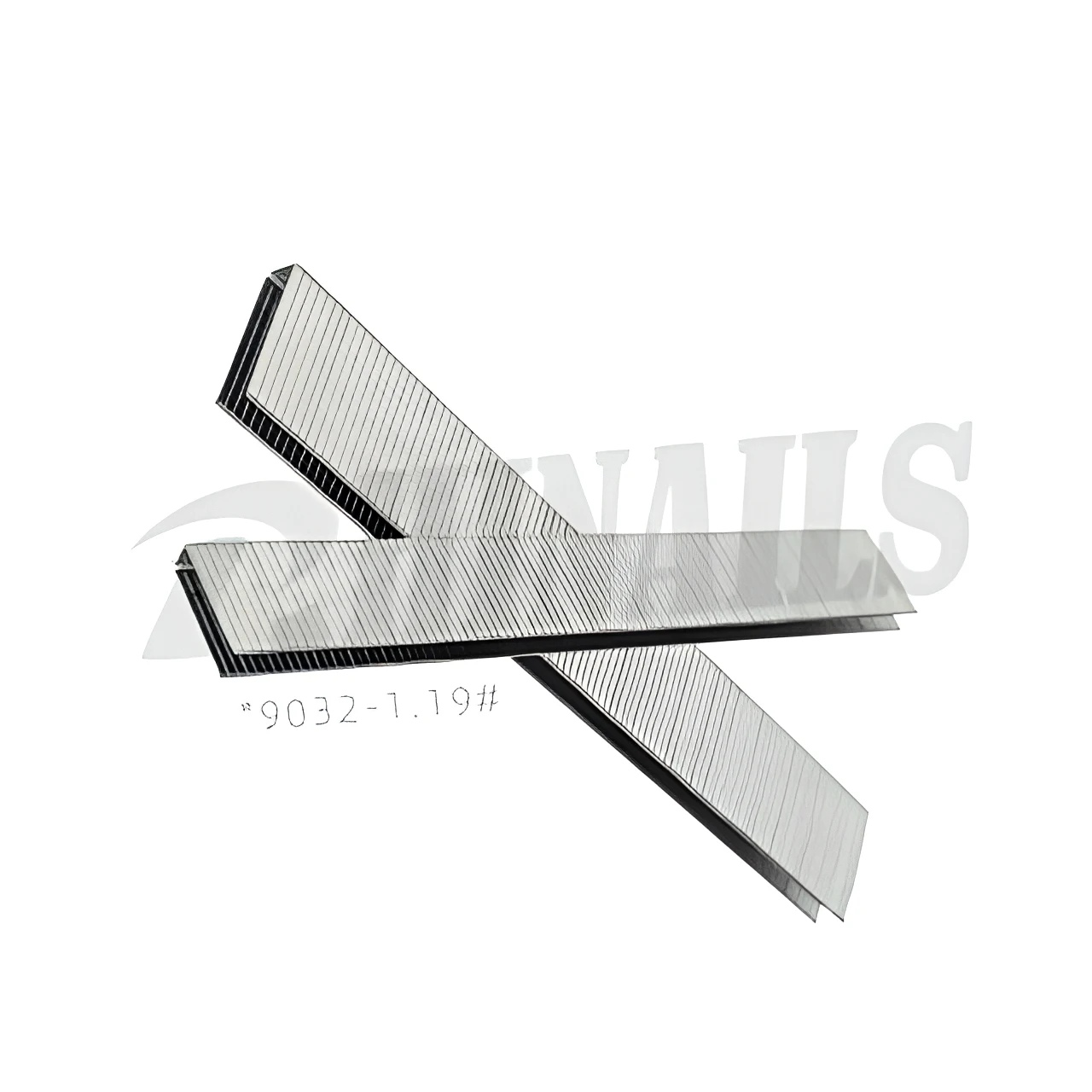
Fig. 2 - Rhinails 90/K-series 18-gauge narrow crown staples: 1/4 in narrow crown specifically engineered for blind-nailing fragile tongues on engineered hardwood and bamboo flooring.
While cleats dominate solid hardwood, they can ruin engineered wood flooring:
Engineered planks feature a thin hardwood wear layer (2 mm to 4 mm) glued over multi-ply birch or HDF.
The milled tongue on engineered planks is significantly thinner and more brittle than solid lumber.
A heavy 16-gauge cleat struck with a flooring mallet delivers enough kinetic shock to shatter the plywood tongue completely.
Once the tongue splits, the plank loses its locking edge and bounces underfoot.
The manufacturer-specified fastener for engineered flooring is the 18-gauge narrow-crown staple (1/4 in crown, 1-1/4 in to 1-1/2 in long). The dual thin legs slip through the core without splitting the veneer.
Sourcing Professional Flooring Staples & Brads Direct?Rhinails manufactures industrial-grade N-series (16ga) subfloor staples, 90/K-series (18ga) narrow-crown flooring staples, and 4J-series underlayment staples with strict +/- 0.01 mm tolerances. |
The subfloor beneath the hardwood plays a decisive role in fastener retention:
3/4 in (23/32 in) CDX Plywood: Cross-laminated veneer layers provide continuous grain in two directions. Both cleats and staples hold exceptionally well.
23/32 in Oriented Strand Board (OSB): Compressed wood strands glued with resin have localized density variations. Staples driven into OSB experience up to 30% lower fatigue pull-out resistance over five years compared to plywood.
The rule for OSB subfloors: If your jobsite features OSB subflooring, choose barbed cleats or supplement with an elastomeric flooring adhesive (glue-assist installation).
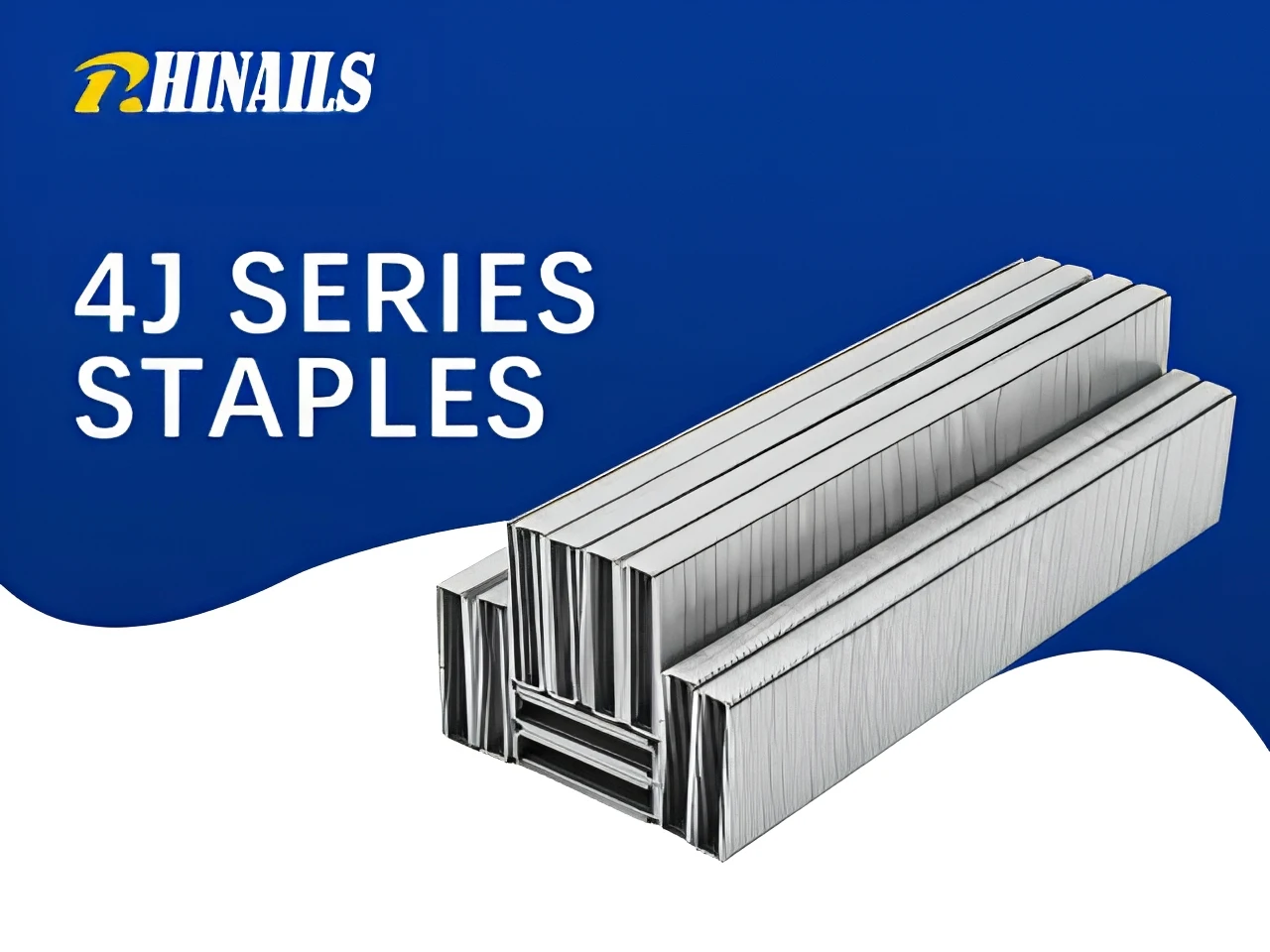
Fig. 3 - Rhinails 4J-series 20-gauge staples: compact crown profile ideal for securing felt underlayment, rosin paper, and thin acoustic subfloor pads.
Flooring Material | Board Thickness | Board Width | Recommended Fastener | Recommended Length | Fastener Spacing Along Plank |
Solid Red / White Oak | 3/4 in (19 mm) | Under 4 in (100 mm) | 16-Gauge L-Cleats | 2 in (50 mm) | Every 8 to 10 inches; 3 in from ends |
Solid Wide Plank Hardwood | 3/4 in (19 mm) | Over 5 in (125 mm) | 16-Gauge L-Cleats + Glue Assist | 2 in (50 mm) | Every 6 to 8 inches + serpentine glue |
Dense Exotic Hardwood | 3/4 in (19 mm) | Any width | 16-Gauge L-Cleats | 1-1/2 in to 1-3/4 in | Every 6 to 8 inches (prevents tongue curl) |
Engineered Hardwood | 1/2 in (12.7 mm) | 3 in to 7 in | 18-Gauge Narrow-Crown (90/K) | 1-1/4 in to 1-1/2 in | Every 6 to 8 inches; 2 in from ends |
Thin Engineered / Bamboo | 3/8 in (9.5 mm) | 3 in to 5 in | 18-Gauge Narrow-Crown (90/K) | 1-1/4 in (32 mm) | Every 4 to 6 inches (avoid splitting) |
Plywood Subfloor to Joists | 3/4 in (19 mm) | Subfloor panel | 16-Gauge N-Series Staples | 1-3/4 in to 2 in | Every 6 inches on edges, 12 in on joists |
Thirty years of collated fastener export highlights four technical benchmarks for flooring contractors and wholesale buyers:
Precision 45-Degree Nose Seating: Flooring tools fire at a fixed 45-degree angle into the plank tongue pocket. Fasteners must feature clean collation without glue flash that tilts the nail in the magazine.
Barb Geometry on Cleats: Cleat edge serrations must be sharp and directional. Rounded or stamped-over barbs slide through wood fibers without locking.
Tensile Wire Hardness for Staples: Flooring staples must be drawn from stiff, cold-worked carbon steel with tensile strength above 1,000 N/mm2. Soft wire crumples inside dense oak tongues.
Resin-Coated Legs for Extra Grip: Quality flooring staples carry a heat-activated polymer coating along their lower shank that melts under driving friction and bonds permanently to subfloor wood fibers.
16-Gauge vs 18-Gauge Finish Nailer: Which Do You Need for Trim & Cabinets?
Cordless Nailer Won't Sink Nails? Diagnostic Troubleshooting Guide
16-gauge heavy crown subfloor staples - N-Series Staples Collection
18-gauge narrow crown engineered flooring staples - 90/K-Series Staples Collection
20-gauge underlayment paper staples - 4J-Series Staples Collection
Heavy framing and coil nails - Rhinails Coil Nails Overview
All fastener categories - Complete Rhinails Catalogue
Q: Why do staples cause squeaking in solid hardwood floors?A: Solid wood expands and contracts across its width with seasonal humidity. This lateral force bends rigid staple legs, enlarging the subfloor hole. Over time, the loose staple slides vertically when stepped on, causing squeaks. |
Q: Can I use 16-gauge cleats on engineered hardwood flooring?A: Usually no. The impact of a heavy 16-gauge cleat can shatter fragile plywood or HDF tongues on engineered planks under 1/2 in thick. Use 18-gauge narrow-crown staples (such as 90/K-series) unless specified by the flooring maker. |
Q: Are L-cleats or T-cleats better for hardwood flooring?A: Both deliver identical holding power and expansion resistance. L-cleats feature a hooked head that seats easily, while T-cleats have a symmetrical head. Choose based on your flooring nailer manufacturer specifications. |
Q: Do cleats hold well in OSB subflooring?A: Cleats hold significantly better than staples in OSB because their barbed ribs resist back-out. However, for wide planks (over 5 in) over OSB, the National Wood Flooring Association (NWFA) recommends a glue-assist installation. |
Q: What length cleats should I use for 3/4 in solid hardwood?A: Standard 2 in (50 mm) cleats are the universal choice for 3/4 in solid flooring over 3/4 in subflooring. If nailing over concrete slab with a 1/2 in plywood sleeper, drop down to 1-1/2 in (38 mm) cleats. |
Rhinails is a precision fastener manufacturer with 30 years of industrial export experience, supplying certified collated flooring staples, finish nails, framing fasteners, and pneumatic tools to commercial flooring contractors, millwork factories, and hardware distributors worldwide.
We produce 16-gauge N-series medium-crown staples, 18-gauge 90/K-series narrow-crown staples, and 20-gauge underlayment fasteners engineered with high-tensile carbon steel and moisture-resistant polymer coatings.
Every production lot undergoes strict dimensional tolerance inspection, collation peel testing, and withdrawal load verification.
Contact us to request flooring fastener specification sheets, container-load wholesale pricing, or jobsite evaluation sample packs.


