
- All
- Product Name
- Product Keyword
- Product Model
- Product Summary
- Product Description
- Multi Field Search
Views: 0 Author: Rhinails Fasteners Publish Time: 2026-10-21 Origin: Site


A cordless nailer stops sinking nails flush when one of three things happens: battery pack voltage sag under heavy load, excessive friction in the nose driver channel, or oversized fastener wire and glue collation dragging inside the magazine.
While a pneumatic tool delivers instant full-tank air burst on every cycle, battery-powered flywheel and sealed-nitrogen nailers have fixed mechanical energy reserves.
When nail dimensions drift even 0.03 mm over nominal tolerance, driving power drops and nail heads stand proud.
Pneumatic tools use shop air stored at 90 to 120 psi. When the trigger drops, compressed air acts instantly across the full piston head area.
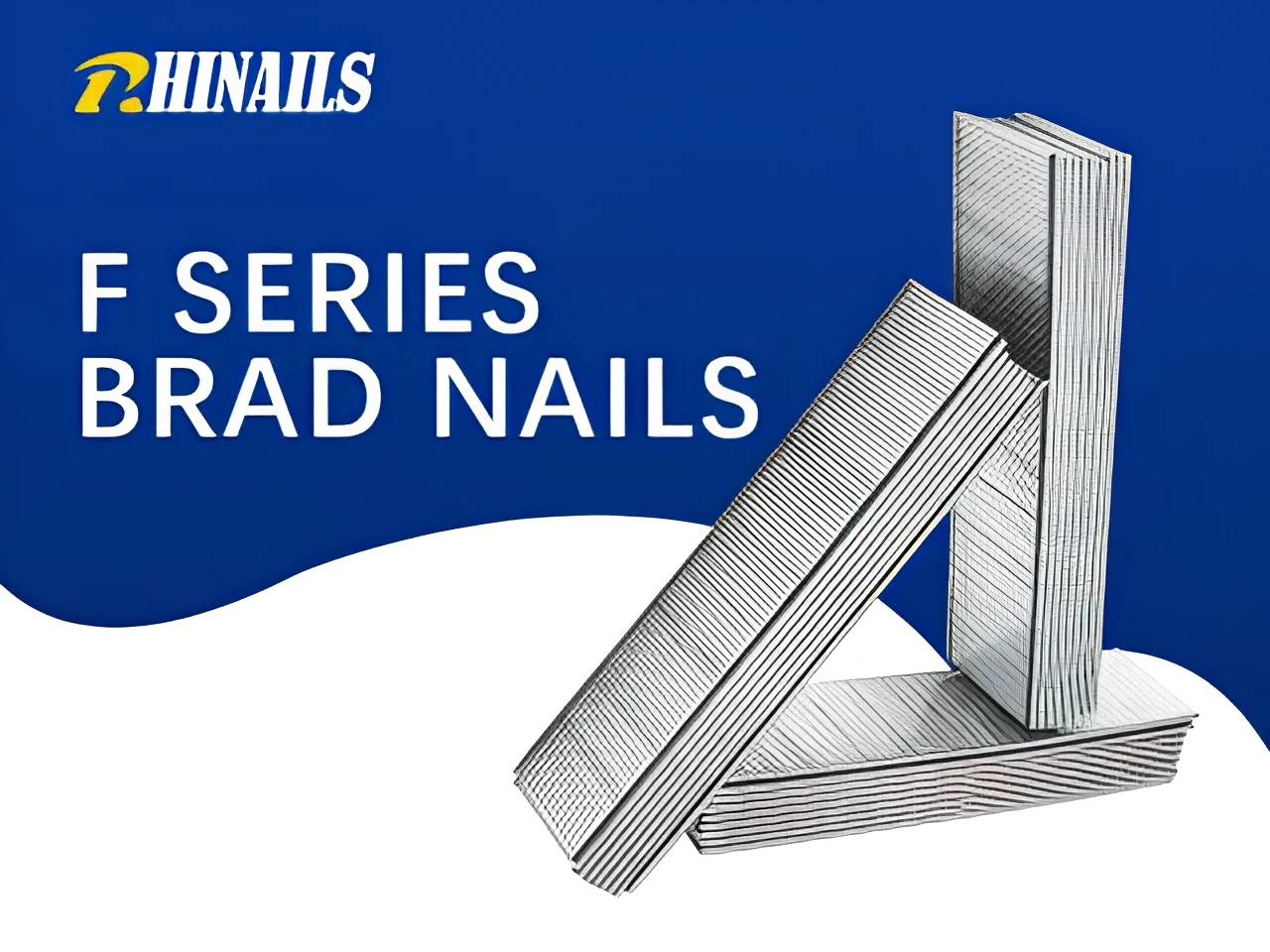
Fig. 1 - Rhinails F-series 18-gauge brad nails: consistent wire diameter (+/- 0.01 mm) ensures jam-free cycling in both cordless and pneumatic tools.
Cordless tools work through two distinct mechanisms:
Flywheel systems: An electric motor spins a heavy flywheel; a solenoid clutches the driver blade into the spinning mass to strike the nail.
Sealed nitrogen cylinders: A brushless motor draws a piston backward against a pressurized gas spring, releasing it to fire.
In both battery designs, available driving energy is fixed per shot. Any mechanical drag inside the magazine or nose channel consumes energy that should have driven the nail flush.
When your battery nail gun leaves proud heads, check these four areas before returning the tool:
Small 1.5 Ah and 2.0 Ah compact battery packs suffer severe voltage drop under the 30-amp burst drawn during a firing cycle.
Switch to a 4.0 Ah or 5.0 Ah high-output battery pack.
Larger packs have dual parallel cell banks that maintain stable voltage under instantaneous load.
If the tool sinks nails when the pack is hot off the charger but stalls after 30 shots, the battery cells are sagging.
A battery nailer nose channel has razor-thin operating clearances.
Cheap aftermarket brad strips often use wire that is 0.05 mm thicker than nominal 1.20 mm spec.
Excessive collation glue on the strip edges creates friction inside the nose guide.
The driver blade wastes 20% of its kinetic energy forcing the oversized fastener through the nose.
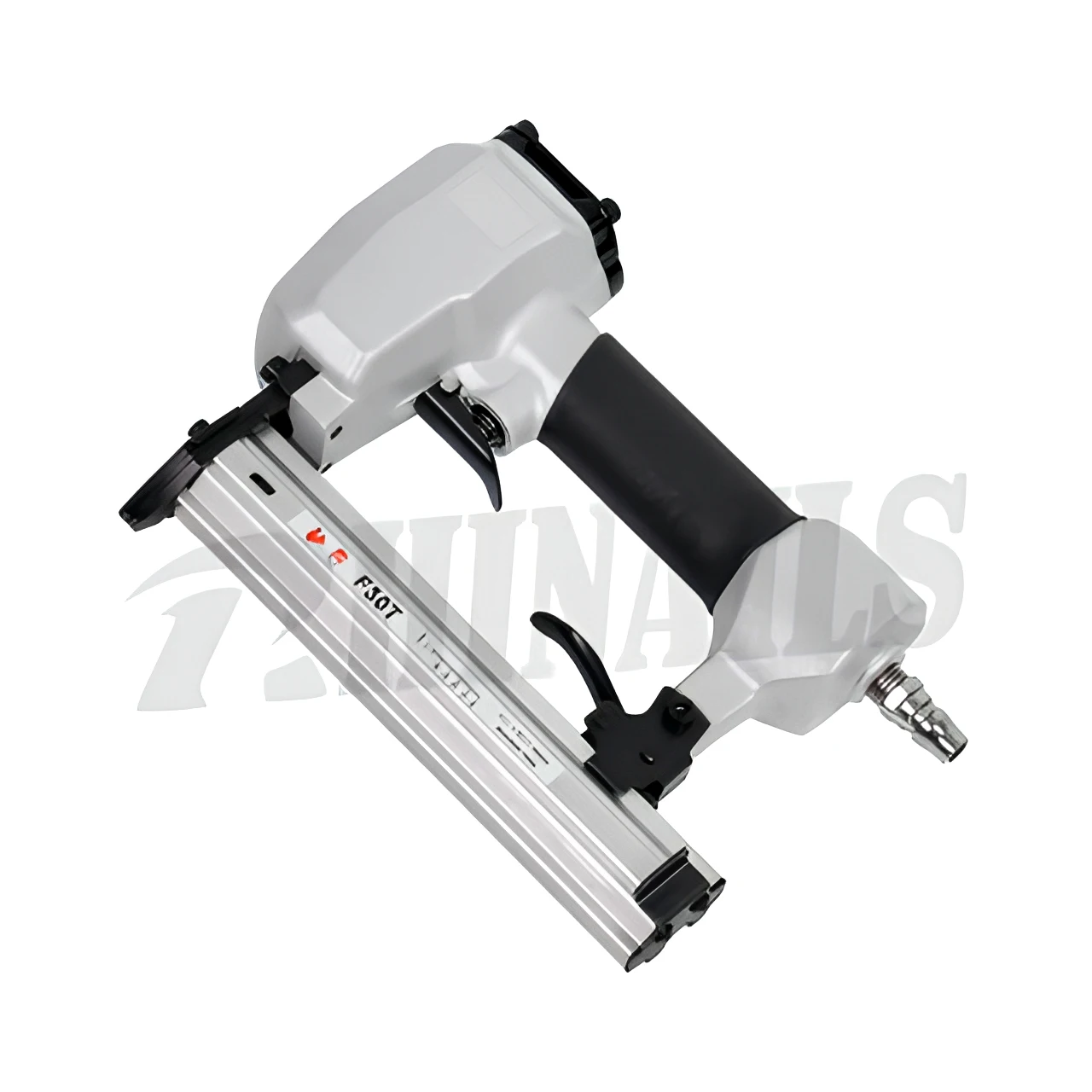
Fig. 2 - Rhinails F-series pneumatic nailer: lightweight design with zero cycle latency for high-production assembly lines.
Check the tool nose for glue residue and sawdust buildup:
Inspect the thumbwheel depth adjuster; vibration can back it out toward shallow drive.
Check the sliding safety contact bracket; if resin coats the slider, the tool cannot compress fully against the wood.
Clean the nose guide with dry silicone spray, not heavy motor oil that attracts sawdust.
Driving a 2 in brad into soft pine requires roughly half the kinetic force needed for kiln-dried hard maple.
In dense hardwoods (Oak, Maple, Hickory), step down nail length by 1/4 in if holding power permits.
Never fire directly through solid knots; deflects the nail tip and halts the driver blade mid-stroke.
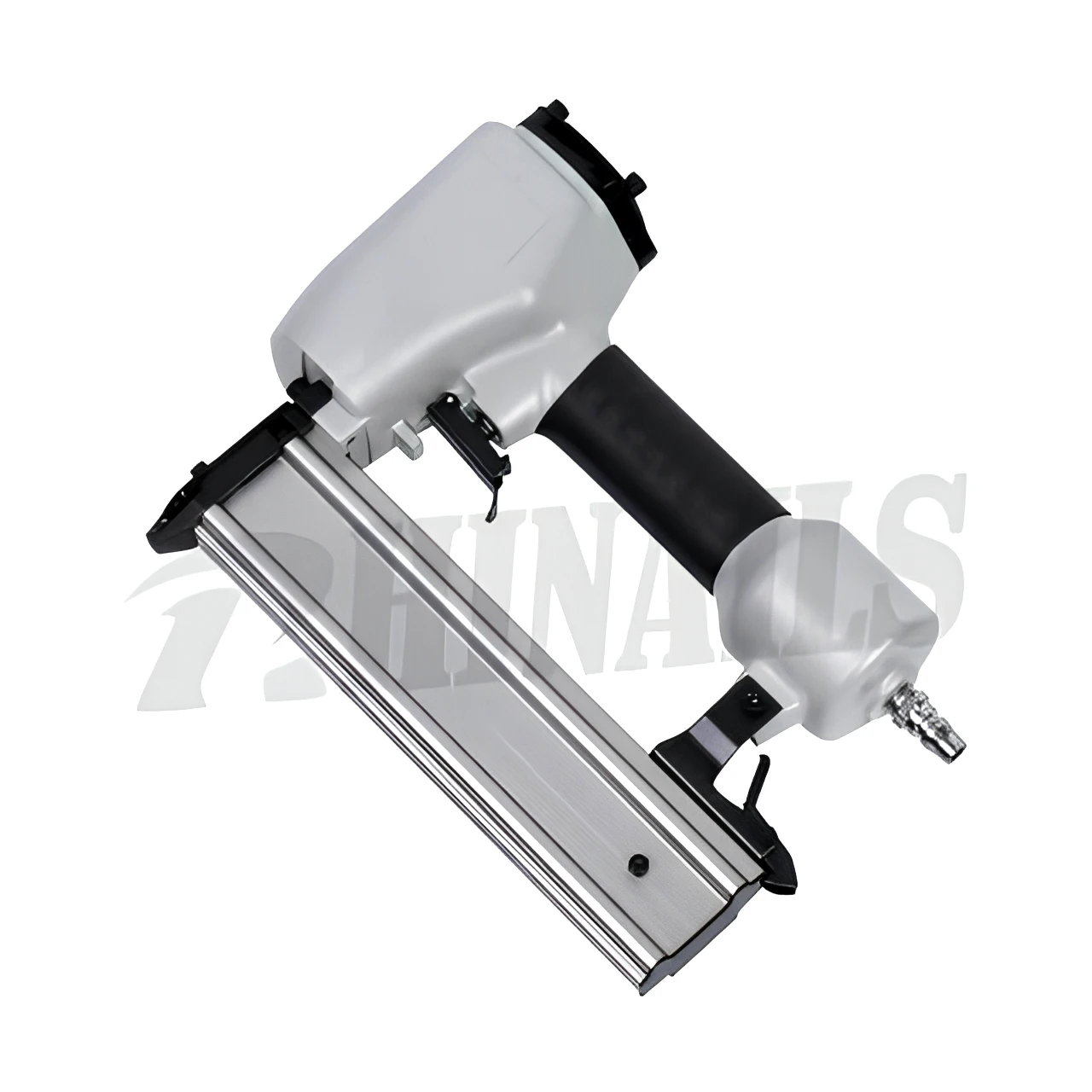
Fig. 3 - Rhinails T-series pneumatic nailer: 16-gauge power for dense hardwood framing where cordless tools frequently stall.
Symptom | Primary Cause | Immediate Solution |
Nails sink fine at first, then stand proud after 20 shots | Battery voltage sag in compact pack | Upgrade to 4.0 Ah or higher battery; avoid compact single-row packs |
Tool sounds like it fires, but driver blade stalls halfway | Dry nose guide or driver blade burr | Clean magazine track; apply dry PTFE lubricant to driver channel |
Nails stand proud only in dense hardwood | Tool energy capacity exceeded | Reduce nail length; switch to pneumatic tool for high-density species |
Double firing followed by jammed strip | Brittle collation glue shattering | Switch to high-tensile collated strips with flexible bonding glue |
Nail head flush on one side, proud on the other | Tool fired at an angle | Hold nailer dead-square (90 degrees) to the molding face |
Rhinails produces collated brad and finish nails specifically tested for modern battery and pneumatic tools:
Tight Dimensional Tolerances (+/- 0.01 mm): We draw wire through diamond dies to guarantee the driver blade contacts the nail head centered and flat.
Controlled Collation Film: We apply micro-metered bonding adhesive that shears cleanly upon impact, leaving zero residue inside the nose track.
High-Tensile Wire Core: Drawn from cold-hardened carbon steel with tensile strength above 1,100 N/mm2 to prevent column buckling in dense hardwood.
18-gauge brad nails (10 mm to 50 mm) - F-Series Brad Nails Collection
16-gauge heavy finish nails (20 mm to 64 mm) - T-Series Finish Nails Collection
Matched professional air nailers - Rhinails Pneumatic Tool Range
All fastener categories - Rhinails Fastener Overview
Q: Why does my cordless nailer sink nails when the battery is full but leave them proud later?A: Compact single-row battery packs (1.5 Ah - 2.0 Ah) suffer rapid voltage sag under repeated 30A motor draw. Switch to a 4.0 Ah or 5.0 Ah dual-row battery pack to sustain peak strike energy throughout the charge. |
Q: Can cheap nails cause a cordless nailer to stall?A: Yes. Inconsistent wire diameter and heavy collation glue create severe mechanical friction inside the tight nose guide. The driver blade expends kinetic energy pushing the oversized strip rather than sinking the nail. |
Q: Do cordless nailers have as much power as pneumatic nailers?A: Quality cordless nailers match pneumatic power for single shots in standard softwoods. However, pneumatic tools maintain full driving force indefinitely through compressed air tanks, whereas cordless tools lose power as batteries deplete or motors heat up in hardwoods. |
Q: Should I lubricate a cordless nail gun magazine?A: Use only dry PTFE or silicone spray. Never use wet pneumatic tool oil or grease in a cordless nailer magazine, as liquid oil attracts sawdust and creates a sticky sludge that jams the driver blade. |
Q: What is the maximum nail length for an 18-gauge cordless brad nailer?A: Most 18-gauge cordless brad nailers handle up to 2-1/8 in (54 mm) nails. In dense hardwoods like oak or maple, nails longer than 1-1/2 in (38 mm) may require a pneumatic tool to sink flush consistently. |
Rhinails is a fastener and pneumatic tool manufacturer with 30 years of industrial export experience. We supply precision collated brad nails, finish nails, staples, and coil nails to commercial trim contractors, furniture factories, and hardware importers worldwide. Every production lot is verified for wire tensile strength, dimensional tolerances, and smooth feeding across major cordless and pneumatic tool platforms. Contact us to request fine-finish fastener specification sheets, bulk container pricing, or evaluation samples.


