
- All
- Product Name
- Product Keyword
- Product Model
- Product Summary
- Product Description
- Multi Field Search
Views: 0 Author: Rhinials Publish Time: 2026-11-20 Origin: Site


The decisive difference between common nails and box nails of the same pennyweight (length) is shank diameter: a 16d common nail has a heavy 0.162 in (4.11 mm) diameter shank with 60% more steel area to resist lateral shear loads in structural 2x4 framing and shear walls (IRC Section R602.3), while a 16d box nail has a slender 0.128 in (3.25 mm) shank engineered to prevent splitting in thin lumber, cedar siding, and wooden shipping crates.
Both common nails and box nails follow the historic English pennyweight system (abbreviated as "d"), which indicates nail length from 2d (1 in) up to 16d (3-1/2 in) and 20d (4 in).
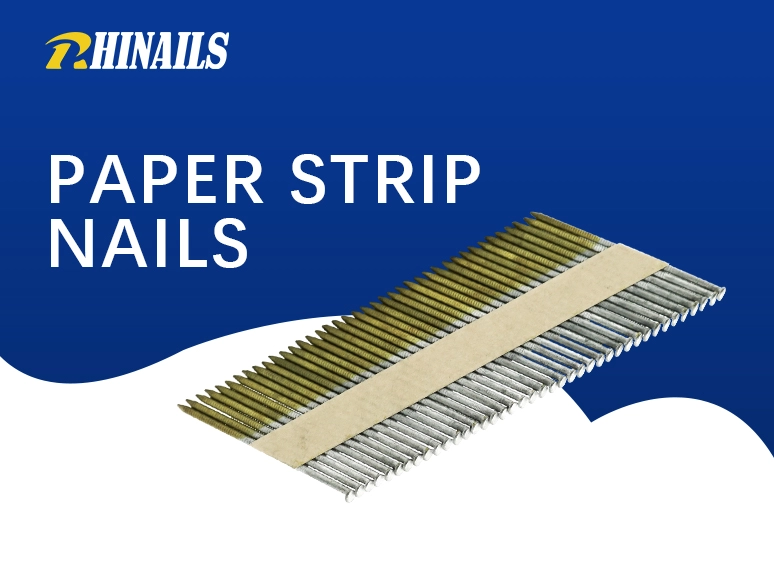
Fig. 1 - Rhinails paper strip nails: cold-drawn wire nails collated at 30 to 34 degrees for pneumatic framing guns, manufactured to strict ASTM F1667 shank diameter tolerances.
However, penny size does not specify shank thickness:
A 16d common nail and a 16d box nail are both exactly 3-1/2 inches (89 mm) long.
But the 16d common nail measures 0.162 in (8-gauge / 4.11 mm) in diameter, while the 16d box nail measures only 0.128 in (10-gauge / 3.25 mm).
That 0.034 in difference gives the common nail 60% more cross-sectional steel volume, translating directly into 45% higher shear load capacity.
Fastener Specification | Common Wire Nails (ASTM F1667) | Box Wire Nails (ASTM F1667) | Sinker Nails (Framing Hybrid) |
16d Shank Diameter | 0.162 in (4.11 mm / 8 ga) | 0.128 in (3.25 mm / 10 ga) | 0.148 in (3.76 mm / 9 ga) |
16d Nail Length | 3-1/2 in (89 mm) | 3-1/2 in (89 mm) | 3-1/4 in (83 mm) |
Head Diameter (16d) | 11/32 in (8.7 mm) flat smooth | 9/32 in (7.1 mm) flat smooth | 17/64 in (6.7 mm) checkered countersunk |
Shear Load Capacity | Maximum (code-mandated) | Low (35-45% less shear capacity) | Moderate-High (IRC approved alternate) |
Wood Splitting Tendency | High in dry or thin lumber | Very Low; slender shank glides in | Low (slender shank + checkered head) |
Coating Availability | Bright, Electro-Galv, Hot-Dip (HDG) | Bright, Electro-Galvanized | Vinyl / Cement friction-melt coating |
Primary Construction Role | Structural framing, joists, shear walls | Crates, pallets, cedar lap, light trim | High-production 2x4 framing, subflooring |
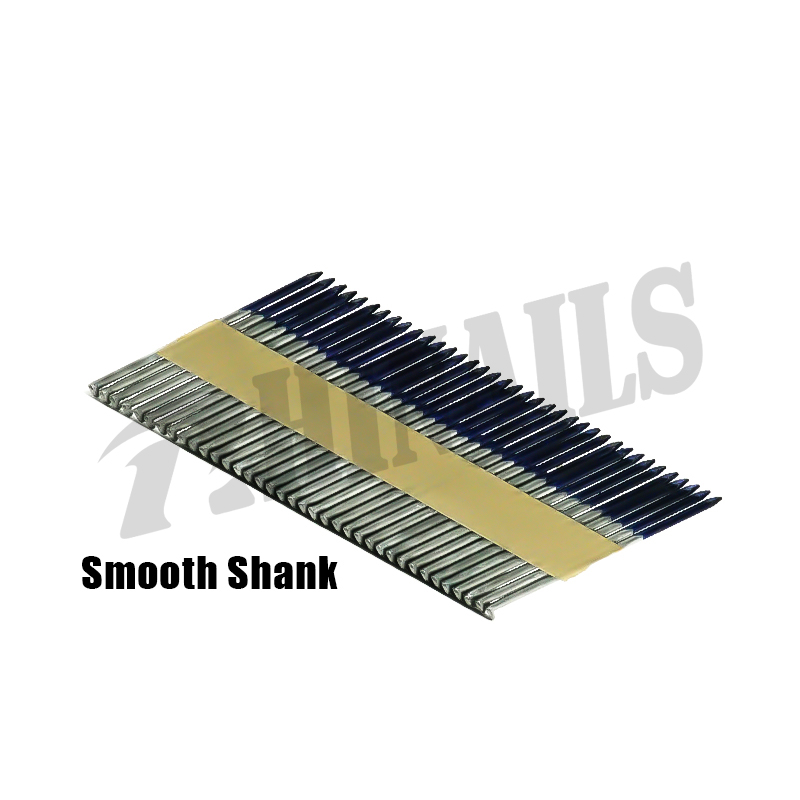
Fig. 2 - Rhinails smooth shank wire nails: cold-forged from Q235 carbon steel with balanced diamond points and concentric flat heads for structural wood-to-wood framing.
Under the International Residential Code (IRC Section R602.3, Fastening Schedule Table R602.3(1)), building inspectors specifically audit nail shank diameter:
In shear walls and floor diaphragms, earthquakes and hurricane wind gusts apply intense lateral racking forces.
The connection between wall studs and top plates relies entirely on the shank shear resistance of the steel.
If a framer substitutes cheaper 16d box nails (0.128 in) for 16d common nails (0.162 in), the structural shear strength drops by more than 40%.
Building inspectors using digital calipers will red-tag the frame, forcing the builder to sister framing studs or install structural hardware retrofit plates.
Box nails were historically invented for wooden crate and box manufacturing, where thin wood slats split easily:
Thin softwood slats (1/2 in to 5/8 in): Driving a thick common nail wedges wood grain apart like a splitting maul. A box nail slices cleanly through wood fibers without splitting board ends.
Exterior wood siding & cedar shakes: Cedar and redwood are brittle. Slender box nails hold siding courses flat without cracking pre-stained boards.
Temporary concrete formwork: Box nails are easier to drive by hand and easier to pry out with a claw hammer during form stripping.
Sourcing ASTM-Certified Framing & Wire Nails Direct from Factory?Rhinails produces certified 16d, 10d, and 8d common wire nails, box nails, and paper/plastic collated framing nails cold-drawn from Q235/1022A carbon steel with strict +/- 0.01 mm shank tolerances. Request a Factory Specification Sheet & Free Jobsite Evaluation Pack -> |
In high-volume residential framing across North America, carpenters frequently drive 16d sinkers instead of 16d common nails:
A 16d sinker measures 3-1/4 in long with a 0.148 in shank - slightly shorter and thinner than a true common nail, making it easier to drive with fewer bent shanks.
Checkered countersunk head: The funnel-shaped head sinks flush into 2x4 lumber without mushrooming surface wood.
Vinyl / Green cement coating: As the nail is driven into the stud, friction melts the resin coating, which lubricates entry and then cools to glue the steel to wood fibers, increasing withdrawal grip by 20% to 30%.
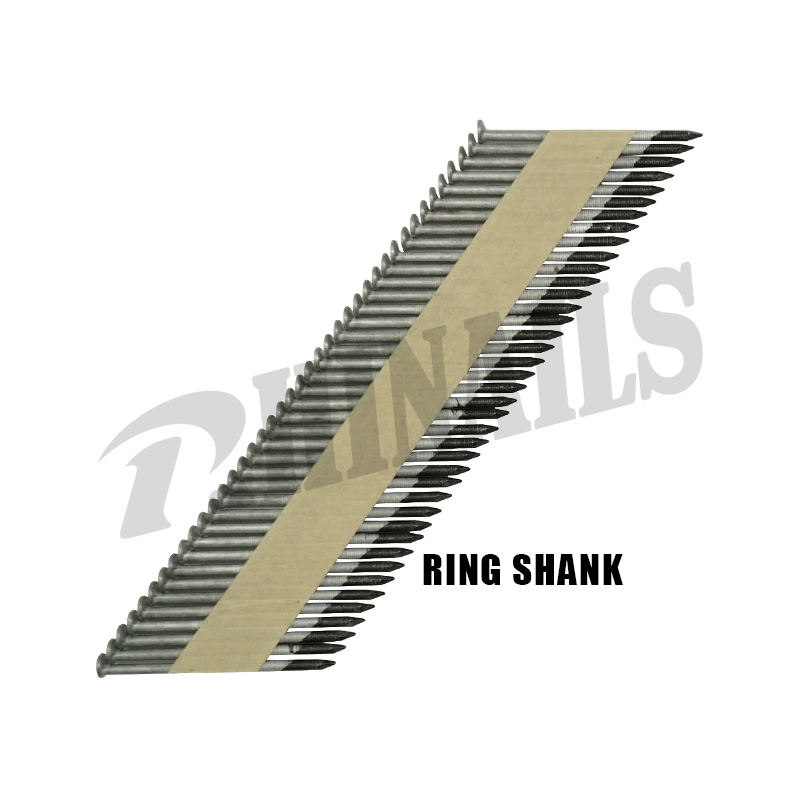
Fig. 3 - Rhinails offset round head ring shank nails: deformed annular ring profile delivers maximum withdrawal holding power where smooth common nails back out under wind vibration.
Penny Size | Nail Length (In / mm) | Common Nail Shank Diameter | Box Nail Shank Diameter | Typical Construction Application |
6d | 2 in (51 mm) | 0.113 in (2.87 mm) | 0.099 in (2.51 mm) | 3/8 in wall sheathing, wood siding, light boxes |
8d | 2-1/2 in (64 mm) | 0.131 in (3.33 mm) | 0.113 in (2.87 mm) | 7/16 in OSB roof sheathing, subfloor underlayment |
10d | 3 in (76 mm) | 0.148 in (3.76 mm) | 0.128 in (3.25 mm) | 2x4 framing to floor plates, interior partitions |
16d | 3-1/2 in (89 mm) | 0.162 in (4.11 mm) | 0.128 in (3.25 mm) | Load-bearing 2x4 / 2x6 framing, roof trusses, joists |
20d | 4 in (102 mm) | 0.192 in (4.88 mm) | 0.148 in (3.76 mm) | Heavy pole barn framing, timber beams, landscape ties |
Thirty years of industrial nail manufacturing highlights four technical controls commercial buyers should verify:
True Carbon Wire Caliber (+/- 0.01 mm): Budget manufacturers shave wire to 0.131 in and sell it as 16d common. Rhinails draws raw Q235 carbon wire through diamond dies to guarantee full 0.162 in structural thickness.
Concentric Flat Head Stamping: The nail head must be cold-forged centered over the shank centerline so pneumatic driver blades deliver balanced impact without bending the shank.
Diamond Point Geometry (ASTM F1667): Symmetrical four-sided diamond points pierce lumber cleanly without steering off-axis or splitting grain.
Hot-Dip Galvanized Zinc Thickness (45+ um): For exterior framing in contact with ACQ pressure-treated lumber, nails must carry true ASTM A153 Class D galvanizing.
The Real Cost of Cheap Framing Nails: Why Bargain Fasteners Cost More
16-Gauge vs 18-Gauge Finish Nailer: Which Do You Need for Trim?
30-34 degree paper tape framing nails - Paper Strip Nails Collection
21-degree plastic collated framing nails - Plastic Strip Nails Collection
High-capacity wire coil framing nails - Coil Nails Overview
Pneumatic framing and coil nailers - Rhinails Pneumatic Tool Range
All structural fasteners - Rhinails Complete Catalogue
Q: What is the main difference between common nails and box nails?A: Shank thickness. A 16d common nail has a thick 0.162 in shank for heavy structural framing shear strength. A 16d box nail has a slender 0.128 in shank designed to prevent wood splitting in thin crates and siding. |
Q: Can I use box nails for structural house framing?A: Generally no. Building codes (IRC Section R602.3) require common nails for shear walls and load-bearing framing. Box nails have 40% less shear capacity and may cause framing to fail structural inspection. |
Q: What is the diameter of a 16d common nail?A: A true 16d common nail has a shank diameter of 0.162 inches (4.11 mm) and a length of 3-1/2 inches (89 mm), forged under ASTM F1667 standards. |
Q: Why are they called box nails?A: Box nails were originally designed for assembling thin wooden shipping crates and fruit boxes. Their slender shank drove into fragile 1/2 in pine slats without splitting the wood edges. |
Q: What is the difference between a sinker nail and a common nail?A: A 16d sinker is slightly shorter (3-1/4 in) with a thinner shank (0.148 in) than a 16d common nail (3-1/2 in x 0.162 in). Sinkers feature a checkered countersunk head and vinyl coating for easier driving. |
Rhinails is a structural fastener manufacturer with 30 years of global export experience, supplying certified 16d/10d/8d common wire nails, box nails, paper strip framing nails, coil nails, and pneumatic tools to commercial lumberyards and framing contractors worldwide.
We produce high-tensile carbon steel nails with bright, electro-galvanized, and hot-dip galvanized (ASTM A153 Class D) finishes engineered to IRC Section R602.3 structural standards.
Every production lot undergoes strict dimensional tolerance inspection, shear-load testing, and jam-free pneumatic firing verification.
Contact us to request technical specification sheets, container-load wholesale pricing, or jobsite evaluation sample packs.


