
- All
- Product Name
- Product Keyword
- Product Model
- Product Summary
- Product Description
- Multi Field Search
Views: 0 Author: Rhinails Publish Time: 2026-11-18 Origin: Site


To remove stubborn carpet and upholstery staples without gouging wood, slide a curved-blade staple puller or thin-blade pry lifter flat under the crown and pry straight upward against a sacrificial 1/4 in (6 mm) wood fulcrum block, rather than twisting side-to-side with pliers which shears the crown off.
For broken staple legs snapped below the wood line, clamp the exposed steel tip with curved-jaw locking pliers (vice-grips) and roll backward along the rounded jaw profile to pull the shank straight out without denting oak or pine grain.
Homeowners pulling old carpet pads or reupholstering antique chairs frequently reach for standard diagonal wire cutters or needle-nose pliers.
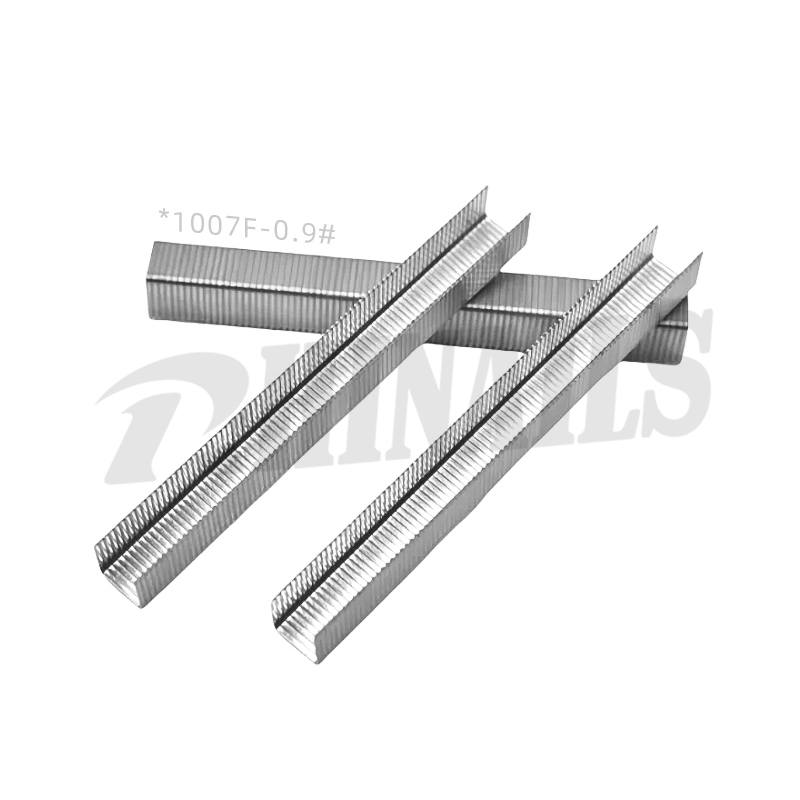
Fig. 1 - Rhinails 10F-series fine wire staples: when re-covering furniture after staple removal, high-tensile 22-gauge wire drives smoothly into old wood rails without splitting dry, brittle grain.
Using standard pliers creates three severe surface defects:
Pivoting gouges: As pliers pivot on bare wood, the sharp steel jaw edge acts like a punch, crushing soft earlywood fibers into permanent deep dents.
Sheared crowns: Gripping the thin wire crown and twisting sideways shears the steel right at the shoulder, leaving two razor-sharp leg shanks buried flush inside the wood.
Sander blade destruction: Sanding over buried staple legs on a hardwood floor immediately shreds expensive 36-grit floor sander belts or chips planer knives.
Removal Tool Type | Grip Mechanism | Risk of Gouging Wood | Risk of Shearing Crown | Best Application | Removal Speed (Staples / Min) |
Curved Upholstery Staple Lifter | Thin spooned spade blade with pry fulcrum | Very Low (smooth rounded heel) | Low; lifts both legs equally | Antique chairs, delicate wood frames, sofa rails | 15 to 25 staples/min |
Pry Bar / Flooring Tack Claw | Wide notched V-chisel wedge | Low (when used with fulcrum block) | Moderate in rusty staples | Hardwood floor subfloors, oak stairs, carpet prep | 25 to 40 staples/min |
Curved-Jaw Locking Pliers (Vice-Grip) | High-pressure locking mechanical clamp | Low (when rolling along jaw curve) | Lowest (grasps single broken legs) | Extracting headless broken staple shanks | 8 to 12 broken legs/min |
End-Cutting Pliers (Nippers) | Sharp transverse cutting jaws | Moderate; sharp edge must not bite | High (if squeezed with full grip) | Grasping short staple crowns flush to surface | 12 to 18 staples/min |
Standard Diagonal Cutters (Side-Cutters) | Angled wire cutting blades | Extremely High; sharp edge dents grain | Highest; easily cuts crown in two | Emergency use only; never on show surfaces | Under 10 staples/min |

Fig. 2 - Rhinails 80-series staples: 12.75 mm wide crown spreads clamping force across fresh upholstery webbing, covering old removal marks completely.
Follow these practical guidelines to strip thousands of staples cleanly:
Never rest a metal pry bar directly on finished hardwood flooring:
Place a 3 in x 3 in scrap piece of 1/4 in plywood or thin Masonite directly behind the staple.
Slide the notched pry blade flat along the floor under the staple crown.
Lever the tool handle downward against the wood block: the block distributes downward force across 9 sq inches, preventing any denting in the oak floor.
Antique sofa frames use kiln-dried beech or mahogany that splinters easily:
Tap a curved spade-tip staple lifter gently under the center of the crown using the palm of your hand.
Pry upward at a 90-degree angle to lift the crown roughly 1/8 in.
Reposition the lifter beneath one leg and pop that leg out first; the second leg follows with zero wood tear-out.
Re-Fastening After Staple Removal? Source Factory-Direct FastenersRhinails manufactures clean-driving 10F (22ga), 10J (20ga), and 4J underlayment staples drawn from high-tensile carbon steel, engineered to anchor firmly into existing fastener holes without splitting aged wood. Request a Fastener Engineering Specification Sheet & Free Sample Pack -> |
When a rusty staple crown snaps off, leaving one or two sharp wire pins protruding 1/16 in:
Do not hammer them deeper into the floor; they will rust through floor finish or tear carpet pads.
Clamp the wire tip firmly with small curved-jaw locking pliers (vice-grips).
Lock the pliers tight, then roll the tool backward along the rounded outer curve of the jaw.
Rolling applies pure vertical leverage, sliding the embedded shank out cleanly without bending.
On a whole-house carpet tear-out with 5,000+ pad staples across plywood subflooring:
Use a long-handled heavy floor scraper held at a low 15-degree angle to shear off protruding staple crowns in bulk.
Follow up immediately with a rolling magnetic sweeper to collect loose steel crowns before walking on the subfloor.
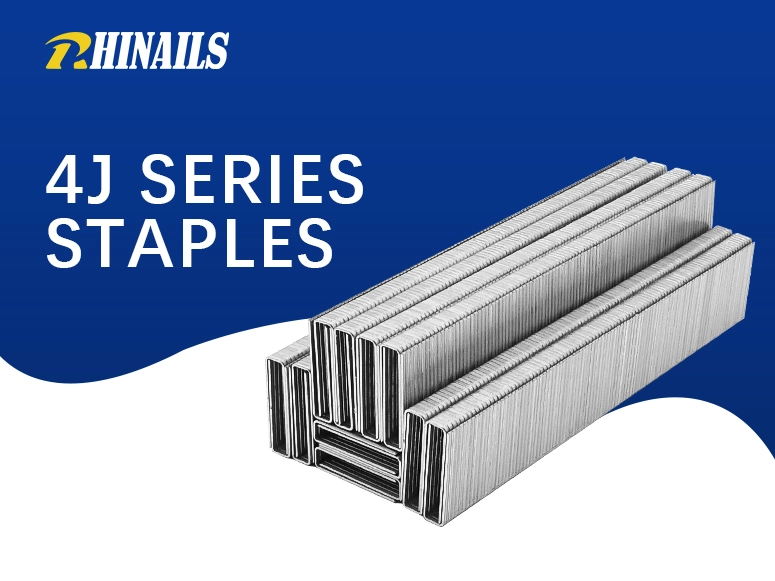
Fig. 3 - Rhinails 4J-series 20-gauge staples: 5.05 mm crown profile ideal for securing new acoustic underlayment felt, rosin paper, and thin subfloor pads after cleanup.
When removing fasteners installed 10 to 20 years ago, cheap staples break in half while quality staples pull out intact:
Low-grade wire embrittlement: Cheap scrap-wire staples corrode along internal micro-cracks over decades of ambient humidity.
Inadequate galvanizing: Standard 3-micron flash zinc oxidizes inside wood fibers, bonding the steel to the cellulose like rust glue.
Factory solution: Rhinails manufactures staples using cold-worked high-tensile carbon steel wire with uniform electro-galvanized coatings that pull clean without snapping under removal stress.
Re-Fastening Project | Wood Substrate Condition | Recommended Fastener Series | Recommended Leg Length | Why It Works |
Antique Chair Re-Upholstery | Aged, dry hardwood rails with old holes | 22-Gauge 10F-Series or 71-Series | 3/8 in (10 mm) | Slender wire grips between old holes without splitting brittle rails |
Sofa Seat Webbing & Padding | Softwood frame with removal crater marks | 21-Gauge 80-Series (Wide Crown) | 1/2 in (12 mm) | 12.75 mm crown spans across and bridges over damaged wood grain |
New Flooring Underlayment Felt | Cleaned plywood / OSB subfloor | 20-Gauge 4J-Series Staples | 1/2 in to 5/8 in | Fast, flat crown prevents bumps beneath luxury vinyl plank (LVP) |
Baseboard Re-Installation | Drywall over wood framing | 18-Gauge F-Series Brad Nails | 1-1/2 in to 2 in | Re-fastens baseboards cleanly with microscopic putty holes |
High-Tensile Wire Core: Drawn from cold-hardened carbon steel with uniform tensile strength to withstand installation driving and future extraction stress.
Electro-Zinc Barrier Plating: Uniform zinc barrier resists wood tannin acid, preventing staples from seizing inside timber cells.
Symmetrical Crown Stamping: Balanced crown geometry ensures both legs lift equally when pried by staple puller tools.
Clean Shear Collation: Micro-metered adhesive bond prevents glue buildup in wood holes.
22-gauge fine wire upholstery staples - 10F-Series Staples Collection
21-gauge 80-series wide crown staples - 80-Series Staples Collection
20-gauge 4J underlayment staples - 4J-Series Staples Collection
18-gauge F-series trim brad nails - F-Series Brad Nails Collection
Complete fastener catalogue - All Rhinails Fastener Collections
Q: What is the best tool to remove carpet staples from hardwood floors?A: A curved-blade tack lifter or flat notched pry bar levered against a thin scrap piece of 1/4 in plywood is the fastest and safest tool. The wood block protects the hardwood floor from pressure dents. |
Q: How do you pull out broken staple legs stuck in wood?A: Clamp the tiny exposed tip of the broken wire with curved-jaw locking pliers (vice-grips). Lock them tight, then roll the tool backward along the rounded jaw profile to pull the leg straight up without gouging the wood. |
Q: Can I just hammer carpet staples flat into the subfloor?A: No. Hammering staples flat leaves metal bumps that telegraph through thin vinyl or laminate flooring. On hardwood, buried staples will ruin expensive drum sander belts during refinishing. |
Q: Why do staple crowns shear off when pulled with pliers?A: Pliers apply lateral twisting force across the staple shoulder rather than pure vertical pull. Squeezing too hard with cutting pliers also cuts the wire crown in two before the legs can lift. |
Q: What staples should I use when reupholstering over an old, hole-filled frame?A: Use 22-gauge 10F-series or 71-series fine wire staples. The thin 0.69 mm wire anchors cleanly between old staple holes without wedging or splitting dry, aged hardwood rails. |
Rhinails is a high-precision wire fastener manufacturer with 30 years of industrial export experience, supplying certified collated staples, finish brads, and pneumatic tools to professional furniture restorers, flooring contractors, and hardware distributors worldwide.
We manufacture 10F, 10J, 4J, and 80-series upholstery staples cold-drawn from high-tensile carbon steel with rust-resistant electro-galvanized finishes engineered for clean installation and future removal without wood tear-out.
Every production lot undergoes strict dimensional tolerance inspection, wire tensile testing, and jam-free pneumatic firing verification.
Contact us to request technical specification sheets, container-load wholesale pricing, or jobsite evaluation sample packs.


