
- All
- Product Name
- Product Keyword
- Product Model
- Product Summary
- Product Description
- Multi Field Search
 |




| Degree: | |
|---|---|
| Specification: | |
| Material: | |
| Length: | |
| Quantity: | |
| Weight: | |
| Quantity: | |
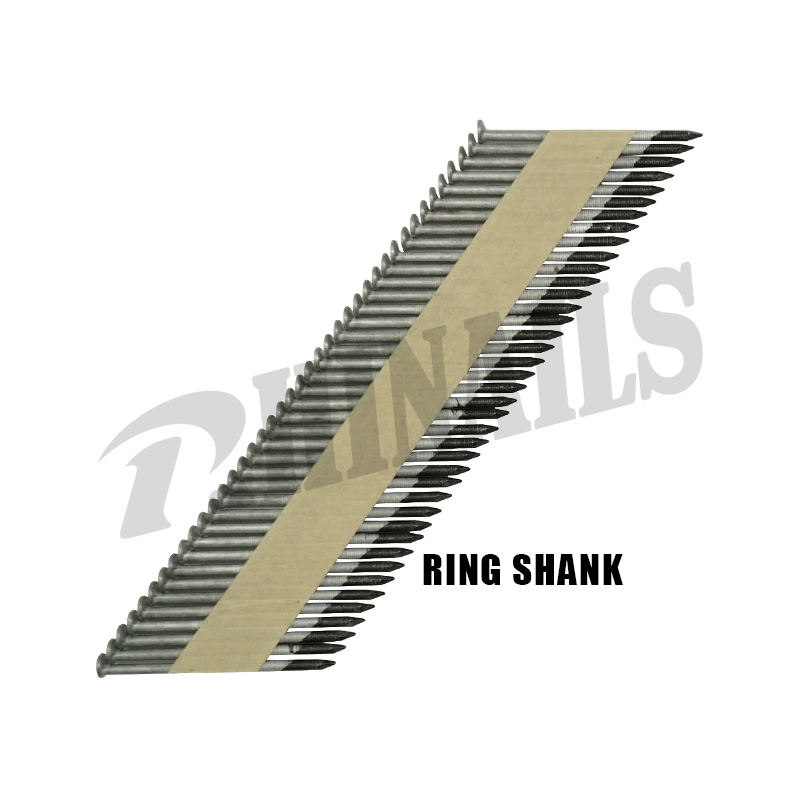
Offset Round Head Ring Shank Paper Strip Nails
Rhinails
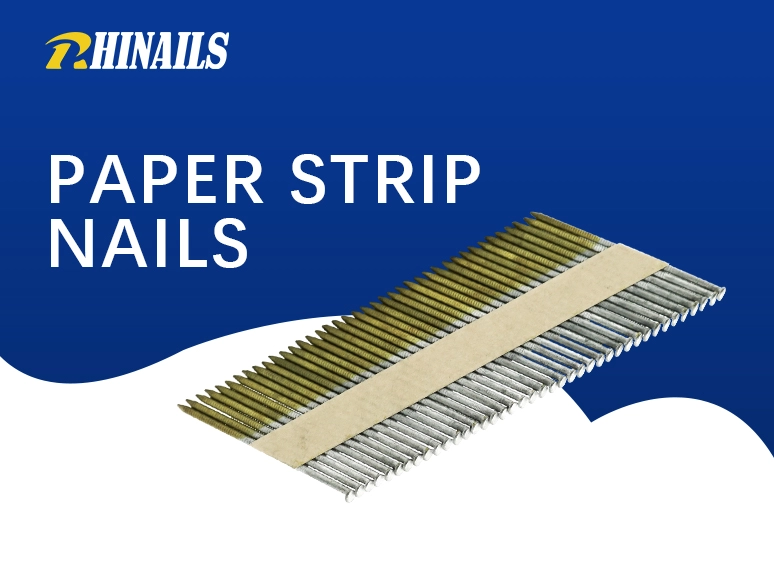
Rhinails Paper Strip Nails are paper collated framing nails built for 28 and 34 degree framing nailers.
Supplied in 50mm, 60mm and 83mm lengths at 2.87mm and 3.05mm diameters, in smooth, spiral or ring shank, and in Q235 carbon steel or stainless steel, they cover everything from sheathing and subflooring to heavy structural framing.
The paper strip holds the nails squarely through rapid firing and disintegrates at the drive point, leaving almost no residue in the magazine.
Need Paper Strip Nails for Framing and Construction? Factory-direct pricing on paper-collated framing nails - smooth, spiral and ring shank in 50mm, 60mm, 83mm. |
Paper strip nails are framing nails collated onto a paper strip at a fixed angle so a nailer can fire them in one continuous run. Rhinails supplies them for the standard 28 degree and 34 degree framing nailers used on professional sites, in 50mm, 60mm and 83mm lengths on 2.87mm and 3.05mm wire.
Each strip carries 40 nails per row across 75 rows, and the whole range is available in smooth, spiral or ring shank so you can match holding power to how permanent the joint needs to be.
The reason to run paper instead of plastic collation is what happens after the shot. A paper strip breaks cleanly at the drive point and leaves almost nothing behind in the magazine, so the feed mechanism keeps running without the intermittent jams that build up when plastic fragments accumulate.
It also keeps plastic out of the finished work: plastic fragments can sit between the nail head and the wood and leave visible debris on a surface the client is going to inspect. For high volume framing crews and for finished woodwork, both of those matter.
Shank Types Available | Smooth / Spiral / Ring shank |
Materials | Q235 carbon steel, Stainless steel |
Length Options | 50mm / 60mm / 83mm |
Diameters | 2.87mm / 3.05mm |
Collation | Paper collated, 28 / 34 degree angle |
Pieces per Strip | 40 pcs/row x 75 rows |
Strip Weight | 9.46kg (2.87mm) / 14.78kg (3.05mm) |
Point Type | Diamond point |
Nailer Compatibility | 28 degree and 34 degree framing nailers |
Applications | Framing, decking, roofing, fencing, sheathing, subflooring |
Key Advantage | Paper collation breaks cleanly at the drive point, leaving minimal magazine residue and no plastic debris in the finished work |
Download Our Paper Strip Nails Catalog Complete specs, shank variants, and nailer compatibility guide for all paper strip nail models. |
Paper collation gives you two advantages over plastic collated nails, and both of them show up on site rather than on the spec sheet.
First, the strip breaks cleanly at the drive point, so almost no residue reaches the nailer magazine; plastic fragments accumulate in the feed mechanism and cause intermittent jams that slow production and force frequent cleaning, especially in cold weather where plastic turns brittle.
Second, there is no plastic debris in the finished work: paper disintegrates during driving and leaves clean nail to wood contact, instead of fragments that can sit between the head and the surface and show up on a finished face.
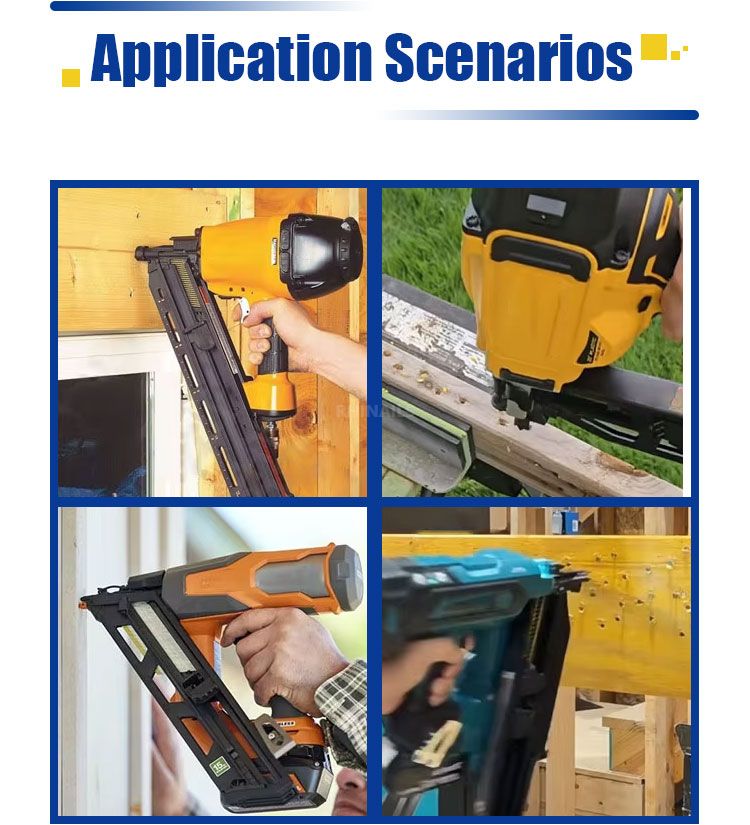
Paper strip nails are used for:
Wall framing and stud to plate connections
Roof sheathing and subflooring
Decking and fencing, where withdrawal resistance matters
Ledger board and beam to post connections
Temporary bracing, where nails may need to come out again
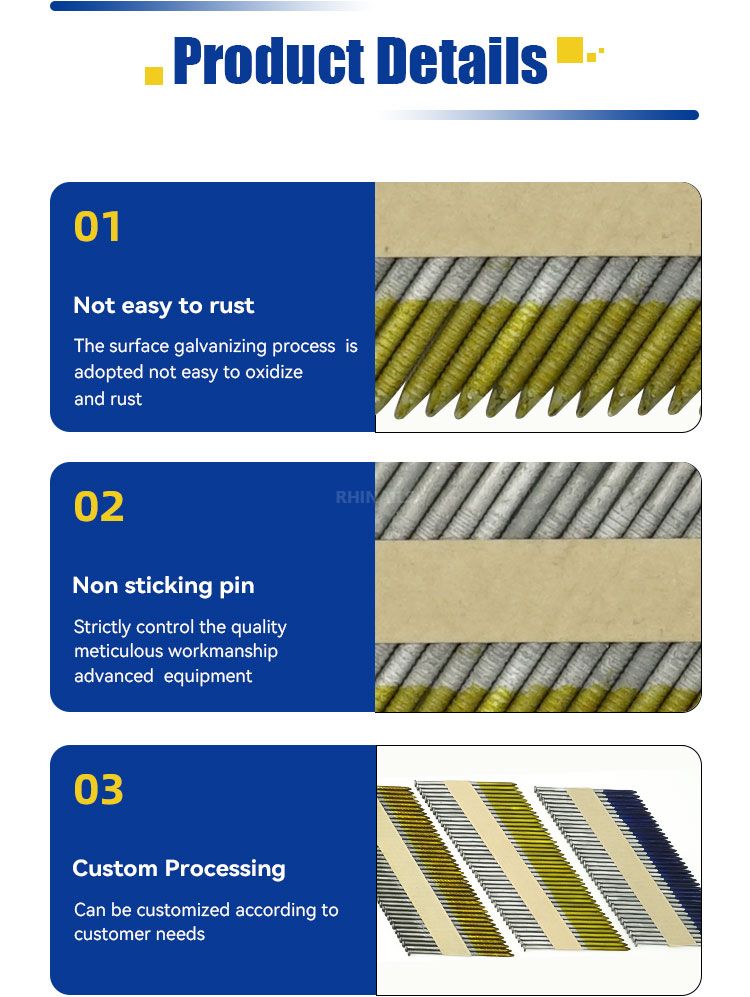
Two materials cover the range. Q235 carbon steel is the standard construction grade for interior and general framing work, and every nail runs through a surface galvanizing process so the shank does not oxidize and rust in service.
Stainless steel is the option for corrosive environments and exterior applications where long term rust resistance is the requirement, such as coastal decking, marine work and treated timber.
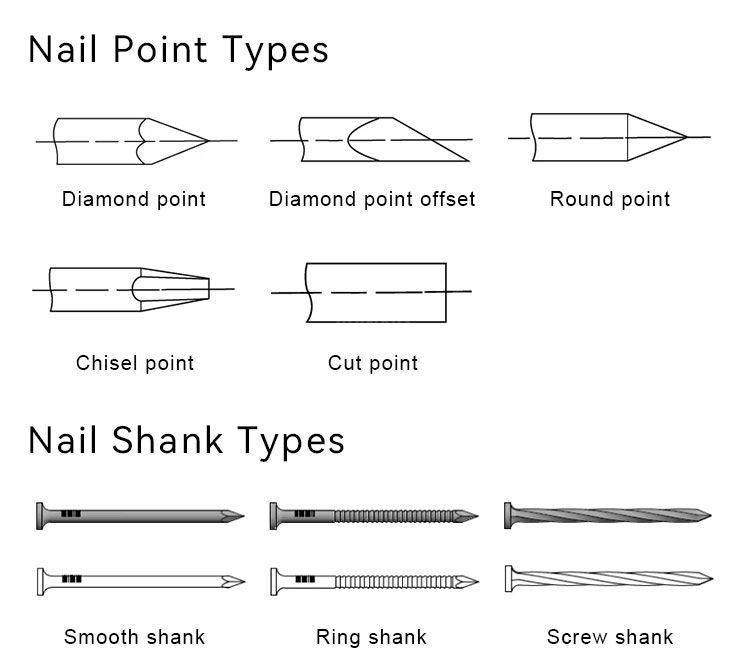
All variants carry a diamond point that penetrates hardwood and engineered lumber cleanly instead of splitting it.
Both materials are also checked for the two faults that stop a framing crew: the pin sticking in the strip, and the surface going rusty before the job is closed up.
If your project runs in a wet climate, near salt water, or into engineered lumber that is harder than the point was set for, send us the site conditions and the substrate and we will confirm the material grade and the point that suits it.
Choosing the right length and shank depends on the structural load and on how permanent the joint has to be:
50mm - sheathing, subflooring, light duty bracing and temporary framing. Best paired with smooth shank where removal flexibility matters
60mm - general framing, wall stud to plate connections, decking and roof sheathing. The most versatile length for residential construction
83mm - heavy structural framing, ledger board connections, beam to post joints and engineered lumber. Best paired with ring shank for irreversible permanent connections
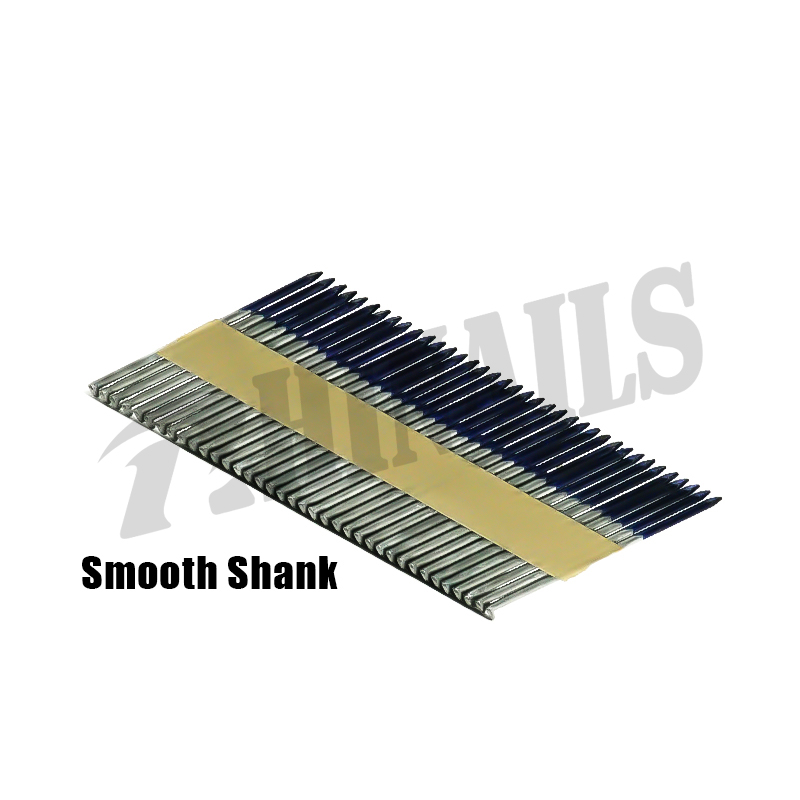
On shank: smooth shank relies on friction and is the easiest to pull, spiral shank screws into the wood fibres for higher withdrawal resistance in roofing and decking, and ring shank locks mechanically and is the strongest option where the connection must never back out.
Size | Diameter | Length | Material | Shank | Strip Weight |
2.87 x 50 | 2.87mm | 50mm | Stainless steel | Ring shank | - |
2.87 x 60 | 2.87mm | 60mm | Q235 carbon steel | Smooth / Ring shank | 9.46kg |
3.05 x 83 | 3.05mm | 83mm | Q235 carbon steel | Smooth / Spiral / Ring shank | 14.78kg |
Not sure which size fits your build up? Send us the framing schedule and the nailer you are running, and we will recommend the size and shank for each connection.
Rhinails has been manufacturing industrial fasteners since 1996, supplying paper strip nails, coil nails, brad nails and staples to distributors and contractors in more than 50 countries. Our vertically integrated production runs from wire drawing to nail forming to collation to export packing, so nail geometry, paper strip adhesion and coating stay consistent from batch to batch. Every batch undergoes length, diameter and collation integrity inspection before shipment, and we hold ISO 9001:2015 quality management certification, with CE, RoHS and SGS test reports available on request.
Product | Shank | Material | Length | Best For |
Smooth | Q235 | 60mm / 83mm | Temporary bracing and sheathing | |
Paper Strip Nails (This Product) | Smooth / Spiral / Ring | Q235 / Stainless steel | 50mm / 60mm / 83mm | General framing and construction |
Spiral | Q235 | 83mm | Roofing and decking, high withdrawal resistance | |
Ring | Q235 | 60mm / 83mm | Permanent structural framing and decking | |
Ring | Stainless steel | 50mm | Corrosive and exterior environments |
View All Paper Strip Nails | Offset Round Head Ring Shank | Plastic Strip Nails | All Nails
Ready to Order Paper Strip Nails? Factory-direct pricing, custom shank and length combinations, and bulk packaging available. Standard lead time 15 to 25 days. |
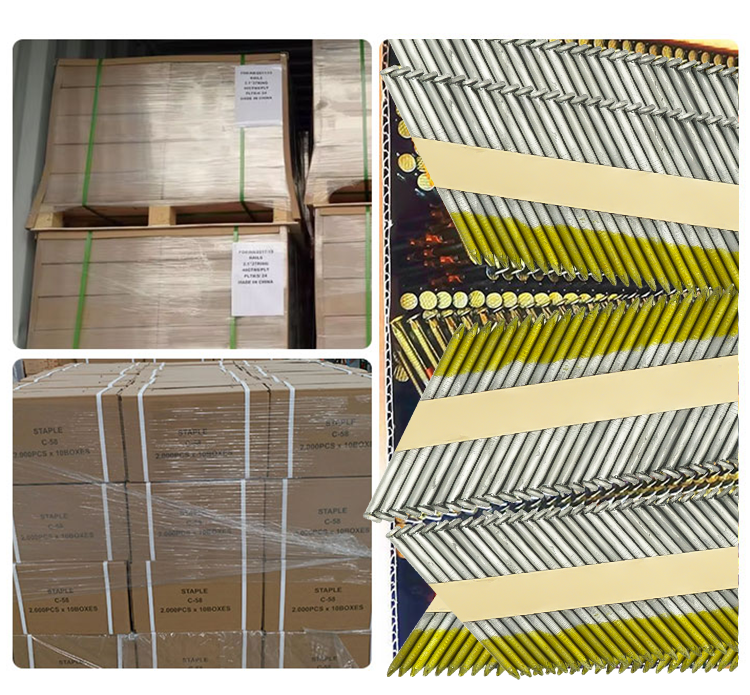
Q: What framing nailers are compatible with these paper strip nails?A: They are designed for 28 degree and 34 degree framing nailers, the standard angle configurations used in professional construction. The paper collation strip feeds smoothly through the magazine without plastic residue buildup. Send us your nailer model number and we will confirm compatibility for your specific tool. |
Q: Should I choose smooth, spiral or ring shank paper strip nails?A: Smooth shank nails rely on friction and are the easiest to remove, so they suit temporary bracing and sheathing. Spiral shank nails use helical grooves that screw into the wood for higher withdrawal resistance, which is what roofing and decking need. Ring shank nails use concentric rings that lock mechanically and are the strongest choice where the connection must never back out. |
Q: What is the difference between paper collated and plastic collated nails?A: Paper collation breaks cleanly at the drive point, so almost no residue reaches the nailer magazine and no plastic debris ends up between the nail and the wood surface. Plastic collation can fragment, accumulate in the tool feed mechanism and cause intermittent jams, and it can leave coloured plastic debris on finished surfaces. Paper collation is preferred for high volume professional framing. |
Q: What is the minimum order quantity?A: Standard MOQ varies by packaging format, whether bulk boxes or custom labelled boxes, and we keep flexible minimums for sample and trial orders so you can evaluate quality before committing to a larger volume. Tell us your packaging preference and destination and we will confirm the MOQ. |
Q: Can Rhinails produce custom paper strip nails for our brand?A: Yes. OEM and ODM are supported across length, diameter, shank type, material and collation angle, including custom labelling and packaging design under your own brand. Send a drawing, sample or specification and we will confirm it and submit a sample for your approval before mass production. |


