
- All
- Product Name
- Product Keyword
- Product Model
- Product Summary
- Product Description
- Multi Field Search
Views: 0 Author: Rhinails Publish Time: 2026-09-21 Origin: Site


Pick upholstery staple leg length by the thickness you are fastening: 1/4 in (6 mm) for a single layer of thin fabric, 3/8 in (10 mm) for standard fabric over foam, and 1/2 in (13 mm) for padded or multiple layers. Then match the wire: 22 gauge fine wire for fabric that must not tear, 20 gauge for general upholstery and frames. Any job that gets wet - marine, auto, outdoor cushions - needs a stainless staple, not zinc coating.
Every box of upholstery staples is defined by three measurements. Get all three right and the staple disappears into the work; get one wrong and you either tear the fabric or watch staples walk out of the frame.
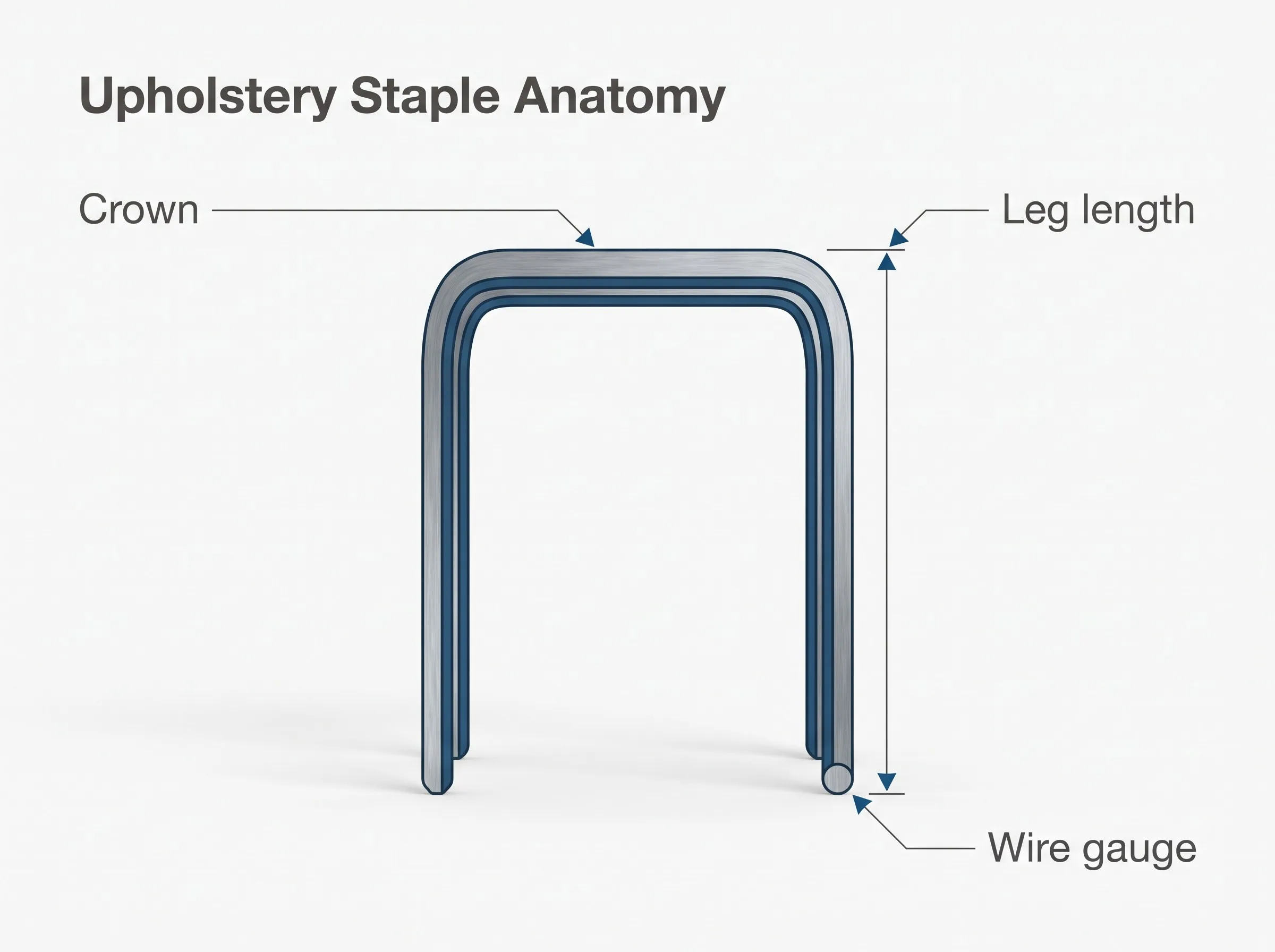
Fig. 1 - The three numbers on the box: crown width, leg length and wire gauge.
Measurement | What it controls | Typical upholstery range |
|---|---|---|
Crown width | How much material the staple spans and how much it grips | 5 mm (narrow) to 12.75 mm (wide) |
Leg length | How deep the staple goes and whether it reaches the wood | 1/4 in (6 mm) to 1/2 in (13 mm) |
Wire gauge | How much the staple tears the fabric and how strong it holds | 22 gauge (fine wire) to 20 gauge |
Crown width and wire gauge are decided once, when you choose a staple series. Leg length is the number you change job by job - and it causes most of the trouble.
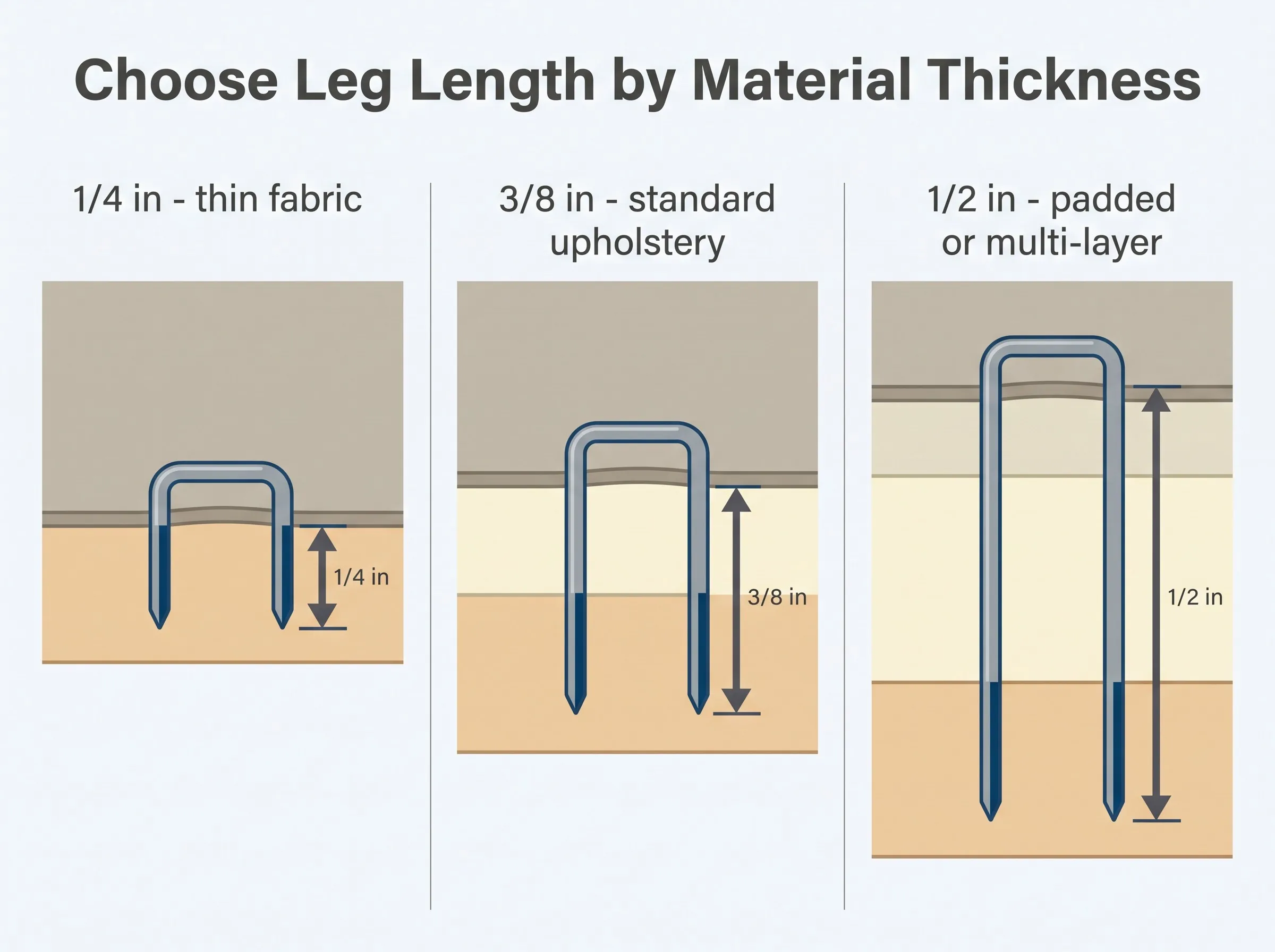
Fig. 2 - Leg length follows the material stack: short legs for thin fabric, longer legs once padding is involved.
What you are fastening | Leg length | Why |
|---|---|---|
Thin fabric, single layer, or fabric to a thin panel | 1/4 in (6 mm) | Long legs punch through the panel and come out the face side |
Standard fabric over foam onto a wood frame | 3/8 in (10 mm) | The accepted default - reaches the wood without tearing the foam apart |
Padded panel, multiple fabric layers, thick foam | 1/2 in (13 mm) | Needs the extra reach to bite into the frame under the padding |
Deep cushion build-up, webbing over thick padding | 1/2 in or longer | Test on scrap first - over-long staples tear through the face |
Two field rules worth remembering:
Leg too long is worse than leg too short. A staple that bottoms out on a hidden part of the frame leaves a dimple in the face fabric that no amount of steaming removes. A staple slightly short still holds; a staple punching through the front does not.
Measure the stack, not the fabric. Add fabric + foam + any batting, then pick the shortest leg that still reaches the wood frame. This is why professional shops keep 1/4 in, 3/8 in and 1/2 in on the bench rather than one "universal" length.
Gauge and wire diameter move in opposite directions: a higher gauge number means thinner wire. That single fact explains most upholstery staple mistakes.
Gauge | Wire character | Where it belongs | What happens if you use it wrong |
|---|---|---|---|
22 gauge | Fine wire | Upholstery fabric, vinyl, leather facings, thin trim | Too fine for structural panel work - it will not hold a thick frame joint |
21 gauge | Light-medium | Furniture assembly, veneer and panel fixing | A compromise; check the material before committing a whole run |
20 gauge | Standard wire | General upholstery, frames, webbing, pallet and crate work | On light upholstery fabric, the heavier wire can pull and tear along edges |
18 gauge | Heavy wire | Fine finish carpentry, cabinetry, trim, structural stapling | Far too heavy for fabric - it cuts rather than holds |
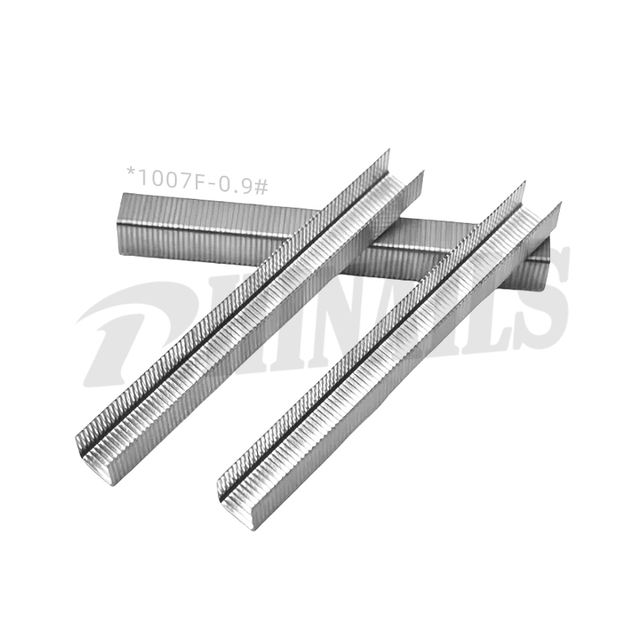
Fig. 3 - 10F series 22 gauge fine wire staples - thin wire that grips fabric without tearing along the edge.
The practical rule from the shop floor: the finer the fabric, the finer the wire. Fine wire staples pass through fabric with less pull, so edges stay flat instead of rippling. Heavy wire is for material that needs holding power, not for the fabric itself.

Fig. 4 - 10J series 20 gauge staples - 11.1 mm crown for furniture frames, panels and auto interiors.
Crown width is the horizontal span of the staple. It decides how many wires, fibres or layers the staple grips at once.
Narrow crown (about 5 mm). For trim, curved work, tight corners and light material - it leaves a small footprint and follows curves without buckling. Use it when the staple must stay invisible.
Mid crown (about 11 mm). The all-rounder for furniture frames, sofa decks, panel backings and auto interior trim - a wider grip than narrow crown without splitting thin stock.
Wide crown (about 12.75 mm). For webbing, plywood backing, seat platforms and anywhere you need the staple to spread its load and resist pull-through.

Fig. 5 - 80 series staples - a wider crown spreads the load across webbing and panel edges.
A tip that saves fabric: on curves and thin material, a narrow crown staple is less likely to pucker the surface than a wide crown one, because it crosses fewer fibres when it enters.
The point decides how the staple behaves the moment it hits the material.
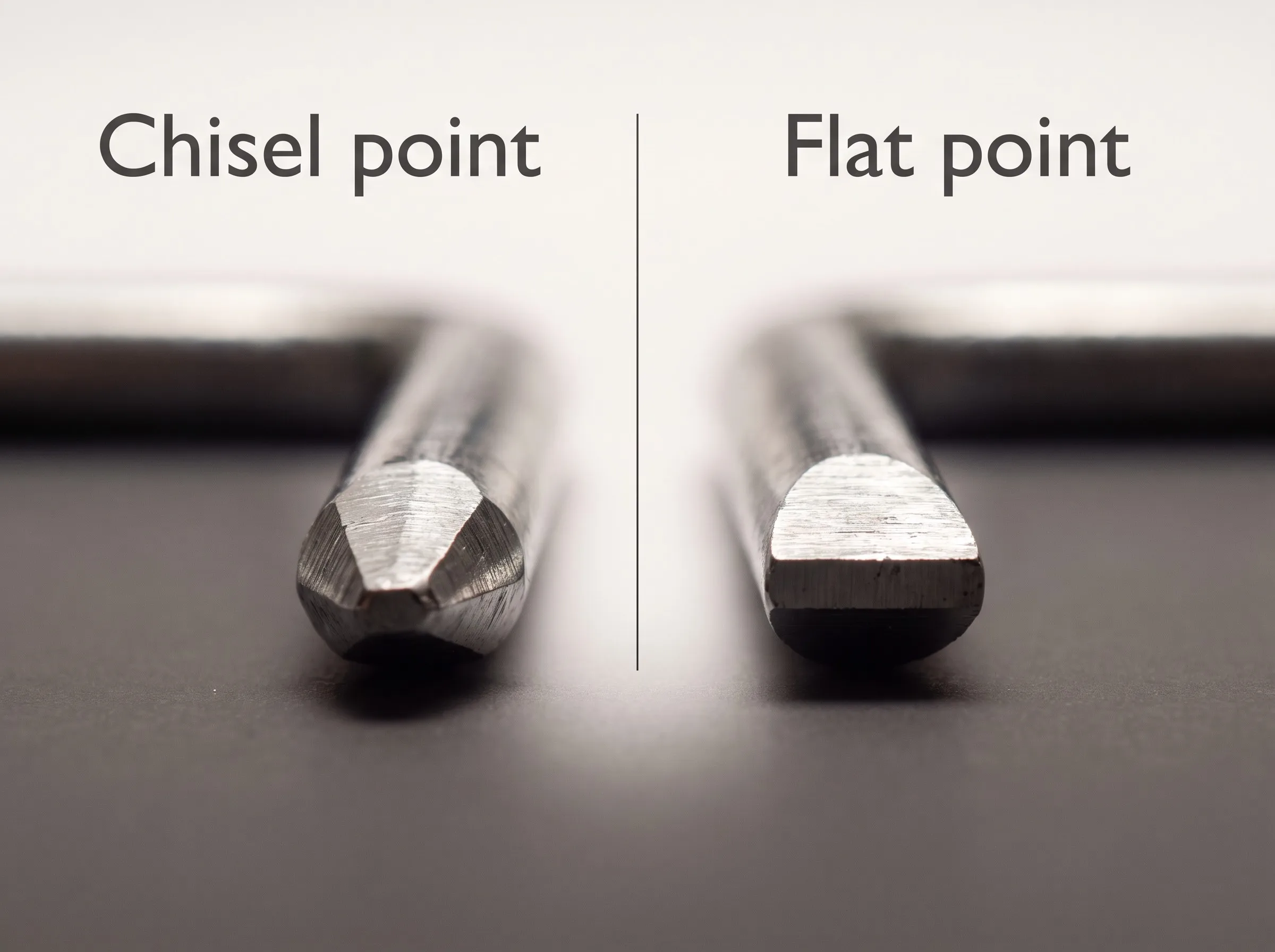
Fig. 6 - Chisel point (left) shears a path through dense material; flat point (right) cuts straight and suits softer stock.
Point | Behaviour | Use it for |
|---|---|---|
Chisel point | The bevelled tip shears its way through, so legs stay parallel instead of bending | Hardwood frames, dense particle board, hardwood plywood, layered material, any job where staples kink |
Flat point | Straight-cut tip enters cleanly with less resistance | Softwood frames, foam, fabric-only tacking, light trim |
If your staples keep bending or clustering when they hit the density, do not reach for more air pressure. Change the point first - chisel point staples are the single most common fix for staples that fail in dense material.
Job | Crown | Leg length | Gauge | Coating |
|---|---|---|---|---|
Thin fabric to a thin panel | Narrow | 1/4 in (6 mm) | 22 | Bright or zinc |
Standard fabric over foam to a wood frame | Narrow to mid | 3/8 in (10 mm) | 22 or 20 | Bright or zinc |
Sofa deck, webbing, panel backing | Mid to wide | 3/8 in to 1/2 in | 20 | Zinc |
Padded or multi-layer panel | Mid | 1/2 in (13 mm) | 20 | Zinc |
Furniture frame joints and cabinet work | Narrow | 3/4 in to 1 in | 18 to 20 | Zinc |
Marine vinyl, boat seats, RV cushions | Narrow to mid | 3/8 in (10 mm) standard | 22 | Stainless |
Auto interior trim, motorcycle seats | Narrow | 3/8 in or 1/4 in | 22 | Stainless for exposed work |
Outdoor cushions and patio furniture | Mid | 3/8 in to 1/2 in | 20 or 22 | Stainless or galvanized |
Indoor furniture can live with a bright or zinc-coated staple. Anything that gets wet cannot.
Stainless steel for boat seats, marine vinyl, motorcycle seats, spa covers, RV cushions and any coastal job. Stainless also avoids the dark rust streaks that bleed through light vinyl.
Galvanized for outdoor patio furniture and shaded, rain-exposed cushions where budget matters more than salt exposure.
Bright or zinc only indoors. In a damp workshop or an unheated storage space, zinc is a short-term answer at best.
Symptom | Likely cause | Fix |
|---|---|---|
Staples tear through the fabric | Leg too long for the stack, or air pressure too high | Shorten the leg by one step; drop to 70-80 psi at the gun |
Staples not reaching the frame | Leg too short, or padding compressing under the gun | Add leg length; compress the padding as you fire |
Staples bend or cluster on entry | Wrong point type for dense material | Switch to chisel point staples |
Fabric ripples along the edge | Wire too heavy for the fabric | Move from 20 gauge to 22 gauge fine wire |
Staples pull out under load | Smooth shank in a job that needs grip, or crown too narrow for the load | Move to a wider crown and a threaded or ring shank staple |
Rust streaks on light vinyl or fabric | Zinc-coated staples in a wet or humid job | Switch to stainless steel |
Jams every few staples | Dirty magazine, wrong strip for the gun, or over-long staples in a short-nose tool | Clean and oil the tool; confirm the staple series matches the gun |
The pressure setting catches more people than any other single cause. Upholstery staplers commonly run best in the 70-80 psi range - not at the top of the regulator. Too much pressure drives the staple straight through fabric and foam, which is exactly the problem you were trying to avoid.

Fig. 7 - A pneumatic upholstery stapler with an anti-jam feed system holds a steady depth far better than a manual gun.
Match leg length to the stack, not to the fabric. Measure fabric + foam + batting, then take the shortest leg that still reaches the frame. Send every new build with a 1/4 in, 3/8 in and 1/2 in sample so the workshop can test on scrap before the run.
Fine wire for fabric, heavy wire for structure. Do not use one gauge for everything. Fine wire protects the face of the work; heavy wire protects the joint. They are different jobs.
Buy coating for the environment, not the price list. Zinc indoors, galvanized outdoors, stainless anywhere wet or salty. A rust streak through vinyl is a warranty claim, not a saving.
Thin fabric, fine wire, close work - 22 gauge staples in the 10F series
Furniture frames, panels, auto interiors - 20 gauge staples in the 10J series
Webbing, wide-crown panel work - the 80 series
Tight corners and fine trim - narrow crown staples in the 4J series
The whole catalogue - all Rhinails staples
Q: What is the standard upholstery staple size?
A: 3/8 in (10 mm) leg length in 22 gauge fine wire is the standard starting point for upholstery - fabric over foam onto a wood frame. Use 1/4 in for single-layer thin fabric and 1/2 in once padding or multiple layers are involved.
Q: Is 20 gauge or 22 gauge better for upholstery?
A: 22 gauge fine wire for the fabric itself, because it grips without tearing and keeps edges flat. 20 gauge is the better choice for frames, webbing and panel work where holding power matters more than the surface finish.
Q: Do I need chisel point staples?
A: If your staples bend, cluster or refuse to set in hardwood, dense particle board or layered material, yes. A chisel point shears a path through dense stock so the legs stay parallel. For softwood, foam and light tacking, a flat point is fine.
Q: What leg length for 1 inch foam?
A: A 1 inch foam build-up usually needs 1/2 in (13 mm) legs or slightly longer, because the staple has to compress the foam and still reach the frame. Test on scrap: if the face fabric dimples where the staple lands, the leg is reaching too far.
Q: Why do my upholstery staples tear through the fabric?
A: Almost always leg length or air pressure. A leg that is one step too long bottoms out on hidden frame parts and prints through the face; pressure above 80 psi drives the staple through fabric and foam. Shorten the leg first, then check the regulator.
Q: Can I use the same staples outdoors?
A: Not zinc-coated ones. Outdoor, marine and automotive jobs need stainless steel staples, or galvanized at minimum, or the staple will rust and bleed streaks through the covering.
Q: What air pressure should an upholstery stapler run at?
A: 70-80 psi is the usual working range for upholstery staples. Start at the low end and raise it only if the staple is not setting fully - high pressure causes more fabric damage than it fixes.
Rhinails is a fastener manufacturer with 30 years of experience producing collated staples for upholstery and furniture production, including 22 gauge fine wire staples, 20 gauge mid crown staples and wide crown staples, in bright, zinc coated, galvanized and stainless steel. Every batch is checked for wire diameter, crown width and collation precision so it feeds in standard upholstery staplers. Contact us for bulk pricing, a size consultation or a free sample pack.


