
- All
- Product Name
- Product Keyword
- Product Model
- Product Summary
- Product Description
- Multi Field Search
Views: 0 Author: Rhinails Publish Time: 2026-10-28 Origin: Site


Self-drilling screws strip out in thin sheet metal when the drill point flutes are longer than the total metal thickness, when driver speed exceeds 2,500 RPM causing pilot holes to overheat, or when an uncalibrated impact driver over-torques the tapped threads.
To eliminate stripping in light 20- to 25-gauge metal studs, select a #2 drill point with twin-lead fine threads, throttle drill speed down to 1,800 to 2,200 RPM, and use an adjustable clutch screw gun set to disengage the instant the washer seats flush.
A self-drilling screw performs three distinct machining operations in less than two seconds: drilling the hole, tapping the mating thread, and clamping the joint.
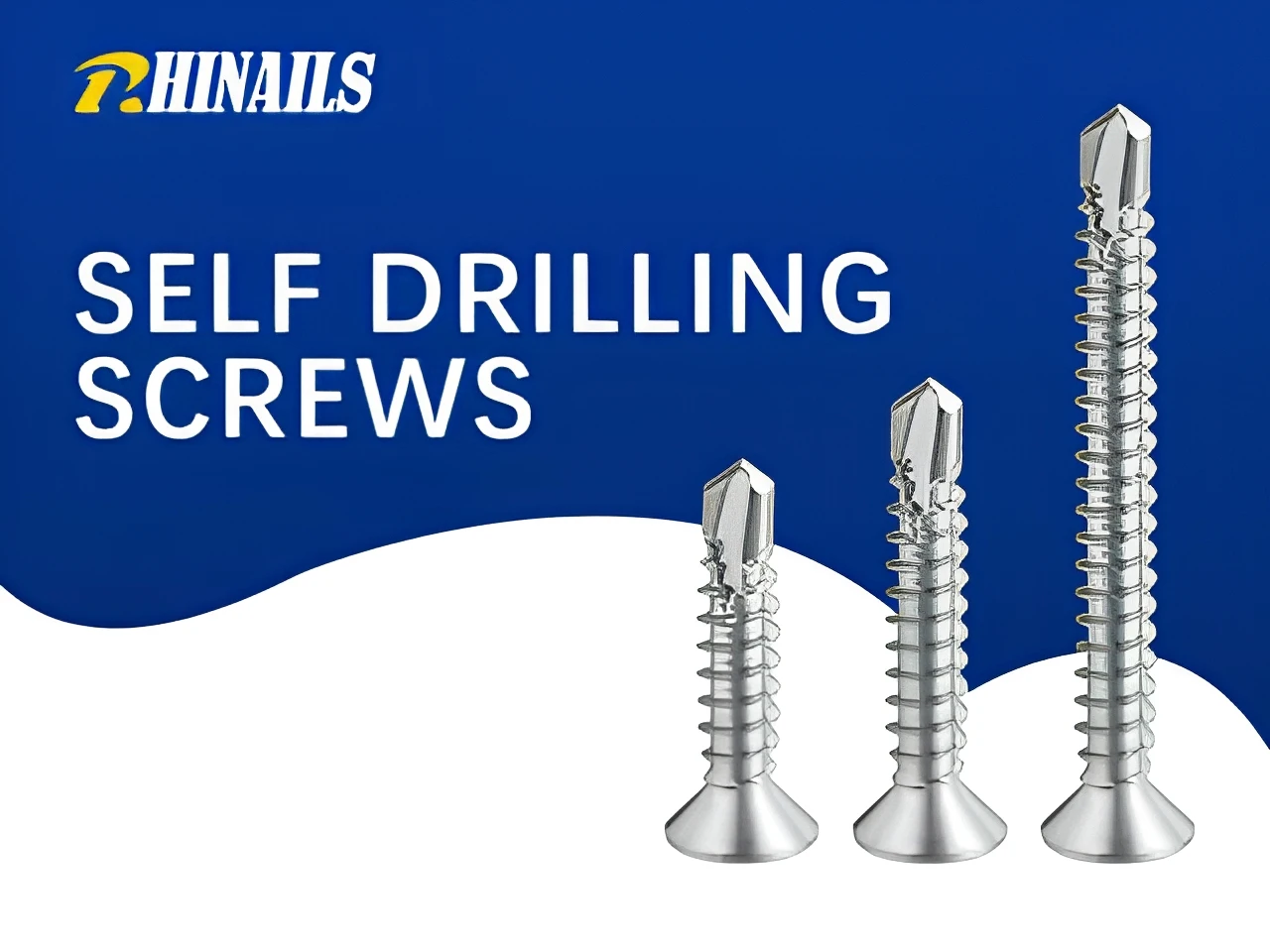
Fig. 1 - Rhinails bugle head self-drilling screws: cold-forged from 1022A carbon steel with HRC 50-55 case hardness and precision-ground drill points.
Stripping occurs when these three operations overlap out of sequence:
The drill point must completely penetrate the sheet metal before the first thread engages.
If the threads enter the metal while the drill flutes are still cutting, the screw feeds forward faster than the drill point can remove chips.
The thread pitch forces the fastener forward like a tap in an undersized hole, stripping the delicate 0.6 mm sheet metal edge into an enlarged, round hole.
Matching the drill point number to your substrate thickness is the single most effective way to eliminate stripped screw holes.
Drill Point Number | Drill Flute Length | Steel Thickness Capacity (Gauge) | Steel Thickness Capacity (mm / In) | Typical Jobsite Application |
Point #1 (Reduced) | Short / blunt | 25 to 20 gauge steel | 0.5 mm to 0.9 mm (0.020 - 0.035 in) | Electrical boxes, HVAC ductwork, thin sheet seams |
Point #2 (Standard) | Medium flute | 20 to 16 gauge steel | 0.9 mm to 1.8 mm (0.035 - 0.070 in) | Drywall studs, interior metal framing, door tracks |
Point #3 (Heavy) | Long flute | 16 to 8 gauge steel | 1.8 mm to 4.2 mm (0.070 - 0.165 in) | Structural cold-formed C-channels, purlins, clips |
Point #4 (Structural) | Extra-long flute | 10 to 4 gauge steel | 3.5 mm to 6.3 mm (0.140 - 0.250 in) | Heavy structural steel tube, building frame brackets |
Point #5 (Extended) | Ultra-long flute | Up to 1/2 in thick plate | 6.3 mm to 12.7 mm (0.250 - 0.500 in) | Heavy I-beams, crane rails, thick industrial plates |
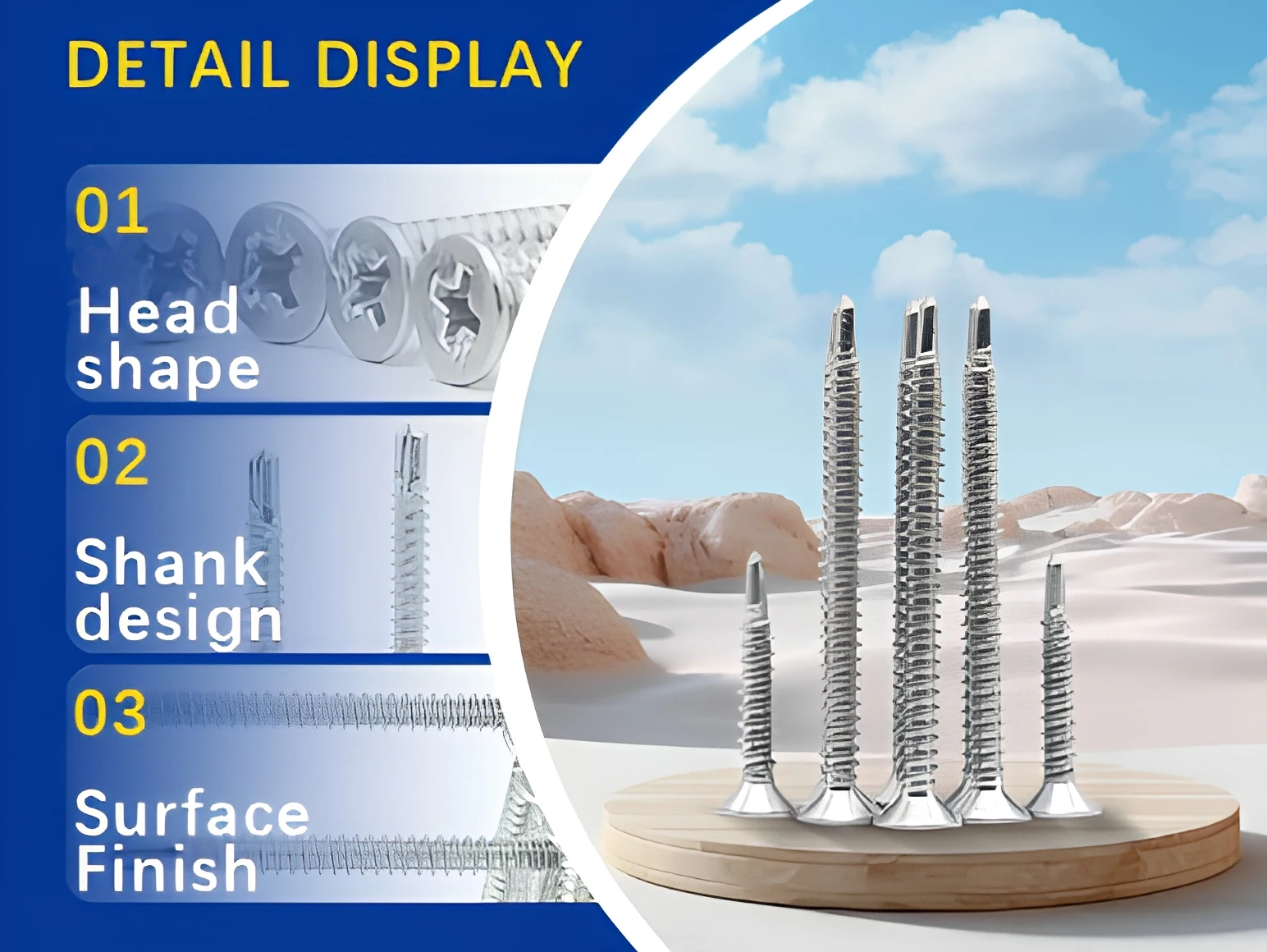
Fig. 2 - Rhinails self-drilling screw detail: high-efficiency chip-clearing flute flushes metal swarf away before the lead thread bites.
A common jobsite error is using a heavy-duty Point #3 or Point #5 screw on thin 25-gauge drywall studs. The oversized drill flute creates a 3.8 mm hole in a sheet that only needs a 3.1 mm pilot, leaving almost no steel for the screw threads to grip.
Trade discussions on contractor forums highlight four field adjustments that immediately prevent stripped holes:
Driving self-drilling screws with a high-speed 4,000 RPM drywall gun burns the cutting flutes instantly.
High speed creates extreme heat before the point cuts through, work-hardening the steel sheet.
The blunted tip pushes inward under force, stretching and blowing out the hole.
Use a dedicated variable-speed drill driver set between 1,800 and 2,500 RPM for light gauge and 1,000 to 1,500 RPM for heavy structural steel.
Impact drivers deliver uncalibrated rotary hammer blows that shear delicate tapped threads in thin metal within milliseconds.
Use an adjustable mechanical torque clutch driver.
Set the clutch to slip just as the screw head seats against the metal surface.
For drywall-to-steel framing, use a depth-sensitive nosecone that disengages drive automatically.
Do not lean your entire body weight into the tool:
Excessive thrust bends the thin drill point tip and mushrooms the sheet metal before it cuts cleanly.
Apply 25 to 35 lbs of steady axial force: let the hardened cutting edges shear metal chips naturally.
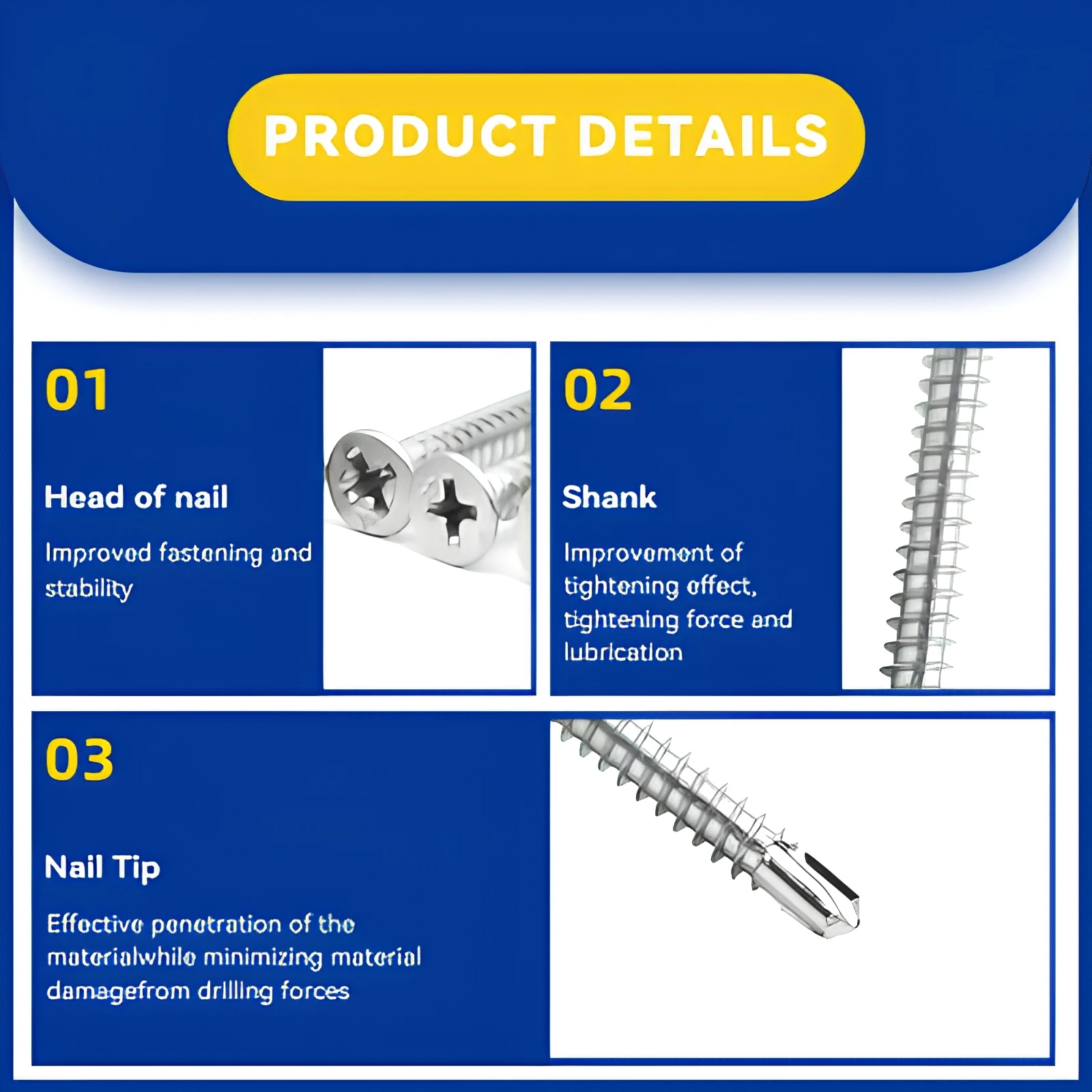
Fig. 3 - Precision cutting point: concentric four-facet cutting tip starts instantly on slick painted metal without wandering or scratching.
Head style directly influences strip resistance:
Bugle heads sink deeply and are designed for drywall gypsum.
In bare metal-to-metal framing, use a Hex Washer Head (HWH) or Modified Truss (Wafer) Head.
The wide bearing flange distributes clamping load across 3x more sheet surface, preventing the head from pulling through the thin metal.
Symptom | Primary Cause | Immediate Fix |
Screw spins freely after driving, will not tighten | Point flute too long, or over-torqued by impact driver | Step down to Point #2; switch from impact driver to clutch gun |
Tip glows red or smokes, fails to pierce metal | Driver RPM too high (>3,000 RPM); point dulls instantly | Reduce speed to 1,800 RPM; apply steady 30 lbs feed pressure |
Screw tip wanders across slick metal surface | Off-center drill point or dull chisel edge | Use factory-concentric points; start drill with firm square push |
Screw head shears off right at seating | Over-hardened brittle steel or excessive impact torque | Check fastener case depth; adjust driver clutch to release earlier |
Screws strip only in thin 25-gauge drywall studs | Coarse thread removing too much metal from thin hole | Switch to fine twin-lead thread or anti-strip framing screws |
Manufacturing high-performance self-drilling screws requires tight heat-treatment and die control:
Dual-Hardness Heat Treatment: The drill point requires high surface hardness (HRC 50-55) to pierce structural steel, while the shank core must maintain ductility (HRC 32-40) to absorb building frame movement without snapping.
Concentric Point Grinding: Point flutes ground off-axis create wobble, generating an oversized pilot hole that strips immediately upon thread entry.
High-Grade Raw Material: Rhinails utilizes certified 1022A carbon steel for interior construction and Grade 410 / Bi-metal 304/SCM435 steel for outdoor curtain walls and corrosive environments.
Sheet metal framing & drywall steel studs - Self-Drilling Screws Collection
Bugle head self-tapping fasteners (13-50 mm) - Bugle Head Self-Tapping Screws
Standard drywall to wood framing fasteners - Drywall Screws Collection
High-speed commercial auto-feed strips - Collated Screws Collection
Complete fastener catalogue - All Rhinails Screw Products
Q: Why do self-drilling screws strip out so easily in thin sheet metal?A: When drill flutes are longer than sheet thickness, threads engage before the hole is fully drilled. Fastener forward speed outpaces chip removal, reaming out the thin metal hole into a stripped round void. |
Q: What drill point number do I need for 20- to 25-gauge metal studs?A: Use a Point #2 drill point with fine twin-lead threads. Avoid Point #3 or Point #5 screws on thin metal, as their oversized drill points create pilot holes larger than the screw shank diameter. |
Q: What drill speed (RPM) should I run for self-drilling screws?A: Operate between 1,800 and 2,500 RPM for light sheet metal (20-25 gauge) and 1,000 to 1,500 RPM for heavy structural steel. High-speed drywall guns (>3,500 RPM) burn and blunt drill flutes instantly. |
Q: Can I use an impact driver with self-drilling screws?A: Avoid impact drivers on thin metal. Pulsing rotational impacts apply excessive peak torque that shears tapped threads in 0.6 mm sheet metal. Use an adjustable clutch drill driver instead. |
Q: What is the difference between self-tapping and self-drilling screws?A: Self-tapping screws have sharp pointed tips (Type A or AB) and require a pre-drilled pilot hole in metal. Self-drilling screws feature an integrated flute drill tip (Tek point) that cuts its own pilot hole in one motion. |
Rhinails is a cold-forged fastener manufacturer with 30 years of industrial export experience, supplying high-performance self-drilling screws, drywall screws, collated fasteners, and pneumatic tools to commercial building contractors and hardware distributors worldwide.
We produce Point #1 through Point #5 Tek screws in hex washer, wafer, flat countersunk, and bugle head styles from 1022A carbon steel and Grade 410 stainless steel, finished with electro-zinc, black phosphate, or 1,000-hour Ruspert coatings.
Every production lot undergoes strict drive-time verification, case-depth testing, and torsional shear inspection. Contact us to request technical specification sheets, bulk container pricing, or evaluation sample packs.


