
- All
- Product Name
- Product Keyword
- Product Model
- Product Summary
- Product Description
- Multi Field Search
Views: 0 Author: Rhinails Publish Time: 2026-11-26 Origin: Site


Yes, galvanized nails will eventually rust outdoors, but service life depends entirely on zinc coating thickness: thin electro-galvanized (EG) nails with 5 to 8 microns of zinc oxidize into structural red rust within 2 to 5 years, while hot-dip galvanized (HDG) nails (ASTM A153 Class D, 45 to 85 microns) sacrifice zinc at roughly 1 to 2 microns per year, providing 20 to 30+ years of maintenance-free exterior service in standard inland climates.
For saltwater environments within 15 miles of the coast, bypass zinc entirely and specify Grade 304 or 316 stainless steel.
Zinc does not shield steel like paint or plastic. It protects through cathodic sacrificial protection.
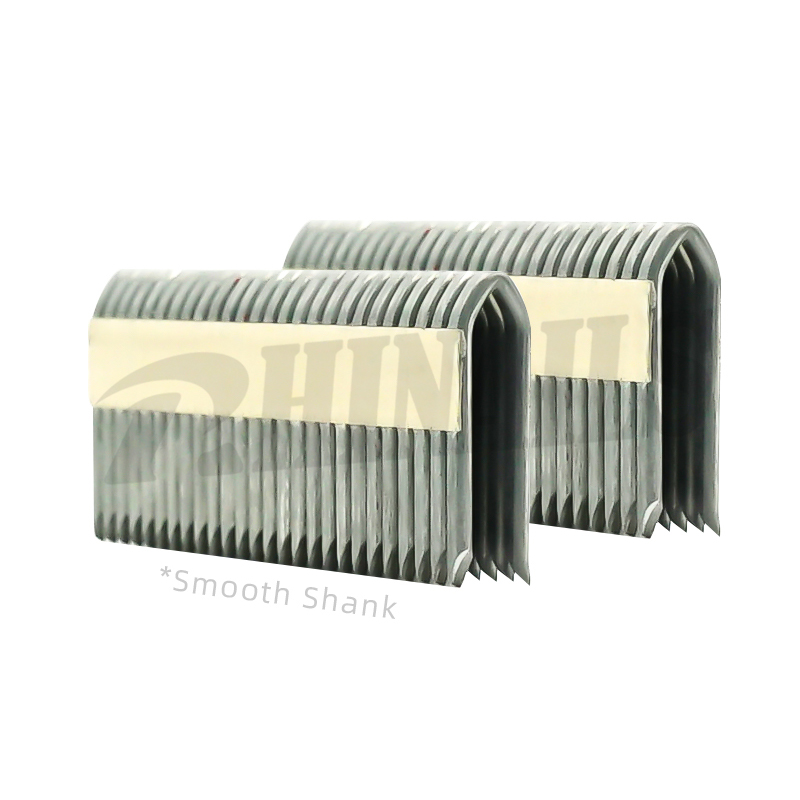
Fig. 1 - Rhinails smooth shank galvanized fence staples: heavy zinc-coated carbon steel wire engineered for agricultural wire fencing and outdoor boundary posts.
When moisture contacts a galvanized nail:
Zinc is more electrochemically active (anodic) than the carbon steel core.
The zinc layer oxidizes first, creating a thin, chalky white patina of zinc hydroxycarbonate (white rust) that seals the surface against atmospheric oxygen.
Even if a hammer or nailer driver blade scratches the coating down to bare steel, surrounding zinc sacrifices its electrons to protect the exposed iron scratch.
Only when all available zinc is consumed does moisture begin attacking the steel core, producing flaky iron oxide (red rust) that destroys structural nail holding power.
Home improvement stores frequently stock shiny, bright silver nails labeled simply as "galvanized" without specifying the process. In more than 90% of cases, these are cheap electro-galvanized fasteners.
Electro-galvanizing is an indoor plating process:
Electric current deposits a microscopic zinc flash layer only 5 to 8 microns (0.0002 to 0.0003 in) thick.
In outdoor air, natural humidity and rain deplete zinc at roughly 1.0 to 1.5 microns per year.
Within 36 to 48 months, that 5-micron shield is completely gone.
Rainwater begins eating the bare carbon steel, creating dark rust streaks that run down cedar siding and rot fence posts.
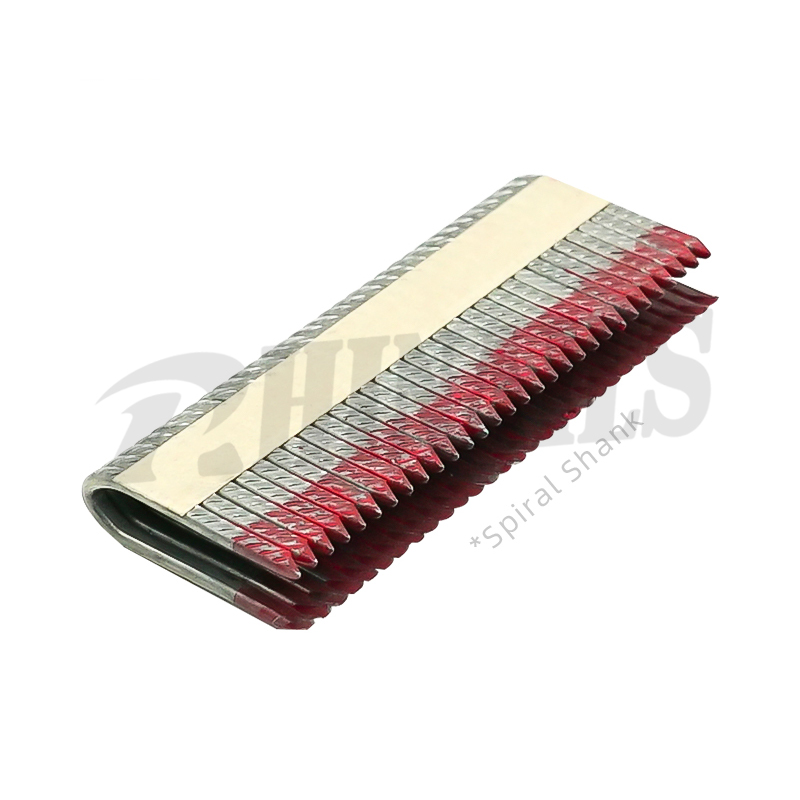
Fig. 2 - Rhinails threaded fence staples: heavy galvanized zinc coating over deformed threaded shanks provides maximum holding power against cyclic wind vibration.
True hot-dip galvanizing immerses clean steel fasteners directly into a bath of molten zinc at roughly 450 degrees Celsius (840 degrees Fahrenheit):
Molten zinc reacts metallurgically with the steel surface, creating four distinct iron-zinc alloy layers beneath a pure zinc outer skin.
The coating thickness reaches 45 to 85 microns (1.8 to 3.4 mils) - roughly ten times thicker than electro-plating.
Even in exposed outdoor weather, hot-dip galvanized nails provide 20 to 30+ years of structural integrity before red rust ever reaches the steel core.
Sourcing Certified Hot-Dip Galvanized Fasteners Direct from Factory?Rhinails produces ASTM A153 Class D certified hot-dip galvanized nails, fence staples, and coil roofing fasteners with verified 45+ micron zinc coatings tested for 1,000+ hours in ASTM B117 salt spray chambers. Request a Factory Specification Sheet & Free Jobsite Sample Pack -> |
How long galvanized nails last outdoors depends directly on your local atmospheric corrosivity category:
Environment Category (ISO 9223) | Typical Outdoor Setting | Annual Zinc Depletion Rate | Electro-Galvanized Lifespan (5-8 um) | Hot-Dip Galvanized Lifespan (45-85 um) | Recommended Fastener |
C1 / C2 (Very Low - Low) | Dry rural inland, low humidity, clean air | Under 0.5 to 0.8 um / year | 4 to 6 years | 40+ years | Hot-Dip Galvanized |
C3 (Medium Corrosivity) | Standard suburban exterior, moderate rain | 1.0 to 2.0 um / year | 2 to 4 years | 20 to 30 years | Hot-Dip Galvanized (ASTM A153) |
C4 (High Corrosivity) | Industrial parks, heavy traffic, urban smog | 2.0 to 4.2 um / year | 1 to 2 years | 12 to 20 years | Hot-Dip Galvanized or Grade 304 SS |
C5 (Very High Marine) | Saltwater coastlines (within 15 miles), estuaries | 4.2 to 8.4 um / year | Under 12 months | 5 to 10 years | Grade 316 Stainless Steel mandatory |
Severe Chemical Exposure | Swine/poultry barns, fertilizer storage, ACQ | 8.0+ um / year | Under 6 months | 3 to 7 years | Grade 304 or 316 Stainless Steel |
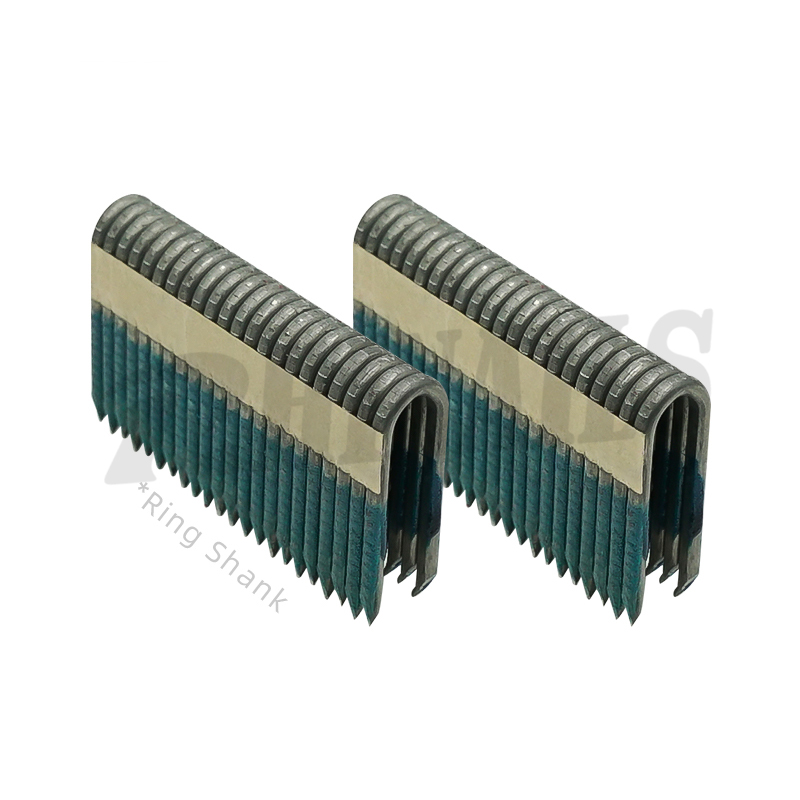
Fig. 3 - Rhinails heavy-duty ring shank staples: permanent barbed rings and heavy zinc protection ensure farm and vineyard fencing remains secure without rust failure.
Understanding what type of rust you see on a nail head determines whether you have a cosmetic issue or a structural emergency:
White Rust (Zinc Hydroxide / Zinc Carbonate): A harmless white powdery film that forms when new galvanized nails get wet in unventilated storage. Once exposed to free-flowing air, it cures into a protective zinc patina. Do not throw these nails away; they are fully functional.
Red Rust (Iron Oxide): Indicates that 100% of the zinc coating has been depleted and the steel core is losing physical cross-sectional area. Nails showing red rust have lost shear strength and must be replaced.
Demand ASTM A153 Class D Certification: Reject generic descriptions like "plated" or "galvanized". True exterior fasteners must specify ASTM A153 Class D (minimum 1.0 oz/ft2 or 45 microns of zinc).
Never Use Electro-Galvanized Nails in Treated Wood: Chemical preservatives in ACQ treated lumber accelerate zinc galvanic loss, eating thin 5-micron coatings in months.
Keep Galvanized Fasteners Away from Copper: Driving galvanized nails through copper valley flashings creates galvanic corrosion that destroys the nail in 2 to 3 years.
Choose Stainless Steel Near Saltwater: If your project sits within 15 miles of an ocean or near salted winter highways, skip zinc entirely and specify Grade 304 or 316 stainless steel.
Hot-dip galvanized wire fence staples (28-50 mm) - Fence Staples Overview
Ring shank outdoor coil roofing nails - Ring Shank Coil Nails Collection
Exterior coated construction screws - Screws Products Overview
Pneumatic outdoor fastening tools - Rhinails Pneumatic Tool Range
Complete fastener collections - All Rhinails Products
Q: Do galvanized nails rust in rain?A: Yes, eventually. Rainfall slowly depletes the protective zinc layer over time. Hot-dip galvanized nails carry 45-85 microns of zinc, lasting 20 to 30+ years in rain before red rust reaches the steel core. |
Q: How long do galvanized nails last outside?A: Electro-galvanized nails last only 2 to 5 years outdoors. Hot-dip galvanized nails last 20 to 30+ years in normal suburban and rural environments, and 15 to 20 years in heavy industrial areas. |
Q: What is the best galvanized nail for outdoor use?A: Hot-dip galvanized (HDG) nails certified to ASTM A153 Class D are the gold standard for outdoor projects. Their thick 45-85 micron metallurgical alloy coating provides ten times more protection than electro-galvanizing. |
Q: What is the difference between hot-dipped and electro-galvanized nails?A: Electro-galvanized nails receive a thin 5-micron zinc flash via electricity, intended strictly for dry indoor use. Hot-dipped nails are plunged into 450 deg C molten zinc, creating a 45-85 micron alloy shield for long-term outdoor exposure. |
Q: Why are my galvanized nails turning white?A: White residue on galvanized nails is zinc hydroxycarbonate (white rust). It forms when zinc oxidizes in moist storage. It is harmless passivation that seals the surface, not structural red rust. |
Rhinails is a high-volume fastener manufacturer with 30 years of industrial export experience, supplying certified hot-dip galvanized nails, fence staples, coil fasteners, and pneumatic tools to agricultural distributors, building contractors, and hardware importers worldwide.
We manufacture wire fasteners in smooth, ring, and spiral shanks with ASTM A153 Class D hot-dip galvanizing and Grade 304/316 stainless steel finishes engineered to IRC outdoor building codes.
Every production lot undergoes strict zinc coating thickness verification, magnetic gauge testing, and ASTM B117 salt spray validation.
Contact us to request technical specification sheets, container-load wholesale pricing, or jobsite evaluation sample packs.


