
- All
- Product Name
- Product Keyword
- Product Model
- Product Summary
- Product Description
- Multi Field Search
Views: 0 Author: Rhinails Publish Time: 2026-09-08 Origin: Site


Use hot-dip galvanized (HDG) fasteners for most outdoor projects, stainless steel (304/316) for coastal, marine, or food-contact environments, and electro-galvanized only indoors. The word "galvanized" alone is not enough - electro-galvanizing deposits a zinc layer roughly ten times thinner than hot-dip, and that thin layer is why so many "galvanized" fence staples rust within a few years outdoors. If your project lives outside, choose the coating by how much moisture and salt it will meet.
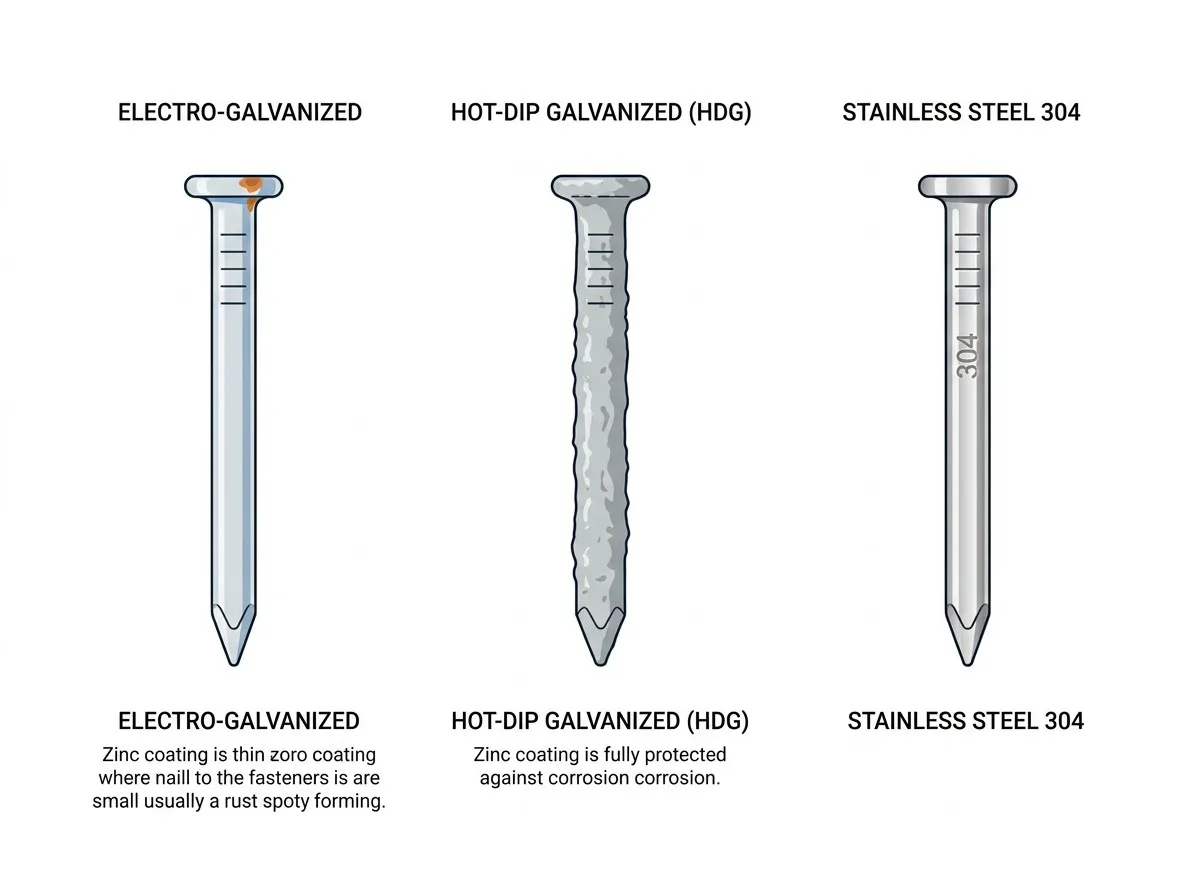
Fig. 1 - Three protection levels: electro-galvanized (thin zinc, indoor), hot-dip galvanized (thick zinc, outdoor), stainless 304 (alloy itself, coastal).
Electro-galvanized | Hot-dip galvanized (HDG) | Stainless steel 304/316 | |
|---|---|---|---|
Zinc layer | Very thin (5-8 µm) | Thick (45-85 µm+) | No coating - alloy itself |
Protection method | Barrier only | Barrier + sacrificial | Chromium oxide passive film |
Best environment | Indoor, dry | Outdoor, humid, rain | Coastal, salt air, marine, food |
Lifespan outdoors | 1-3 years before rust spots | 15-30+ years typical | Decades, essentially indefinite |
Cost | Lowest | Moderate | Highest (2-4x) |
Typical use | Indoor furniture, cartons | Fences, decks, roofing, framing | Boat docks, food plants, cedar |
The key difference: electro-galvanized steel has only a thin cosmetic zinc layer, while hot-dip galvanized steel is dipped in molten zinc, creating a thick, metallurgically bonded armor. Stainless steel doesn't rely on any coating at all - the chromium inside the alloy forms an invisible self-healing film.
This is the single most common outdoor fastening mistake, and it shows up constantly in fencing and roofing forums. A contractor installs "galvanized" staples or nails, and within a few years the heads are streaked with rust.
The reason is usually electro-galvanizing being sold as if it were outdoor-grade:
Electro-galvanized - steel is dipped in a zinc electroplating bath. Result: a thin, smooth, bright layer (5-8 µm). Great for indoor appearance, useless against years of outdoor moisture.
Hot-dip galvanized (HDG) - steel is dipped in molten zinc at about 450°C. Result: a thick, dull-gray, sometimes textured layer (45-85 µm or more) that is metallurgically bonded. This is the outdoor standard.
One forum user described their own test of "galvanized" fencing staples: "Rust within 18 months. Switched to hot-dip, no issues in 5 years." When you buy outdoor fasteners, the spec on the box matters more than the word "galvanized" on the label.
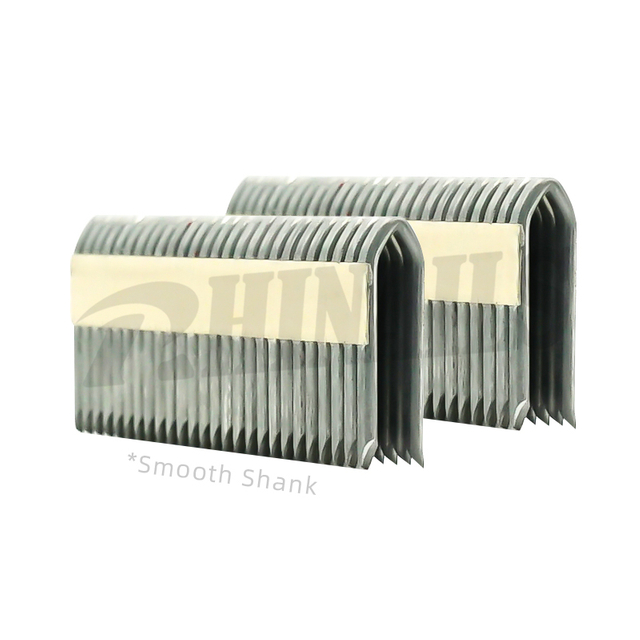
Fig. 2 - Outdoor-grade fence staples like our smooth shank galvanized fence staples should always state the true coating spec.
Choose HDG for most outdoor projects where salt is not a constant factor:
Fences and fence staples - the classic application; HDG staples hold wire for decades. See our full range of fence staples
Decks and pergolas - rain and humidity exposure
Roofing and siding - weather exposure year-round
Framing and outdoor construction - structural security matters
HDG protects in two ways: it forms a barrier against moisture, and when the coating is scratched, the zinc sacrifices itself (corrodes first) to protect the steel beneath. That sacrificial action is why a scratch on an HDG nail doesn't turn into a rust line.
For wire fencing specifically, the staple shank matters as much as the coating: a threaded shank fence staple grips wire tighter than a smooth one, and a ring shank design resists pull-out under tensioned fence wire.
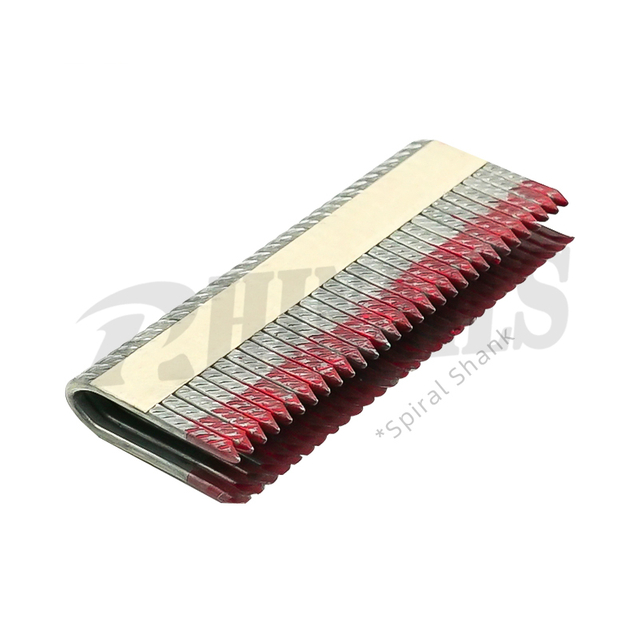
Fig. 3 - Threaded fence staples combine outdoor coating with extra wire grip for tensioned fencing.
In some environments, no zinc coating is enough - you need the alloy itself to resist corrosion:
Coastal and marine - salt air attacks zinc coatings aggressively; stainless is the standard for docks and beach houses
Food and beverage plants - hygiene requirements and washdown chemicals
Cedar and treated lumber - the tannins in cedar react with zinc and cause black staining; stainless avoids it
High-humidity tropical climates
Any fastener you never want to replace
Choose 304 stainless for most coastal and cedar projects; choose 316 (with added molybdenum) for direct saltwater contact or chemical environments.
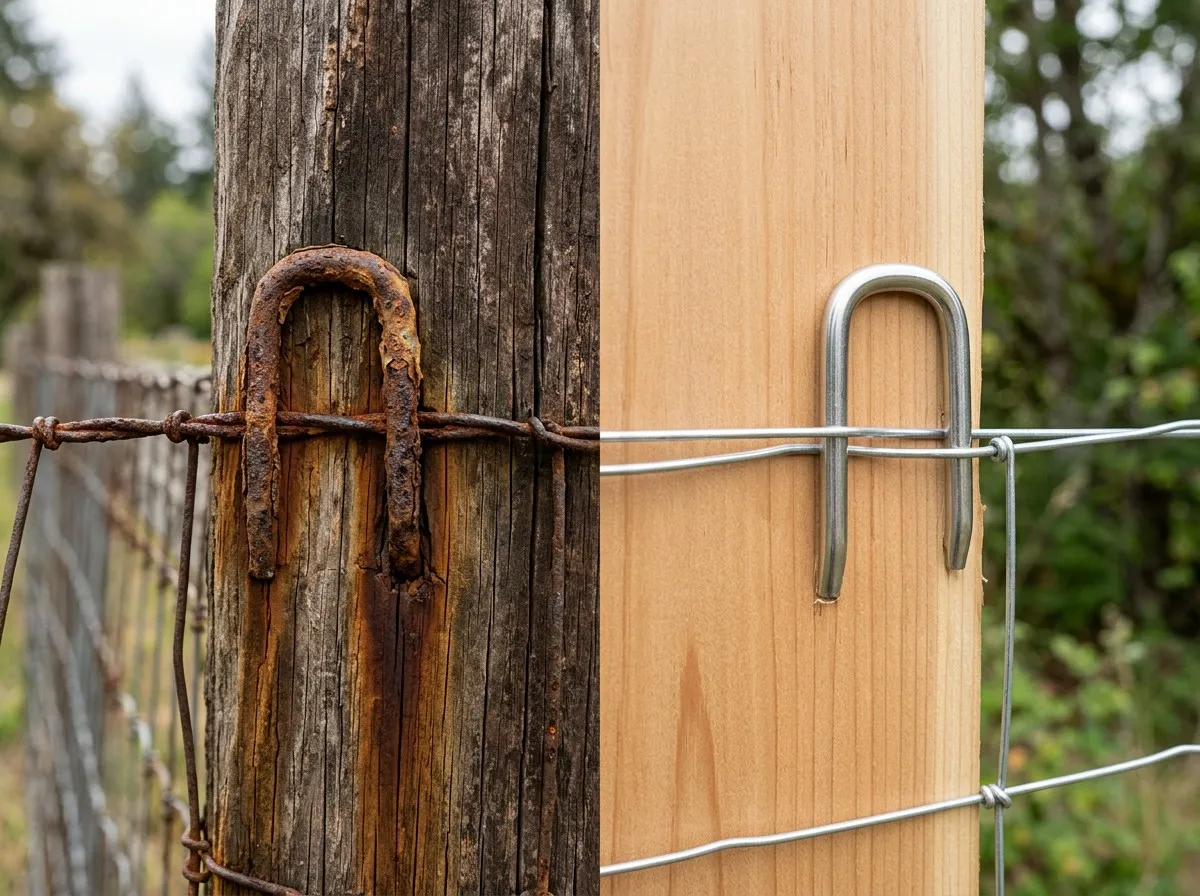
Fig. 4 - The difference outdoor corrosion makes: a rusted staple after years in weather vs a protected stainless staple on cedar.
Where is the fastener going? | Choose |
|---|---|
Indoor furniture, dry workshop | Electro-galvanized |
Garden fence, 2-10 km from coast | Hot-dip galvanized |
Coastal house or deck | Stainless 304 |
Dock, marina, direct saltwater | Stainless 316 |
Cedar or redwood deck | Stainless 304 |
Agricultural fence (normal inland) | Hot-dip galvanized |
Food processing facility | Stainless 304/316 |
Temporary indoor job | Electro-galvanized |
Lesson 1: The 7-year roofing rust. A roofing thread documented nails that rusted through shingle fasteners within 7 years - because the coating was electro-galvanized, not hot-dip. The thread's conclusion, echoed by dozens of contractors: check the coating spec before you install, not after it rusts.
Lesson 2: Cedar staining is a chemical reaction. A fence builder noticed black streaks running down cedar boards from galvanized staples. That's not rust - it's a tannin-zinc reaction. The fix was switching to stainless staples, which are chemically inert against cedar tannins.
From the factory floor, ask for these three things before ordering outdoor fasteners:
Coating type and thickness - "hot-dip galvanized" should come with a zinc coating weight spec (e.g., 50-85 µm or grams per square meter)
Salt spray test report - a standard test (e.g., ASTM B117) shows how many hours the coating survives; outdoor-grade fasteners typically pass 100+ hours with no red rust
Material certificate - confirms the steel grade for stainless (304 vs 316)
If a supplier can't state the coating spec, assume the worst: thin electro-galvanizing marketed as outdoor-grade.
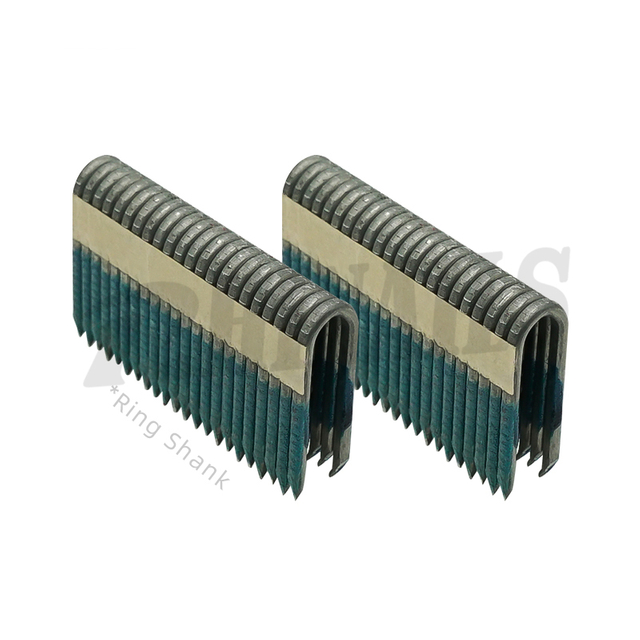
Fig. 5 - For permanent, high-tension fencing choose heavy duty options like our ring shank galvanized fence staples 40-50mm.
Q: Is galvanized or stainless steel better for outdoor use?
A: Both can work, but they answer different needs. Hot-dip galvanized is the economical choice for most outdoor projects (fences, decks, roofing). Stainless steel 304/316 is required for coastal, marine, food-contact, and cedar applications where zinc won't survive or stains matter.
Q: Why do my "galvanized" staples rust outdoors?
A: Most likely they're electro-galvanized - a thin 5-8 micron zinc layer meant for indoor use. Outdoor projects need hot-dip galvanized (45-85 microns+), which is a different and much heavier coating. Check the coating spec, not just the word "galvanized."
Q: Does stainless steel rust?
A: Stainless can rust in theory, but 304 and 316 resist corrosion through a self-healing chromium oxide film. 316 adds molybdenum for saltwater and chemical resistance. True stainless rust is rare and usually caused by contamination or the wrong grade.
Q: Why does galvanized hardware stain cedar wood?
A: Cedar contains tannins that react with zinc, producing black staining over time. The fix is stainless steel fasteners, which don't react with cedar tannins.
Q: What's the difference between 304 and 316 stainless steel?
A: 316 contains added molybdenum, which improves resistance to chlorides (salt). Use 304 for most coastal and cedar work; use 316 for direct saltwater, docks, and chemical environments.
Q: How long do hot-dip galvanized nails last outdoors?
A: In typical inland conditions, 15-30+ years depending on zinc thickness and climate. In aggressive coastal environments, expect less - that's when stainless becomes the better value.
Rhinails is a fastener manufacturer with 30 years of experience producing galvanized fence staples - smooth shank, threaded and ring shank designs - plus construction fasteners in hot-dip galvanized, electro-galvanized and stainless steel finishes. We publish coating specs and offer salt spray test reports on request - so you can verify outdoor protection before you order, not after it rusts. Contact us for bulk pricing or a sample test order.


