
- All
- Product Name
- Product Keyword
- Product Model
- Product Summary
- Product Description
- Multi Field Search
Views: 0 Author: Rhinails Publish Time: 2026-08-14 Origin: Site


A jamming staple gun is almost never the gun's fault - it's usually the staples. Wrong gauge, wrong crown width, wrong point type, or simply bad/old collated strips are responsible for most jams. The quickest fix: check your staple specification against the gun's label, switch to chisel-point staples for hard woods, and replace any staples that have been sitting in a damp garage. Below are 9 fixes ordered from the most common cause to the least.
Every staple gun has its specs printed on the magazine or base plate: gauge (wire thickness), crown width, and leg length range. If you feed 18-gauge staples into a gun built for 20-gauge, the driver blade can't seat properly and the strip jams.
Quick check:
Gauge - 20 gauge (T50 type) is a general-purpose staple; 22 gauge (71-series) is fine-wire for upholstery; 18 gauge and 16 gauge are heavier framing staples
Crown width - 3/8", 1/2", 3/4" and 1" crowns exist; the magazine must match
Leg length - must be within the gun's rated range (e.g., 1/4" to 9/16")
If the staples rattle or slide in the magazine, they're too narrow. If they won't fit, they're too wide. Fix it with the matching spec, and most "jamming" problems disappear.
One of the most common scenes on construction forums: a user staples white oak or another dense hardwood and the gun jams or the staples bend. The staple point type is the issue.
Point type | Best for | Why |
|---|---|---|
Chisel point | Hard woods (oak, maple, engineered wood) | Cuts through dense grain, less bending |
Divergent point | Soft woods, general construction | Legs spread for maximum grip |
Needle / round point | Thin materials, upholstery | Minimal surface damage |
Rule of thumb: dense wood + chisel point + shorter leg. In hard wood you usually need a shorter leg, not a longer one - a 1/4" chisel-point staple in oak holds better and jams less than a 1/2" standard-point staple.
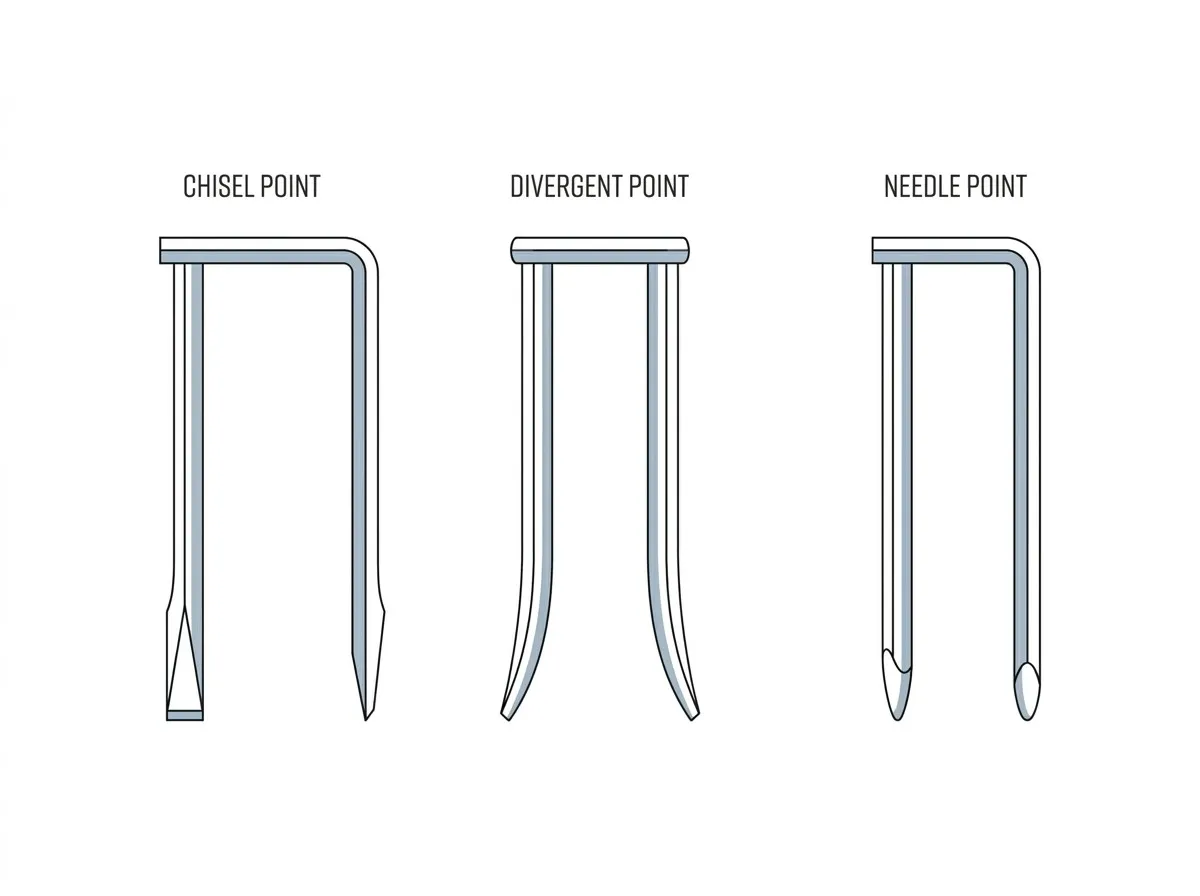
Fig. 1 - Chisel point cuts through hard grain; divergent point grips soft wood; needle point suits thin materials.
Collated staples are held together by glue. Heat, humidity and time degrade that glue - and a partially detached strip is a guaranteed jam.
Rust or discoloration on the wire? Discard the strip
Staples stored in a garage or shed for months? Replace them
Staples that separated from the strip before loading? Don't load them
One Reddit user described it exactly: "I had this problem with bad/old staples. Bought new ones, problem went away." Fresh, factory-sealed staples from a reputable manufacturer feed far more reliably than old stock.

Fig. 2 - Quality collated staple strips (Rhinails 10J series) feed reliably when stored dry and used fresh.
This is the hidden cost of bargain staples. Cheap collated strips often have:
Uneven glue application (too thick at one end - jams in the feed track)
Slightly crooked alignment (driver blade catches the edge)
Glue residue that builds up inside the magazine
Professional fastening brands control collation tolerances precisely - it's one of the main reasons contractors stick to established professional brands or quality OEM manufacturers. Our collated staples go through a collation precision check on every production batch. If your gun jams consistently with one brand but not another, the collation tolerance is the difference. Try a different brand's staples before blaming the tool.
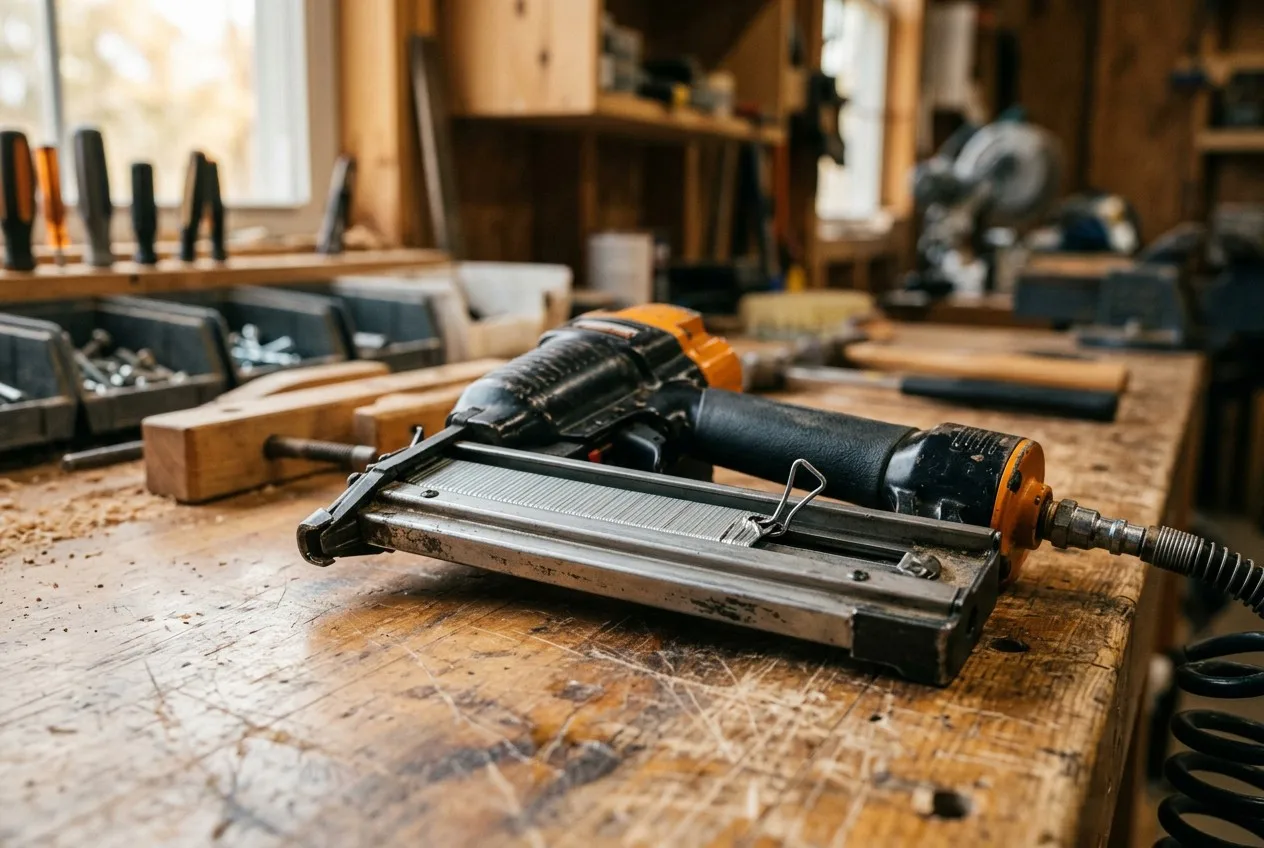
Fig. 3 - A jammed staple gun on the workbench: most jams trace back to the staples, not the gun.
Pneumatic staple guns need consistent air pressure - typically 70-90 psi at the gun, not just at the compressor.
Symptom | Likely cause |
|---|---|
Staples only half-drive | Pressure too low |
Staples punch through material | Pressure too high |
Misfires after a few shots | Compressor too small / tank can't keep up |
Inconsistent depth shot to shot | Air leak in hose or fittings |
Turn up the regulator, check for leaks in the hose and quick-connect fittings, and make sure your compressor's CFM output matches the gun's requirement for continuous work.
Pneumatic tools need a few drops of air-tool oil before use - most users forget. An unlubricated gun loses power and starts misfiring or double-firing.
Weekly maintenance:
2-3 drops of air-tool oil in the air inlet before use
Wipe the magazine and driver channel clean of glue residue
Check the driver blade for chips or bends - a damaged blade causes feed problems
If the gun has a jam-clearing mechanism, use it gently; never force the driver with pliers, or you'll bend the blade and create a permanent jam problem.
On coil-style guns (roofing and high-volume staplers), the magazine base plate has adjustable positions for different staple lengths. A misaligned plate causes the strip to feed at the wrong angle - the gun fires once, then stops feeding. This exact problem appears repeatedly in contractor forums, and the fix is always the same: adjust the base plate to the staple length, then test.
Fig. 4 - Match the staple spec to your gun's magazine; a misaligned base plate on high-volume guns is a common jam cause.
Some guns are "picky" about off-brand staples. A gun that won't feed one brand of staples may run perfectly with another; some pin nailers jam with anything but the gun manufacturer's own pins. Before giving up on your gun:
Try the gun manufacturer's recommended staple brand
Compare the physical dimensions (crown width, wire thickness) of the two strips
If the "official" staples feed fine, your gun is simply sensitive to tolerance - stick to brands with consistent dimensions
In framing work, feeding a 30-degree collated nail into a 21-degree gun - or mixing collation angles - causes immediate jams. Same principle applies to staples: paper-collated, plastic-collated and wire-collated strips are not interchangeable unless the gun explicitly supports them. Always match the collation type printed on your gun's label.
From 30 years of making staples, our top 3 prevention rules:
Buy the right spec once - gauge, crown, leg length and point type printed on the gun's label are law
Store staples in a dry place - humidity destroys collation glue and rusts wire; keep sealed boxes indoors
Match staples to the material - hard wood: chisel point + shorter leg; soft wood: divergent point; upholstery: fine wire (22-gauge 71-series), never construction-grade T50 staples
Q: Why do my staples bend when stapling hardwood?
A: You're likely using a standard point staple that's too long. Switch to a chisel-point staple with a shorter leg (e.g., 1/4" instead of 1/2") - the chisel point cuts through dense grain instead of deflecting.
Q: Why does my staple gun fire two staples at once?
A: Double-feeding is usually caused by (1) damaged collation glue on the strip, (2) a dirty magazine with glue residue, or (3) a worn driver blade. Clean the magazine, replace the strip, and check the blade.
Q: Do I need to use the same brand of staples as my gun?
A: Not always, but consistency matters. Guns with tight tolerances can be picky about off-brand strips. If jams happen with one brand and vanish with another, the collation tolerance is the difference - keep using the brand that feeds cleanly.
Q: What PSI should my pneumatic staple gun be set to?
A: 70-90 psi at the gun for most stapling. Start at 80 psi and adjust down for thin materials, up for hard woods. Make sure your compressor can maintain pressure during continuous work.
Q: How often should I oil my staple gun?
A: 2-3 drops of air-tool oil in the air inlet before every work session, and more if you're running high volume. An unlubricated pneumatic gun loses power and becomes unreliable fast.
Rhinails is a fastener manufacturer with 30 years of experience producing construction staples, nails and screws - including collated staple strips engineered for smooth feeding in all major pneumatic and electric staple guns. We test every production batch for collation precision, so "doesn't feed" is never something our customers hear. Contact us for bulk pricing or a sample test order.


