
- All
- Product Name
- Product Keyword
- Product Model
- Product Summary
- Product Description
- Multi Field Search
Views: 0 Author: Rhinails Publish Time: 2026-08-29 Origin: Site


Use staples when you need strong two-leg grip in soft or thin materials (upholstery, fabric, cartons, mesh), and brad nails when you need clean, nearly invisible finish work (trim, molding, cabinet assembly, picture frames). The staple's two legs double the holding surface; the brad nail's single thin shaft leaves a hole so small it rarely needs filling. Match the fastener to the joint, not the tool you happen to own.
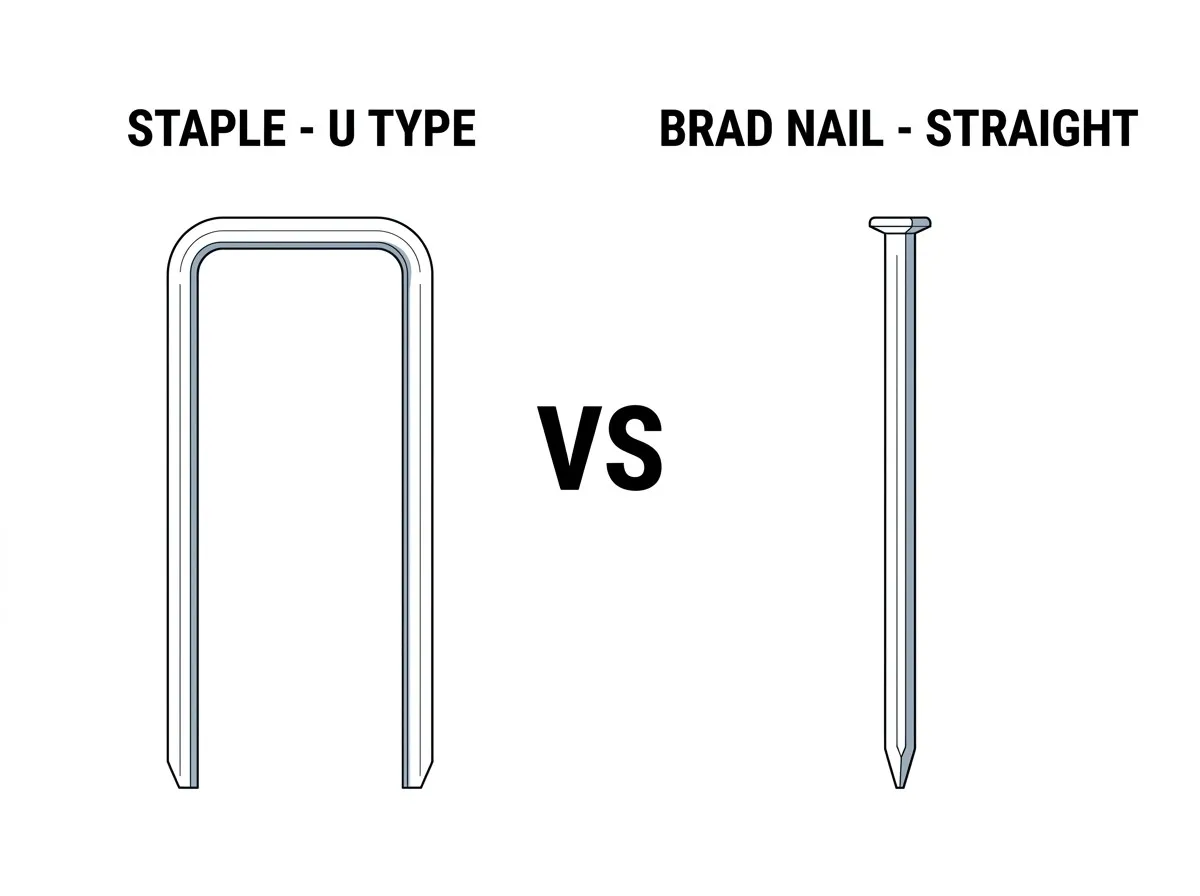
Fig. 1 - Staple (two legs, wide grip) vs brad nail (single shaft, invisible hole): match the fastener to the joint.
Staples (U-type) | Brad Nails (straight) | |
|---|---|---|
Shape | One crown + two legs | Single straight shaft + small head |
Holding power | High - two legs grip two directions | Good along the shaft, less sideways grip |
Hole size | Two holes, wider | One tiny hole, nearly invisible |
Best for | Upholstery, fabric, cartons, mesh, light wood | Trim, molding, cabinetry, picture frames, furniture assembly |
Risks | Can split thin wood, visible holes | Less grip on fabric/mesh, weaker in shear loads |
Typical tools | Staple gun (pneumatic/electric/manual) | Brad nailer (pneumatic/cordless) |
Common gauges | 20, 22, 18, 16 gauge | 18, 16 gauge (F/T/ST series) |
A staple's two legs grip in two directions, which makes it dramatically stronger for certain jobs:
Upholstery and fabric - two thin legs hold fabric to frames without pulling through; this is the classic staple job
Cartons, boxes and light crating - the wide crown spreads the load, so staples resist pull-out from vibration and handling
Mesh, wire and fencing - staples wrap around wire strands; a nail can't do that
Screening and netting - same wrapping action on every crossing point
Attaching thin sheet material (hardboard, thin plywood, PVC panels) - the flat crown presses material flat without the hinge effect of a round nail head
Contractors choose staples where pull-out resistance and speed matter more than appearance.
A brad nail is a single thin shaft with a tiny head - it leaves a hole so small it usually doesn't need filling:
Trim and molding - baseboards, crown molding, door casings; holes vanish or need one dab of filler
Cabinet assembly and face frames - clean joints on visible surfaces
Picture frames and display boxes - precision nailing on thin edges
Furniture assembly - chair rails, table aprons, shelf fronts where holes would be seen
Hardwood joints - a thin straight nail follows the grain and is less likely to split than a wide staple
Finish carpenters choose brad nails where appearance matters more than raw holding force.
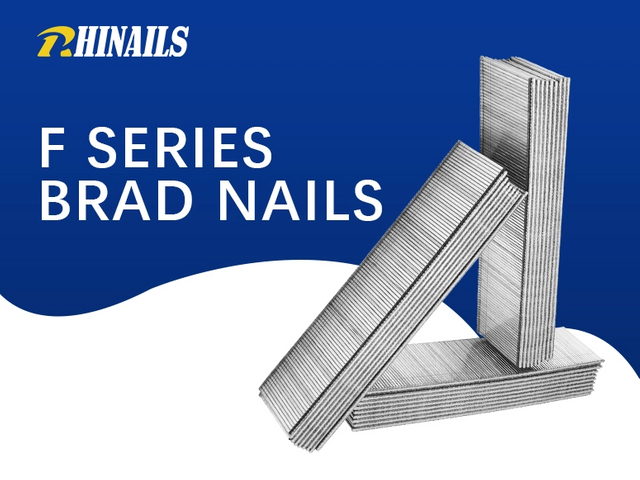
Fig. 2 - Fine brad nails (Rhinails F series) - the finish carpenter's choice for invisible holes.
Across woodworking and tools forums, the same rule surfaces again and again: people who staple into visible hardwood get split edges and visible holes; people who nail fabric with brads get fabric that pulls loose. The mistake isn't the tool - it's the fastener-to-material match.
One forum regular put it simply: "I use my stapler for things you'll never see, and my brad nailer for things you will." That's the whole philosophy in one sentence.
Job | Choose |
|---|---|
Sofa fabric to wood frame | Staple (22-gauge fine wire) |
Baseboard to wall | Brad nail (18-gauge) |
Carton sealing / pallet repair | Staple (20-gauge) |
Door casing and trim | Brad nail (16 or 18-gauge) |
Chicken wire / mesh fencing | Staple (galvanized) |
Picture frame assembly | Brad nail (18-gauge) |
PVC ceiling panel to wood | Staple (fine wire, short leg) |
Cabinet face frame | Brad nail (16-gauge) |
Gauge beats brand. Whether staple or nail, the wire gauge determines holding power and split risk. Thinner gauge for visible fine work, thicker gauge for structural grip.
Match the tool to the job, not the job to the tool. If you only own a staple gun, you'll be tempted to staple trim. Buy the right gun - finish work deserves a brad nailer, and one good pneumatic tool pays for itself in a single project.
Q: Are staples stronger than brad nails?
A: For pull-out resistance in soft materials, yes - the two legs grip two directions. But brad nails hold better along a single axis in wood and leave much smaller holes. "Stronger" depends on the job: staples for grip in soft/thin material, brads for clean joints in wood.
Q: Can I use a staple gun for trim work?
A: You can, but the wide staple crown is hard to hide and more likely to split molding. Trim is the classic brad nail job - small holes, clean finish.
Q: Can I use brad nails for upholstery?
A: Not well. Brads don't grip fabric the way a two-leg staple does, and the fabric will pull loose under use. Upholstery is a staple job.
Q: What gauge brad nail should I use for trim?
A: 18-gauge for most trim and molding; 16-gauge for heavier casing and door frames; 23-gauge pin nails for delicate micro-trim where you want zero visible holes.
Q: Do staples or brad nails split wood more?
A: Staples are more prone to splitting thin hardwoods because two wide legs wedge the grain apart. Brad nails follow the grain and split far less - one reason finish carpenters prefer them on visible wood.
Rhinails is a fastener manufacturer with 30 years of experience producing construction staples and brad nails - including fine-wire upholstery staples and F/T/ST series brad nails engineered for clean finish work in all major pneumatic and cordless tools. Every batch is tested for collation precision and consistent wire dimensions. Contact us for bulk pricing or a sample test order.


