
- All
- Product Name
- Product Keyword
- Product Model
- Product Summary
- Product Description
- Multi Field Search
Views: 0 Author: Rhinails Publish Time: 2026-09-15 Origin: Site


Use plastic collated coil nails for outdoor, humid or high-volume framing and roofing work, and paper collated coil nails for clean indoor work where you want minimal residue. The collation material decides how the strip behaves: plastic shrugs off moisture and feeds reliably in rain or damp air, while paper breaks down cleanly but swells and jams when it absorbs humidity. Choose collation by the job site, not by what your supplier happens to stock.
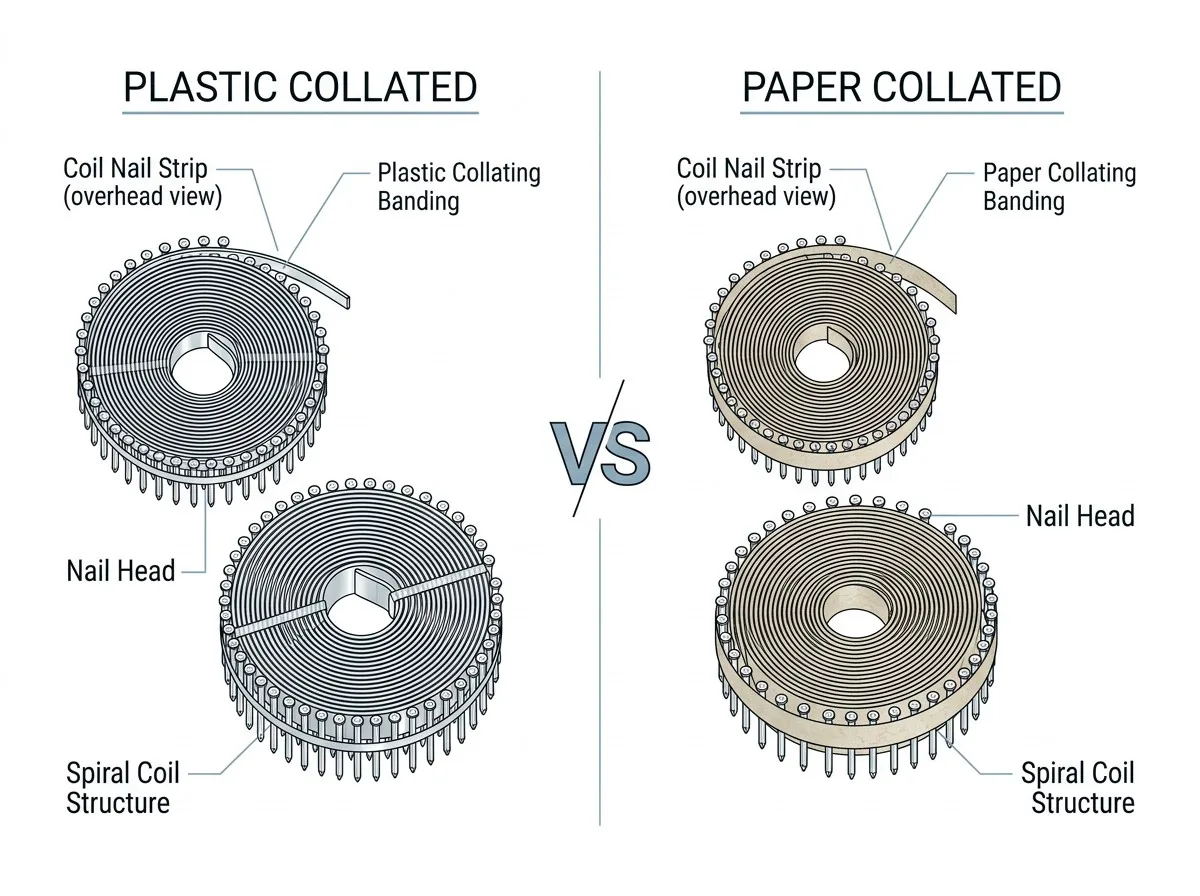
Fig. 1 - Plastic collation (left) resists moisture; paper collation (right) breaks down cleanly but is humidity-sensitive.
Plastic collated | Paper collated | |
|---|---|---|
Collation material | Thin plastic banding/welding | Paper tape or glued paper strip |
Moisture resistance | High - waterproof | Low - absorbs humidity, swells |
Residue left behind | Small plastic bits | Minimal - paper degrades |
Feeding reliability (dry) | Excellent | Excellent |
Feeding reliability (wet/humid) | Excellent | Poor - strips swell and jam |
Best for | Roofing, fencing, outdoor framing, pallets | Indoor framing, crating, furniture, clean floors |
Cleanup | Sweep up plastic bits | Almost none |
Storage | Forgiving - any dry place | Must stay sealed and dry |
Coil nails are held together in a spiral strip by a binding material - either plastic or paper. The nail gun's magazine advances the strip, and the driver blade fires each nail in sequence. Because collation holds the nails at a fixed angle and spacing, the strip's material directly affects:
Feeding smoothness - a swollen or torn strip causes jams
Where the nails can be used - wet sites destroy paper
Post-job cleanup - plastic leaves bits; paper mostly disappears
That is why the same nail, made identically, performs very differently depending on whether it is plastic collated or paper collated.
Choose plastic collation when the site is wet, humid or exposed:
Roofing - roof tiles are fastened in all weather; a paper strip that swells mid-roof is a nightmare
Fencing and outdoor framing - rain, dew and humid air are constant
Pallets, crates and cable reels - high-volume production lines where feeding must never stop
Coastal or tropical climates - humidity attacks paper year-round
Any job where stoppage costs money - plastic collation tolerates rough handling and long storage
Plastic collation is the workhorse of outdoor and industrial nailing: it holds its shape, feeds at speed, and doesn't care about the weather. See our spiral shank coil nails for structural and roofing work.
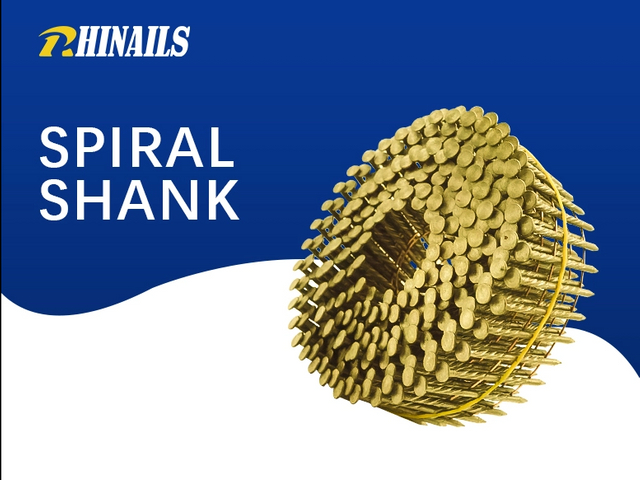
Fig. 2 - Spiral shank coil nails - extra grip for structural and roofing applications, available in plastic collation.
Choose paper collation when the site is dry and finish matters:
Indoor framing and drywall support - controlled conditions, dry air
Indoor crating and furniture frames - almost no residue to clean up
Finished floors and interiors - paper bits don't litter a finished space
Projects where the customer sees the work area - a cleaner site, less sweeping
Short runs in dry climates - paper collation is often the lower-cost option
Paper's advantage is cleanliness: the tape degrades or burns off in use, leaving minimal debris. Its weakness is moisture, which is why paper collation should never be your choice for roofing or exposed outdoor work.

Fig. 3 - Smooth shank coil nails - a common choice for pallets, crates and indoor assembly.
Most coil nail "tool problems" trace back to the strip:
Symptom | Likely cause | Fix |
|---|---|---|
Jams after a few shots | Damp paper strip swelling | Switch to plastic collation or dry the strips |
Strip breaks mid-coil | Damaged or old collation | Use fresh strips, store sealed |
Nails feed at wrong angle | Collation angle doesn't match the gun (e.g. 15° vs 16°) | Match the angle to your magazine |
Shallow or inconsistent drive | Low air pressure, not collation | Set 70-90 psi at the gun |
Plastic bits everywhere | Normal for plastic collation | Sweep up; choose paper for clean interiors |
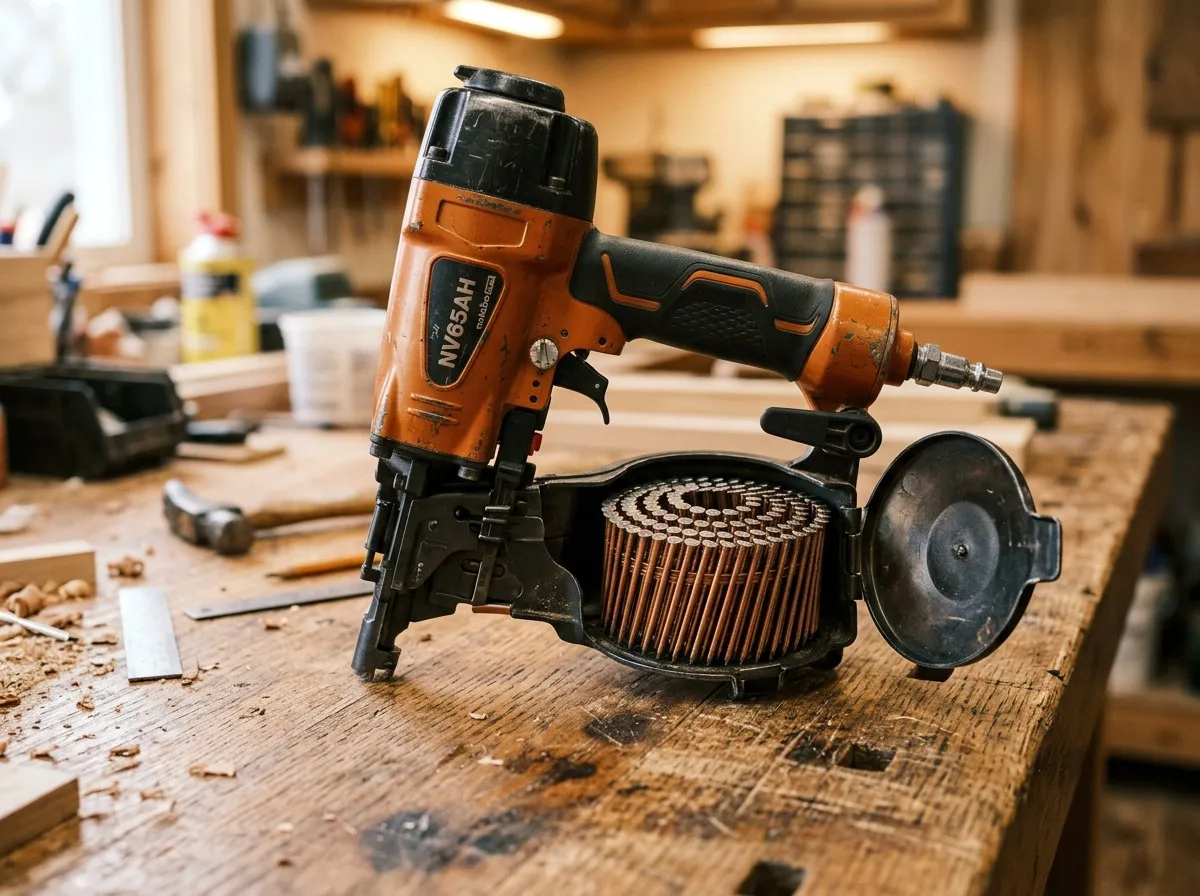
Fig. 4 - A coil nail strip loading into a pneumatic coil nail gun - match collation angle to the magazine.
From 30 years of making coil nails, the decisions that prevent most complaints:
Match the angle first. Coil nail guns are angle-specific; the strip must match the magazine (the most common is 15°). Wrong angle = guaranteed jams.
Pick collation by the weather, not the price. Paper for dry indoor work, plastic for anything exposed. Saving a few cents per coil is not worth a jammed roof.
Treat paper strips like bread. Keep them sealed and dry until use; humidity is their enemy. Plastic strips forgive storage mistakes - another reason they dominate outdoor work.
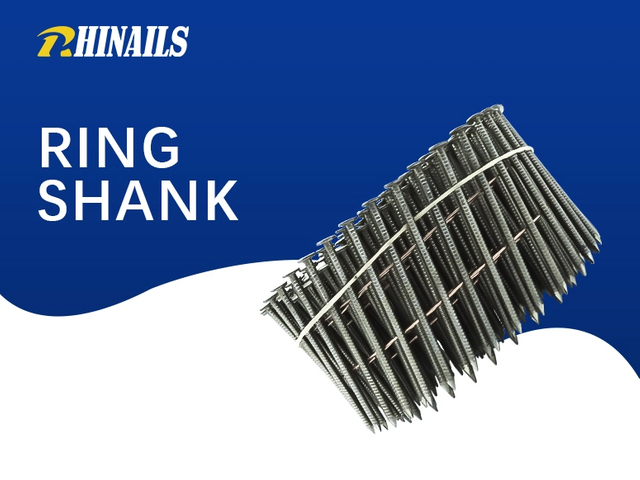
Fig. 5 - Ring shank coil nails for flooring and decking - high pull-out resistance in demanding applications.
Beyond collation, three specs drive performance:
Shank type - smooth (general), spiral (structural grip), ring (maximum pull-out resistance)
Length - 50-100 mm covers most framing, roofing and pallet work
Coating - galvanized or stainless for outdoor exposure; bright for indoor
Browse our full range of coil nails or match them with a coil nail gun for a complete, compatible system.
Q: Is paper or plastic collated better for roofing?
A: Plastic, without question. Roofing happens in all weather, and paper strips absorb moisture, swell and jam. Plastic collation is waterproof and feeds reliably on a wet roof.
Q: Do paper collated nails leave residue?
A: Very little. Paper tape degrades or burns off during driving, so cleanup is minimal - that's why paper collation suits indoor and finished work. Plastic collation leaves small plastic bits that must be swept up.
Q: Can I use paper collated nails outdoors in dry weather?
A: In genuinely dry, controlled conditions it can work, but humidity is unpredictable. For any exposed or long-duration outdoor job, plastic collation is the safer, more reliable choice.
Q: Why do my coil nails keep jamming?
A: The most common causes are a damp paper strip, a collation angle that doesn't match the gun, or low air pressure. Check the strip first, then the angle, then set the regulator to 70-90 psi.
Q: What angle are coil nail guns?
A: Most framing and roofing coil nailers use a 15° magazine, with 16° also common. Always match the collation angle to your specific tool - mismatched angles jam immediately.
Q: Are coil nails stronger than strip nails?
A: Coil nails are chosen for speed and capacity (larger magazine, fewer reloads), not raw strength. Holding power comes from the shank type and length, not the collation format.
Rhinails is a fastener manufacturer with 30 years of experience producing coil nails in smooth, spiral and ring shank designs, with plastic or paper collation engineered for smooth feeding in all major coil nail guns. Every batch is tested for collation precision and consistent wire dimensions. Contact us for bulk pricing or a sample test order.


