
- All
- Product Name
- Product Keyword
- Product Model
- Product Summary
- Product Description
- Multi Field Search
Views: 0 Author: Rhinails Publish Time: 2026-08-20 Origin: Site


Use 22-gauge staples for upholstery and light materials, and 20-gauge staples for wood, cartons and general construction. The difference is wire thickness: 20-gauge wire is nearly 20% thicker than 22-gauge, which means more holding power - but also more risk of splitting thin wood and tearing fabric. Pick the gauge by the material you're stapling, not by what's in the drawer.
Note on names: these two staple classes are also known in some markets by model-style names (e.g. "T50-style" for the 20-gauge 1/4"-crown class). This article uses gauge numbers only, to avoid confusion with T-type straight brad nails used for finish work.
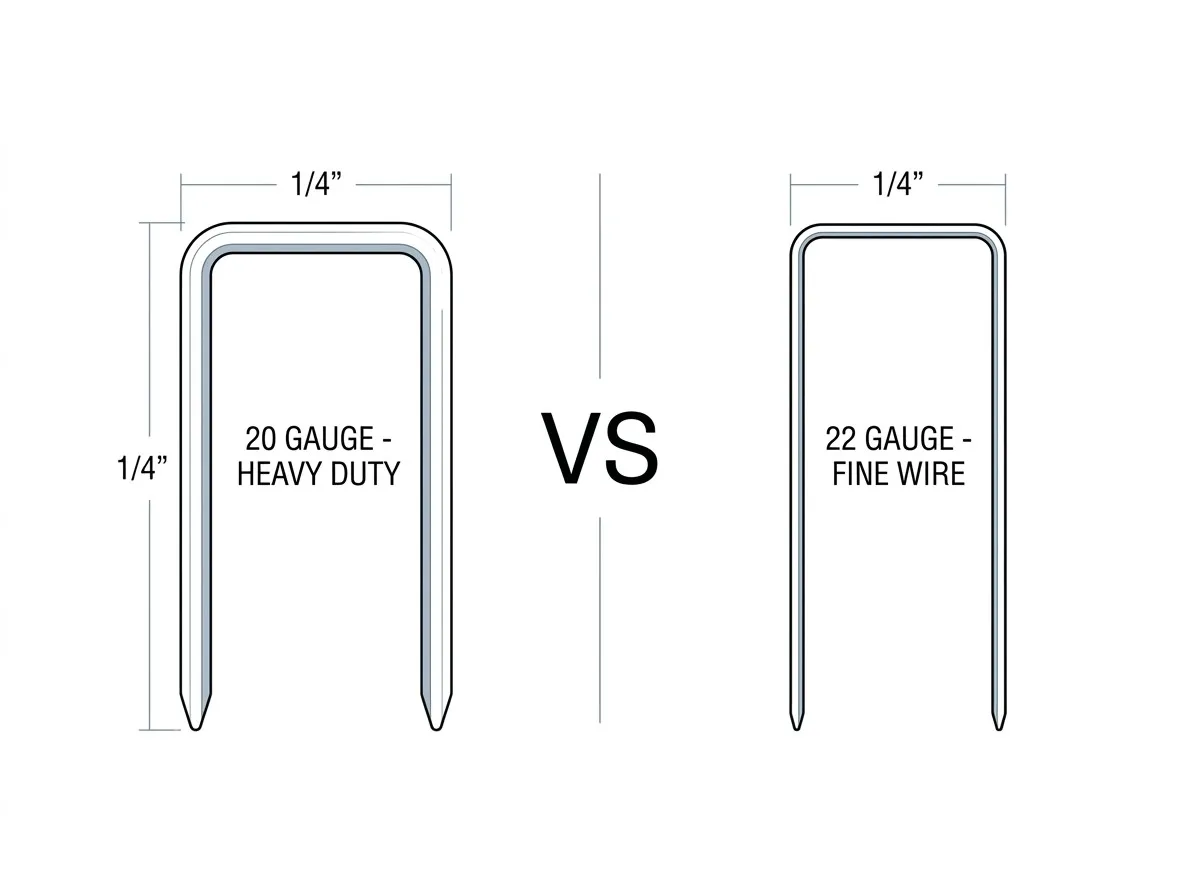
Fig. 1 - 20-gauge (thick wire, heavy duty) vs 22-gauge (fine wire): the gauge decides the job.
20-gauge | 22-gauge | |
|---|---|---|
Wire thickness | Thicker (about 0.033") | Thinner (about 0.028") |
Crown width | 1/4" (wide crown) | Narrow crown |
Typical leg length | 1/4" to 9/16" | 1/4" to 1/2" |
Point type | Chisel or divergent | Divergent / needle |
Holding power | High - grips wood well | Moderate - lighter duty |
Best for | Wood, cartons, pallets, trim, general building | Upholstery, fabric, leather, light wood, paper |
Risk | Can split thin wood, tears fabric | Too weak for heavy loads |
These two gauge classes are the industry standard across every brand - so the comparison applies to any staple gun that accepts 20-gauge 1/4"-crown or 22-gauge staples.
Gauge number = wire thickness. The higher the number, the thinner the wire:
20-gauge - wire diameter about 0.033". A strong, versatile workhorse
22-gauge - wire diameter about 0.028". Fine and flexible
That difference sounds small, but it changes everything about how the staple behaves in the material:
20-gauge staples:
Drive deep into wood and hold with serious grip
Survive vibration and rough handling (cartons, pallets)
Stay straight in harder woods
BUT: heavy legs can split thin boards and pull through soft fabrics
22-gauge staples:
Slip into thin materials without splitting
Don't tear fabric or leather
Leave smaller holes (important for visible upholstery work)
BUT: less holding power in hard wood
Use 20-gauge staples when the joint needs strength:
Furniture frames and carcasses - where legs hold structural joints
Cartons and boxes - the wide crown spreads load, staples stay put
Pallet repair and light crating
Trim, baseboards and general woodwork
Fencing mesh and heavier fabric
If you're unsure, ask yourself: "Will this joint take weight or vibration?" If yes, 20-gauge is the safer call.
Use 22-gauge staples for anything thin, soft or visible:
Upholstery - attaching fabric to wood frames without tearing the weave. This is the classic fine-wire job, and using a coarse 20-gauge staple here is a common DIY mistake
Leather and vinyl - fine wire makes smaller, less visible holes
Thin plywood, hardboard and trim - no splitting
Paper, cardboard and light packaging
Model work and crafts
The rule upholstery professionals follow: the finer the material, the finer the wire. Fabric that frays under a coarse staple will hold perfectly with a 22-gauge leg.
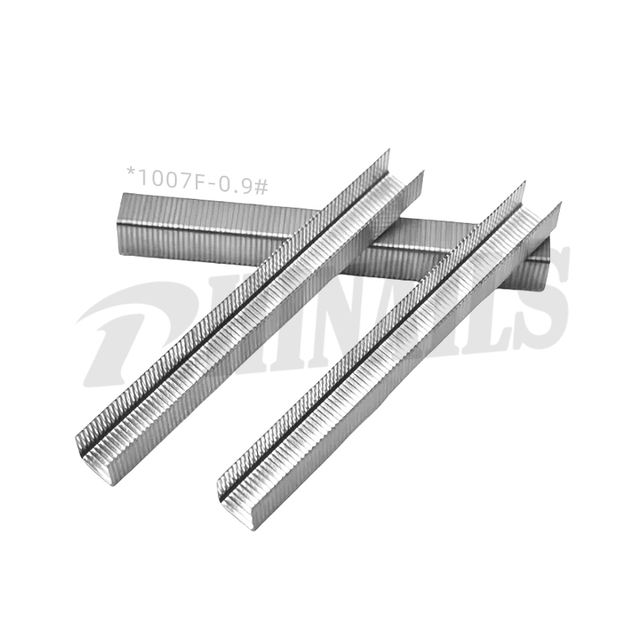
Fig. 2 - Fine 22-gauge staples (Rhinails 10F series) - the upholstery-safe choice.
Both directions fail in predictable ways:
Wrong choice | Symptom | Result |
|---|---|---|
20-gauge on thin wood | Split boards, bent legs | Wasteful, ugly joints |
20-gauge on fabric | Tears, visible holes | Ruined upholstery |
22-gauge on heavy loads | Staples pull out under weight | Unsafe joints |
22-gauge on hard wood | Legs bend, shallow drive | Re-do the job |
Most "my stapler is bad" complaints turn out to be "my staple is wrong" - the same lesson construction forums repeat year after year.
Length should suit the material thickness, not the job size:
1/4" - thin materials, fabric, paper
5/16" - 3/8" - standard woodworking and most upholstery frames
1/2" - 9/16" - heavier frames, carton corner reinforcement
A leg that's too long pokes through the back or bends on impact; too short and the staple doesn't grip. When in doubt, go shorter - you can always step up.
For hard woods, choose chisel-point staples - the angled tip cuts through dense grain instead of deflecting. For soft wood and general work, divergent-point staples (legs spread at the tip) give maximum grip. Fine 22-gauge staples usually come with divergent or needle points, which is another reason they suit fabric - minimal surface damage.
From 30 years of making staples, the fastest way to choose correctly:
Check your gun's label - it states the exact gauge and crown the magazine accepts
Match the material - hard/load-bearing = 20-gauge; thin/soft/visible = 22-gauge
Keep both on hand - professionals own both gauges because jobs change; swapping takes seconds
Q: Are 20-gauge and 22-gauge staples interchangeable?
A: No. They use different wire gauges and generally different crown widths. Feeding the wrong gauge into a gun designed for the other causes jams, misfires and poor driving. Check the gauge printed on your gun's magazine.
Q: Can I use 20-gauge staples for upholstery?
A: You can, but you shouldn't. The coarse wire tears fabric and leaves visible holes. Upholstery is the classic 22-gauge fine-wire job - smaller holes, no tearing.
Q: What's the best staple for a sofa frame?
A: It depends on the layer: 22-gauge staples for attaching fabric to the frame, and 20-gauge (or screws) for structural wood joints. The visible layer gets the fine staple; the load-bearing layer gets the strong one.
Q: How do I know which gauge my staple gun takes?
A: Look at the label on the magazine or base plate - it states the gauge, crown width and leg length range. If the label is worn, check the gun's manual or the manufacturer's website.
Q: Why do my staples pull out of the wood?
A: Either the staple is too short for the material, or it's a 22-gauge staple doing a 20-gauge job. Step up in length first; if that's not enough, step up in gauge.
Rhinails is a fastener manufacturer with 30 years of experience producing construction staples, including 20-gauge heavy-duty staples and 22-gauge fine-wire staples engineered for smooth feeding in all major pneumatic and electric staple guns. Every batch is tested for collation precision and consistent wire dimensions. Contact us for bulk pricing or a sample test order.


