
- All
- Product Name
- Product Keyword
- Product Model
- Product Summary
- Product Description
- Multi Field Search
Views: 0 Author: Rhinails Publish Time: 2026-09-23 Origin: Site


A staple gun refuses a strip when one of four measurements falls outside the tool's tolerance: crown width, leg length, wire diameter, and the thickness of the collation holding the staples together.
That is why the same box of staples can run perfectly in one gun and jam in another that looks identical - the strip is not "incompatible", it is out of tolerance, usually by a fraction of a millimetre.
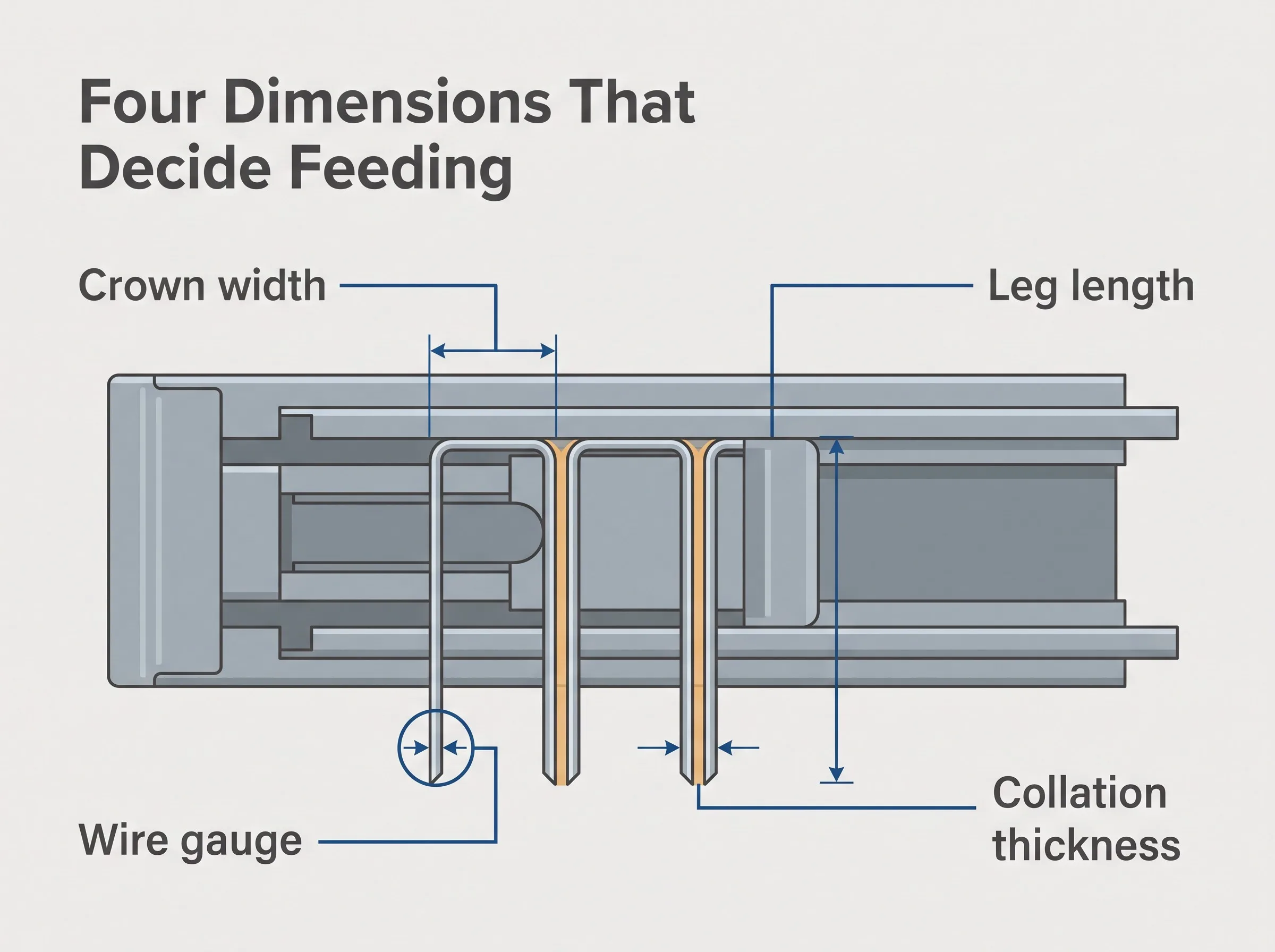
Fig. 1 - Four dimensions decide whether a strip slides through the magazine or stops dead in the nose.
Dimension | What the tool expects | What happens when it is out of tolerance |
|---|---|---|
Crown width | The magazine track is cut to a specific crown span - for example 11.1 mm for a mid crown tool | A crown that is wide by even 0.3 mm rubs the track walls; the strip drags instead of advancing freely |
Leg length | The nose channel is sized for a leg-length range, not an exact figure | Over-long legs foul the nose and bend on the way out; short legs can double-fire because the strip advances too far |
Wire diameter | The driver blade and feed pawl are matched to a wire size | Thick wire will not seat in the track; thin wire slips past the pawl and feeds two staples at once |
Collation thickness | A fixed clearance between the strip and the track wall | Thick glue or tape closes that clearance, and the strip binds after a handful of shots |
The critical point: all four have to be right at the same time. A supplier that holds crown width but drifts on wire diameter still produces strips your tool will reject.
Tools are built to a nominal size, and every manufacturer holds that nominal within its own tolerance band. Two guns of the same type can sit at opposite ends of that band. A strip built in the middle of spec feeds in both; a strip built at the edge of spec feeds in one and binds in the other.
That is the entire explanation behind the most common complaint in the trade - "my gun only likes its own brand of staples". It is rarely loyalty. It is a stack-up of tolerances:
Track width. A few hundredths of a millimetre of extra crown width is enough to create drag.
Factory grease and wear. A new tool is tight; a worn tool is loose. The same strip behaves differently in both.
Nose clearance. Different nose profiles tolerate different leg lengths, which is why a staple that works in a short-nose upholstery tool can foul a long-nose one.
Feed pawl tension. Weak spring tension shows up first at the end of a strip, when the magazine has the least push behind it.
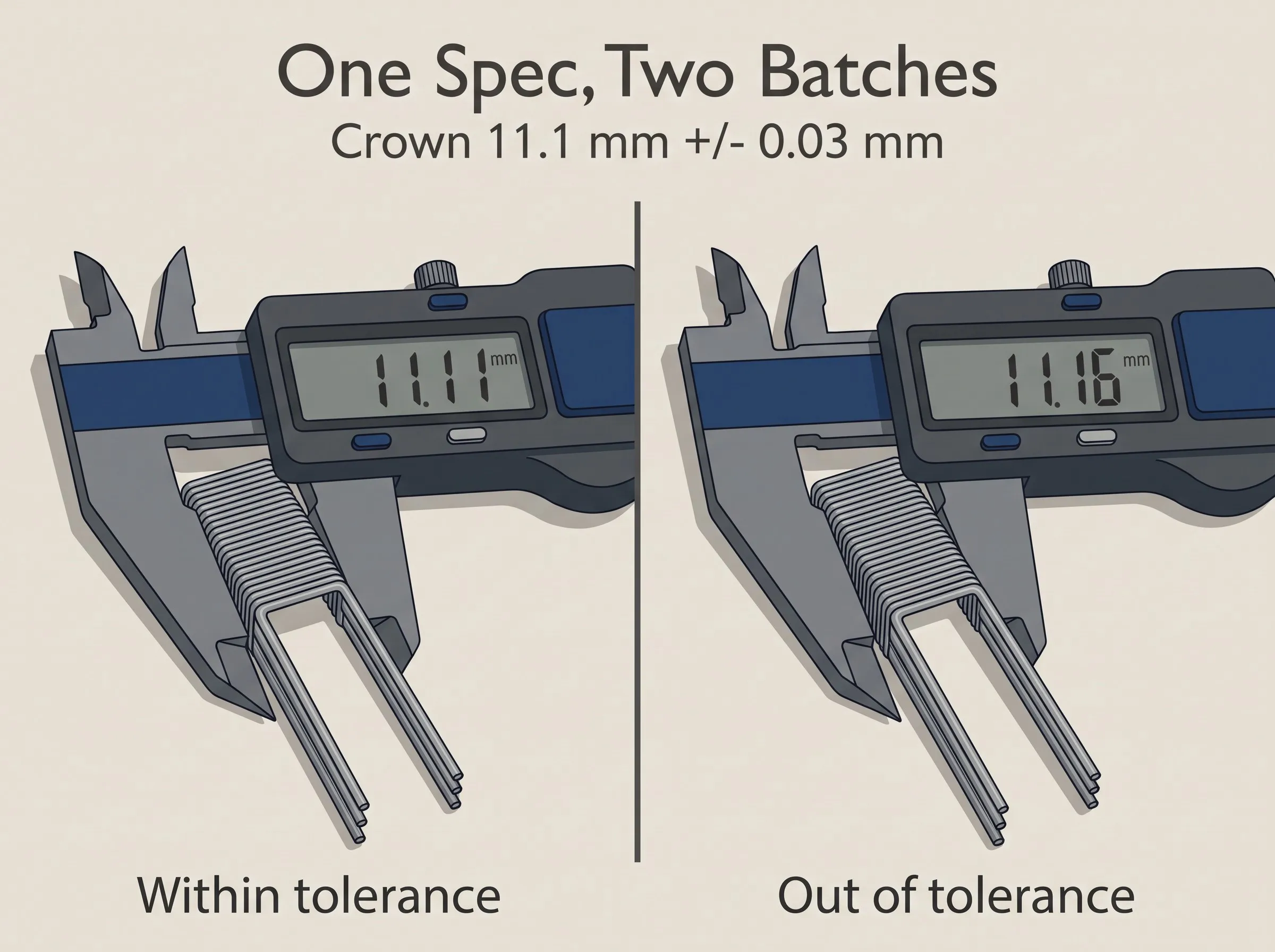
Fig. 2 - Two batches, one spec sheet. Only a caliper across the crown shows which one your tool will accept.
Most feeding problems are not a design fault, they are a batch fault. A supplier runs within spec for months, then a coil of wire arrives slightly thick or the forming dies wear, and crown width drifts upward by a tenth of a millimetre. Nothing about the box changes. Only the behaviour does.
This is why a professional buyer asks for tolerances, not just dimensions:
What to ask for | Why it matters |
|---|---|
Crown width with a tolerance band | A nominal figure with no band tells you nothing about the strips at the edge of the run |
Wire diameter range across the batch | The spread, not the average, is what jams tools |
Collation thickness and bond strength | Thin glue plus weak bond equals strips that break mid-magazine |
Batch inspection record | Proves the numbers were actually measured, not copied from a catalogue |

Fig. 3 - 10J series staples: crown 11.1-11.15 mm (+/- 0.03 mm) and wire 0.87-0.92 mm (+/- 0.01 mm), held batch to batch.
A tolerance band that narrow is not marketing language. It is the difference between a strip that clears the track and one that drags against it.
You do not need a laboratory to catch a bad batch. Five checks on a sample pack will tell you most of what you need to know:
Measure the crown across ten staples. Use a caliper on staples taken from different parts of the strip, not ten in a row. Variation inside one strip is the warning sign.
Stand a strip on its legs on a flat surface. Every staple should touch. A strip that rocks has legs of inconsistent length and will foul the nose.
Slide a strip into the empty magazine by hand. It should move with light finger pressure and no scraping sound. If you can feel it rub, the tool will feel it too.
Bend one staple off the strip by hand. The bond should release cleanly between staples. A bond that tears fibres out of the neighbouring staple means the collation is too heavy.
Run 100 staples through your own tool. Count jams, misfires and double feeds. Most problems show up in the first fifty shots; a batch that runs 100 clean is usually safe for the order.
Symptom | Usual cause | What to change |
|---|---|---|
Will not feed at all, feels tight in the magazine | Crown width over size, or collation too thick | Ask for a crown tolerance band; or move to a lighter collation |
Feeds two staples at once | Wire diameter under size, or feed pawl tension low | Confirm wire spec; service the pawl spring |
Feeds the first 40, then jams | Strip drags as magazine pressure drops toward the end of the coil | Check crown tolerance and collation thickness; clean the track |
Staples bend in the nose | Leg length too long for the tool, or legs not square | Match the leg range to the tool; check strip alignment |
Strip breaks mid-coil | Weak or uneven collation bond | Specify bond strength and test check 4 above |
Runs fine in one tool, jams in another | Tolerances sitting at opposite ends of the band | Ask for a batch centred in the middle of spec |
Fine for the first box, then problems | Batch drift | Request the inspection record for the current batch |
Put these five questions in writing. The answers separate a trader from a manufacturer:
What are your tolerances on crown width, wire diameter and collation thickness? A manufacturer answers immediately. A trader forwards the question.
Which tool models have you tested this strip in? Compatibility is a test result, not a claim.
Can you supply the batch inspection record? Numbers you can check beat assurances you cannot.
Do you send samples before an order? Run checks 1-5 above on the sample.
How is the product packed and stored? Sealed, dry packing keeps paper collation and coated wire in the condition they left the factory in.

Fig. 4 - 80 series strips - a different crown width means a different tool family, never a substitute.

Fig. 5 - The same principle applies to collated brad nails: wire diameter and collation control feeding as much as the gun does.
Send the tool model with the enquiry. Crown width, leg length and collation type follow the tool, not the cheapest price list. A product code is not enough - the tool model decides the spec.
Hold the tolerance, not just the nominal. A strip that is "11.1 mm" on average and 11.4 mm at the edge of the run is a jam waiting to happen. Narrow, repeatable tolerances are the product.
Test on the customer's tool before the first container. A sample pack and a hundred-shot test cost almost nothing. A rejected container costs a season.
Q: Why does my staple gun jam with new staples but work with the old ones?
A: Almost always a tolerance issue rather than a broken tool. Crown width, wire diameter or collation thickness in the new batch sits outside what the magazine accepts. Measure the crown across ten staples with a caliper and compare it with the previous batch.
Q: Do I have to use the manufacturer's own staples in my gun?
A: No, provided the strip matches four things: crown width, leg length, wire diameter and collation type. Any strip built inside those tolerances will feed. "Own brand only" usually means the tool's tolerance band is narrow, not that the tool is special.
Q: How do I know which staple series fits my tool?
A: Match the crown width and gauge first - those two decide the tool family. Then confirm the leg-length range the nose accepts. A strip of the right crown in the wrong leg length will still foul.
Q: What is an acceptable crown width tolerance?
A: The tighter the better, and a band in the order of +/- 0.03 mm across a batch is a good working standard for mid crown staples. Ask any supplier for their actual band before ordering.
Q: Can I mix staples from two suppliers in the same magazine?
A: Not while working. Even two batches that both pass a tolerance check will differ slightly, and the feed pawl sets up to one of them. Finish a strip, then change over, and run a few test shots after switching.
Q: Why do staples feed fine at the start of a coil and jam near the end?
A: Magazine spring tension is lowest at the end of the strip, so any small amount of drag in the track becomes a jam. That points at crown width or collation thickness rather than the tool.
Rhinails is a fastener manufacturer with 30 years of experience producing collated staples and nails, including 20 gauge mid crown staples, 22 gauge fine wire staples, wide crown staples and F series brad nails. Crown width, wire diameter and collation are controlled and recorded batch by batch, and every product line is tested for feeding in mainstream pneumatic and cordless tools. Contact us with your tool model for a compatibility check, our tolerance sheet or a sample pack.


